

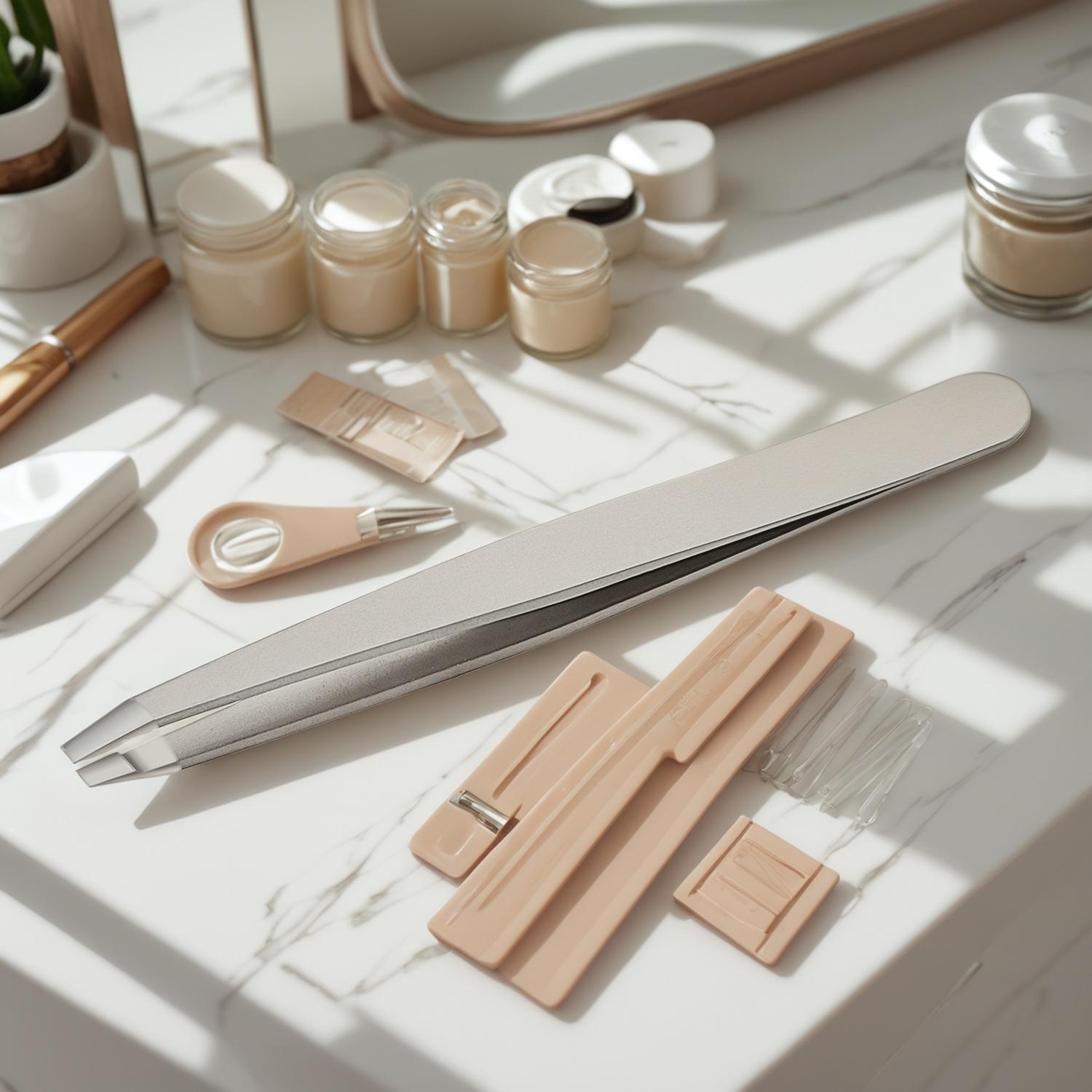
Buying Tweezers in Bulk: How to Check Quality Before You Commit
When you buy tweezers in bulk, the decision is not only about unit cost. A tweezer is a small tool, but customers judge it immediately by how well the tips meet, how smoothly it grips, and whether it feels stable in the hand. For retailers, salon buyers, beauty brands and distributors, inconsistent tweezers can create returns, complaints and damage to repeat sales. A reliable bulk order should deliver the same grip, finish and usability across every carton, not just in the first sample you receive.
This guide explains what to evaluate before placing a volume order, how to compare a tweezers factory or supplier, and which quality details matter most for long-term customer satisfaction. It is written for buyers sourcing professional beauty tools, especially slanted tip tweezers used for brow shaping, facial hair removal and everyday grooming.
Start With the Use Case, Not Only the Price
Bulk tweezers are purchased for different channels, and each channel has different expectations. A salon may care most about precision, cleaning and operator comfort. A retail brand may focus on appearance, packaging presentation and consistent performance for home users. A promotional order may prioritize safe handling and basic grooming function, while still needing acceptable alignment and finish.
Before comparing quotes, define the job the tweezers must do. Are they intended for brow grooming, lash application support, general personal care kits, or resale as a standalone beauty tool? Slanted tips are widely preferred for brow work because they offer a broad gripping edge while allowing controlled angle placement. However, the slant must be even, the two tips must close together cleanly, and the edges should grip fine hairs without cutting them.
If you are building a broader assortment, compare tweezers alongside other beauty tool products so the finish, packaging and quality level feel consistent across your range. A buyer who treats tweezers as part of a coordinated tool line usually makes better decisions than one who sources them as a generic commodity.
Key Quality Checks for Bulk Tweezers
A good tweezer feels simple because the manufacturing details are well controlled. When those details are ignored, users notice problems immediately: tips that do not meet, weak tension, rough edges, slippery grip or inconsistent coating. The following checklist helps you evaluate samples before scaling up to a bulk order.
- Tip alignment: Close the tweezer under light pressure and check whether the tips meet evenly from edge to edge. Misalignment is one of the most common causes of poor hair grip.
- Grip performance: Test on fine hair or a similar thin fiber. The tweezer should grasp without repeated attempts and should not snap or cut the hair unnecessarily.
- Tip finish: The slanted ends should be clean, symmetrical and free from burrs. Rough tips can scratch skin or feel uncomfortable during precision grooming.
- Spring tension: Open and close the tweezer repeatedly. It should provide enough resistance for control without causing hand fatigue.
- Body shape: Check whether the handle width, length and curve allow a stable grip. Ergonomic design is especially important for salon and brow professionals.
- Surface finish: Look for scratches, stains, uneven polishing, color variation or coating defects. These issues are easy for customers to see in retail packaging.
- Cleanliness: Samples should arrive clean and ready for inspection, without metal dust, oil residue or loose particles inside packaging.
For volume buying, do not rely on one perfect sample. Request enough pieces to judge consistency. A factory may be able to produce an excellent prototype, but bulk reliability depends on process control across many units.
Material and Finish Considerations
The original quality of a tweezer begins with the material and forming process. Stainless steel is commonly used for beauty tweezers because it supports durability, hygiene and long service life when properly produced and finished. Buyers should look for clear communication about the material used, the surface finish, and how the tool will be protected during storage and shipping.
Material choice affects more than appearance. If the steel is too soft, the tips may deform with use and lose alignment. If the edges are poorly finished, the tweezer may feel sharp against the skin. If the surface is not handled properly during production and packing, visible blemishes may reduce perceived value before the customer even tries the tool.
For retail programs, finish selection also matters from a merchandising point of view. A polished, matte or colored finish can change how the tweezer fits into a brand collection. However, appearance should not come at the expense of function. Any coating or decorative treatment should leave the tips precise, clean and fully usable.
How to Compare a Tweezers Manufacturer or Supplier
A reliable tweezers supplier should be able to discuss both product details and order execution. The best sourcing conversations go beyond price and delivery timing. They cover how samples are evaluated, what defects are considered unacceptable, how packaging is confirmed, and how the supplier maintains consistency between sample approval and production.
Use the table below to structure your comparison when reviewing potential suppliers or manufacturers.
| Evaluation Area | What to Check | Why It Matters |
|---|---|---|
| Sample consistency | Inspect multiple samples, not just one unit | Shows whether quality is repeatable |
| Tip precision | Check closure, edge symmetry and grip | Directly affects user satisfaction |
| Finish quality | Look for scratches, burrs and uneven color | Impacts retail presentation and perceived value |
| Packaging control | Confirm insert, pouch, card or box requirements | Reduces damage and supports brand consistency |
| Communication | Review how clearly requirements are documented | Prevents errors during bulk production |
If your business needs a flexible purchasing path, low-MOQ options can be useful for testing a new market or launching a focused product line without overcommitting inventory. The important point is to balance order flexibility with the same quality expectations you would apply to a larger production run.
Packaging and Presentation for Retail or Professional Use
Packaging is not only a visual decision. It protects the tweezer tips, keeps the tool clean, and helps customers understand what they are buying. For slanted tip tweezers, the tip area needs protection so the alignment is not damaged during transit or shelf handling. A tweezer that leaves the factory correctly aligned can still disappoint customers if packaging allows the tips to bend or rub against hard surfaces.
For retail, consider whether the packaging clearly displays the tweezer shape and finish. Customers often compare tools visually before purchase, so the product should look clean, straight and well positioned. For professional use, buyers may prefer practical packaging that supports storage, handling and repeated access.
When planning a larger beauty tool range, review product collections to think about how tweezers will sit alongside scissors, manicure tools, lash tools or grooming accessories. Consistent packaging dimensions, color direction and product naming can make a mixed assortment easier to merchandise.
Bulk Order Inspection: A Practical Receiving Plan
Quality control should continue when the bulk order arrives. Even if samples were approved, incoming inspection helps catch transit damage, packing mistakes or batch variation before products reach customers. The inspection plan does not need to be complicated, but it should be consistent.
- Check cartons and labels first. Confirm quantity, product description and packaging version before opening individual units.
- Inspect packaging condition. Look for crushed boxes, loose items, moisture signs or damaged protective materials.
- Pull samples from different cartons. Do not inspect only the easiest carton to access. Variation can occur across packed batches.
- Test tip alignment and grip. Use the same method applied during sample approval so results are comparable.
- Record visible defects. Note scratches, uneven finish, burrs, stains, bent tips or incorrect packaging.
- Separate questionable units. Keep them out of sellable stock until a decision is made.
This receiving process is especially helpful for growing brands that sell through marketplaces, salons or retail partners where product reviews and returns directly affect reputation.
Maintenance Guidance Your Customers Will Appreciate
Customers often judge tweezers by first use, but proper care also affects long-term performance. Including simple care instructions in packaging or product content can reduce misuse and support better reviews. Buyers should consider whether their chosen packaging leaves room for short guidance, especially for professional or premium retail products.
Useful care points include keeping the tips clean and dry, storing the tweezer with tip protection when possible, avoiding drops onto hard surfaces, and not using brow tweezers as general household tools. If the tips are bent from misuse, even a well-made tweezer can lose precision. Clear guidance helps customers understand that alignment is part of the tool's performance.
Questions to Resolve Before Placing a Bulk Tweezers Order
Before confirming production, document the product and packaging requirements in writing. This reduces ambiguity and gives both sides a clear reference. Key points include tweezer type, tip style, finish, packaging format, approved sample standard, carton packing method and inspection expectations. If branding or private packaging is involved, artwork approval and color confirmation should be handled before production begins.
It is also useful to define what counts as a major defect. For example, bent tips, non-closing tips, sharp burrs, heavy scratches, incorrect finish or wrong packaging may be unacceptable for sellable goods. Minor cosmetic marks may be judged differently depending on the market and price positioning. The standard should match the expectations of your customers.
For buyers preparing a new project, you can send an inquiry with your product goals, target channel and packaging preferences. If you need help narrowing options or comparing sourcing details, contact Olimor to discuss a practical path for bulk tweezer purchasing.
Build Reliability Into the Purchase, Not After It
Buying tweezers in bulk is easier when quality is treated as part of the sourcing process from the beginning. The best results come from clear use-case definition, careful sample review, realistic packaging planning and consistent receiving checks. Price will always matter, but a low price cannot compensate for weak grip, misaligned tips or visible finish problems that customers notice immediately.
For retailers, salons and beauty brands, a dependable tweezer program starts with the details: stainless steel construction, precise slanted tips, comfortable handling, clean finishing and repeatable production quality. When these points are verified before the order is placed, bulk purchasing becomes a reliable way to support your product range and protect customer trust.
Tag: