

Buy Tweezers in Bulk for Professional Precision
Buying tweezers in bulk is not only a cost decision. For a salon, lash studio, nail desk, beauty retailer or distributor, tweezers are high-touch tools that affect comfort, hygiene routines, application accuracy and the customer’s impression of your service. A low unit price can become expensive if the tips do not meet cleanly, the grip feels unstable, the finish wears quickly or the shape does not suit the work your team performs every day.
This guide focuses on practical selection criteria for professional buyers: how to compare bulk tweezers, what to check before confirming a wholesale order, and how to think about factory sourcing without relying only on photos. Olimor Beauty supplies beauty tools for professional and retail channels, and buyers can review related beauty tool products or browse broader product collections when building a coordinated assortment.
Start With the Job: Lash, Brow, Nail Art or Retail Kits
The right tweezer depends on the task. Bulk orders often fail when one shape is expected to serve every use. Lash technicians need fine control and consistent tip contact for isolation or placement. Brow shaping requires firm alignment and a comfortable pinch for repeated hair removal. Nail artists may prefer control for decals, rhinestones, stickers or small embellishments. Retail buyers may need a balanced assortment that looks attractive in packaging while still feeling precise in hand.
Before comparing suppliers, define the buying scenario. A salon replenishment order may prioritize durability, repeatable feel and easy cleaning. A gift set or beauty kit may place more weight on appearance, finish consistency and packaging presentation. A distributor may need a design that is broadly acceptable across many customers rather than highly specialized for one technique.
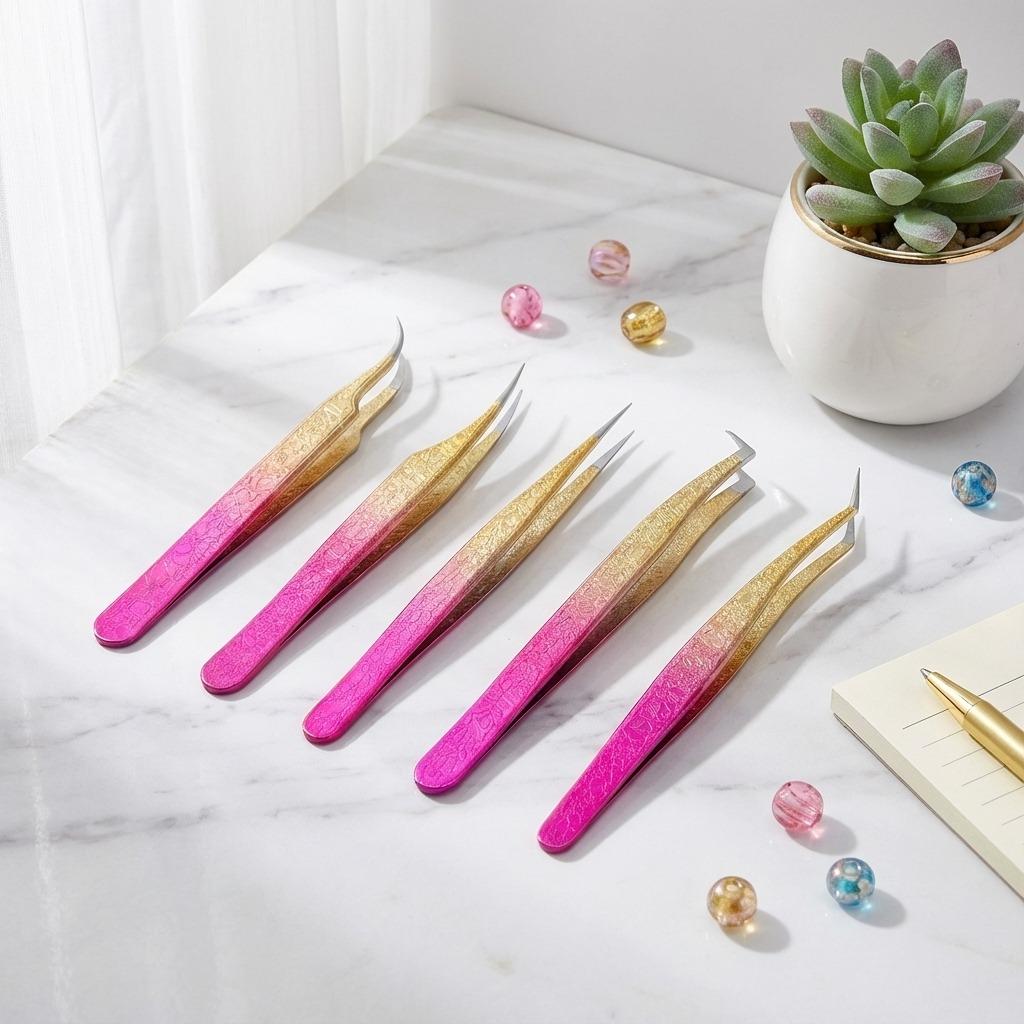
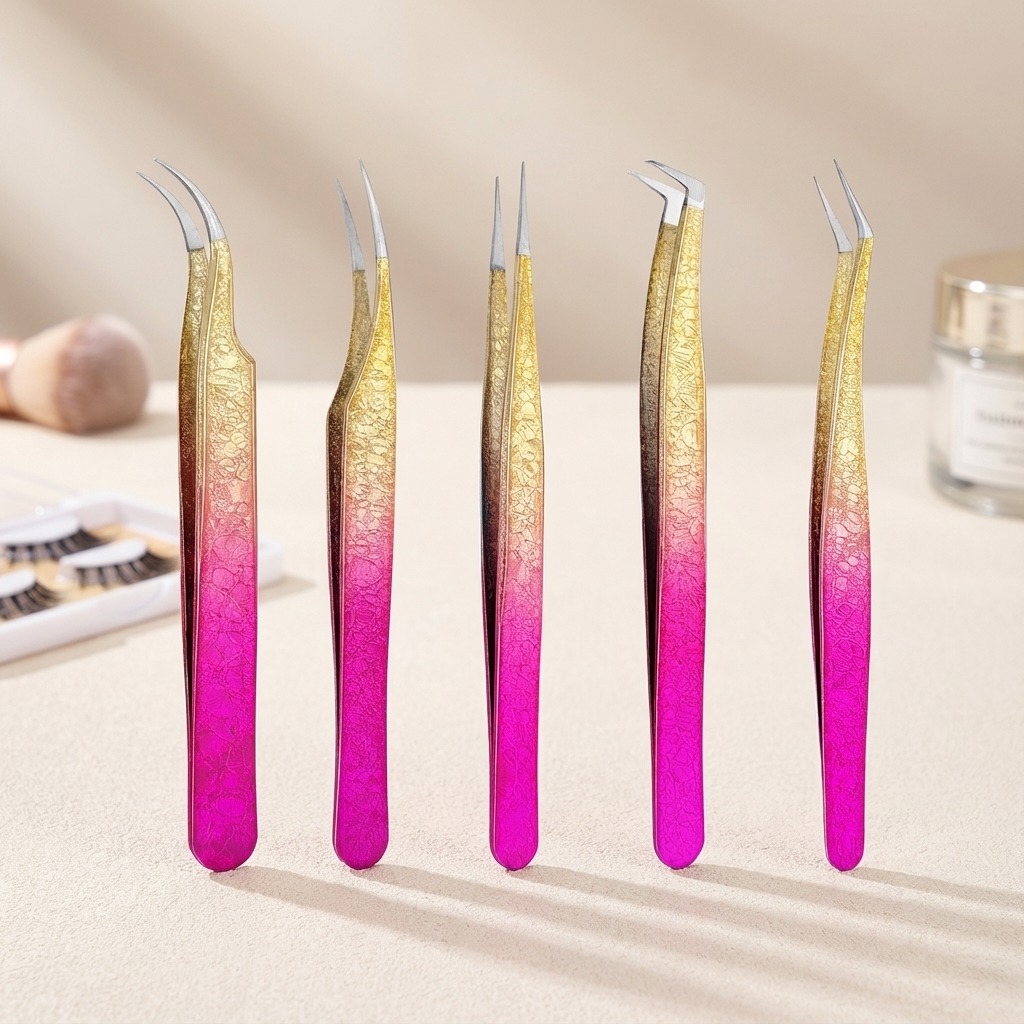
In the supplied product details, the tweezers feature stainless steel construction, gradient gold-to-pink styling, embossed texture for grip, lengths from 115 mm to 130 mm and ergonomic 10 mm handles. Those details make the range especially relevant for buyers who want professional functionality with a visible design element, rather than plain utility tools only.
Key Specifications to Compare Before a Bulk Order
When you buy tweezers in bulk, it is useful to evaluate samples with the same criteria your staff or customers will notice. A tweezer can look attractive in a catalog but still perform poorly if the closing pressure, tip match or surface texture is inconsistent. Use the checklist below when comparing lots, samples or supplier options.
- Tip alignment: The two tips should meet cleanly without crossing, gapping or sliding past each other. Alignment is essential for precise gripping.
- Tip style: Pointed, slanted, curved or double-tip designs serve different tasks. Do not select by appearance alone; match the shape to the user’s technique.
- Hand pressure: Tweezers should close without excessive force. Too much tension can cause fatigue during lash, brow or nail work.
- Grip texture: Embossed or textured areas can improve control, especially during detailed work or when gloves are used.
- Length and balance: The stated 115 mm to 130 mm range gives buyers options for reach and handling preference. Longer tools may feel more controlled for some detailed applications, while shorter tools can feel direct and compact.
- Handle comfort: The 10 mm handle detail is relevant for repeated use because a handle that is too narrow or slippery can increase strain.
- Finish consistency: Gradient finishes should be checked for color uniformity, surface flaws and edge smoothness across the batch.
- Cleaning compatibility: Confirm that the selected design can fit your salon’s cleaning and storage workflow. Avoid shapes or textures that trap residue in daily use.
Retail Buying vs. Working With a Tweezers Wholesaler
Retail outlets are convenient when you need a few tools quickly, but they are rarely the best route for professional replenishment or resale planning. Retail purchases often create mixed inventory: different shapes, finishes, packaging styles and quality levels accumulated over time. That can make it harder for a salon team to work consistently or for a retailer to present a clean product story.
A wholesale approach is better when you need predictable supply, repeatable specifications and coordinated presentation. It also allows you to compare product details in a more structured way before purchase. Instead of asking only, “What is the price per piece?” professional buyers should ask, “Will this tweezer perform consistently across the full quantity, and does it match the use case?”
For example, a gradient gold-to-pink tweezer with embossed texture can be a strong option for beauty retailers or salon retail areas because it has visible shelf appeal. At the same time, the stainless steel body, length range and ergonomic handle details give the buyer practical features to assess beyond color. If you are preparing a replenishment order or assortment plan, you can send an inquiry with your intended use, quantity range and preferred tweezer types so the discussion stays focused on fit rather than generic catalog browsing.
How to Evaluate a Tweezers Factory or Supplier
Choosing a tweezers factory is not simply a question of domestic versus overseas production. The more important issue is whether the supplier can control the details that matter to the user: metal forming, tip finishing, surface treatment, inspection and packaging. Small deviations at the tip can make a tweezer feel unreliable, even if the overall shape appears correct.
When assessing a supplier, request clear information about how the tools are checked before shipment. You do not need to rely on broad claims; focus on observable checkpoints. Are tips inspected for contact? Are edges checked for burrs? Is the finish reviewed for scratches, uneven coloring or peeling? Is the packaging suitable for preventing tip damage in transit? These questions are especially important for pointed or curved tips, where minor deformation can affect performance.
The original product information notes internal quality controls from raw materials to packaging. For a bulk buyer, that type of process is valuable because tweezers are precision tools, not disposable accessories. A reliable supplier should be able to discuss how consistency is maintained throughout a production lot and how goods are protected before they arrive at your warehouse, salon or retail stockroom.
Comparing Tweezer Types for Professional Use
A simple comparison table can help buyers decide what to include in a bulk order. The best mix depends on your customer base and service menu.
| Buyer need | Useful tweezer features | What to check in samples |
|---|---|---|
| Lash application | Fine control, stable closing pressure, precise tips | Tip contact, hand fatigue, ability to pick up small items cleanly |
| Brow grooming | Firm grip, comfortable handle, durable stainless steel | Hair grip, tension balance, edge smoothness |
| Nail art | Controlled handling for rhinestones, decals or small decorations | Grip on tiny pieces, visibility around the tip, tool balance |
| Retail resale | Attractive finish, consistent appearance, practical shape | Color consistency, packaging protection, broad user appeal |
| Salon back bar | Repeatable performance, easy storage, cleaning-friendly design | Batch consistency, durability of finish, daily handling comfort |
Maintenance and Storage After Purchasing in Bulk
Even well-made tweezers need proper handling. Bulk purchasing often means tools are distributed across multiple stations, kits or retail packs, so maintenance standards should be clear. For professional service settings, follow your local hygiene rules and your internal sanitation process. Keep tweezers dry after cleaning, avoid tossing them loose into drawers, and protect fine tips from impact.
Tip damage is one of the most common causes of poor performance. A tweezer can lose accuracy if it is dropped onto a hard floor or stored with heavy tools pressing against the points. Consider using sleeves, cases or divided organizers, especially for pointed and detailed designs. Retailers should also check that packaging protects the tip area during shipping and shelf handling.
For teams, it helps to standardize tool placement. If lash, brow and nail tools are mixed together, staff may use the wrong tweezer for the task and wear it out faster. Labeling or separating shapes by service can extend usable life and keep the customer experience consistent.
Building a Smarter Bulk Tweezers Order
A good bulk order balances appearance, function and operational needs. The gradient gold-to-pink design described here can support a more distinctive product display, while embossed grip, stainless steel construction, 115 mm to 130 mm length options and ergonomic 10 mm handles provide concrete details for professional evaluation. For some buyers, the double-tip Gradient Glam Tweezer may be suitable when a more specialized precision tool is desired, but it should still be assessed through samples and real handling tests.
Before confirming an order, document your intended use, preferred tip types, packaging expectations and inspection priorities. If the tweezers are for resale, consider how they will look in a set or on a product page. If they are for salon use, test them with the people who will handle them daily. Comfort and control are easier to judge in hand than on a specification sheet.
For help comparing options or preparing a professional assortment, contact Olimor with your target application and buying plan. A careful sourcing process reduces replacement problems, improves user satisfaction and helps ensure that every tweezer in the bulk order supports the work it was purchased to do.
Tag: