

How to Buy Tweezers in Bulk for Precision, Consistency and Better Value
For salons, lash studios, brow bars, training schools and beauty retailers, tweezers are not small accessories. They are daily working tools that affect speed, hygiene, client comfort and the final look of each service. Buying one pair at a time may be convenient for personal use, but professional environments usually need consistent tools across multiple stations, backup inventory and predictable replenishment. That is why many buyers choose to buy tweezers in bulk rather than rely on mixed retail purchases.
A good bulk order is not simply about getting a lower unit price. It should help your team standardize grip feel, tip alignment, cleaning procedures and tool availability. This guide explains how to compare tweezer types, evaluate a tweezers wholesaler, check quality before committing to repeat purchases and care for tools so they keep their precision longer.
Why Professional Buyers Choose Bulk Tweezers
Beauty professionals use tweezers for different tasks: isolating lashes, applying extensions, shaping brows, removing fine hairs, handling nail art details or managing small cosmetic accessories. When every workstation has a different tool from a different retailer, service quality can become harder to control. One tweezer may close cleanly at the tip, another may leave a gap, and another may feel too stiff during long appointments.
Bulk sourcing supports consistency. A salon owner can stock the same style for each artist, keep spare tools ready after sterilization, and reduce urgent last-minute purchases. For beauty schools or training teams, matching tools also makes instruction easier because students can learn hand position, pressure and angle using the same tool format.
There is also a practical purchasing benefit. Retail stores often sell limited styles in small quantities, which can lead to higher per-unit costs and uneven availability. Working with a wholesale source can provide broader options across curved, straight, slanted and pointed tweezers, making it easier to match the tool to the service rather than forcing one general-purpose tool into every task.
Match Tweezer Shapes to Real Salon Use
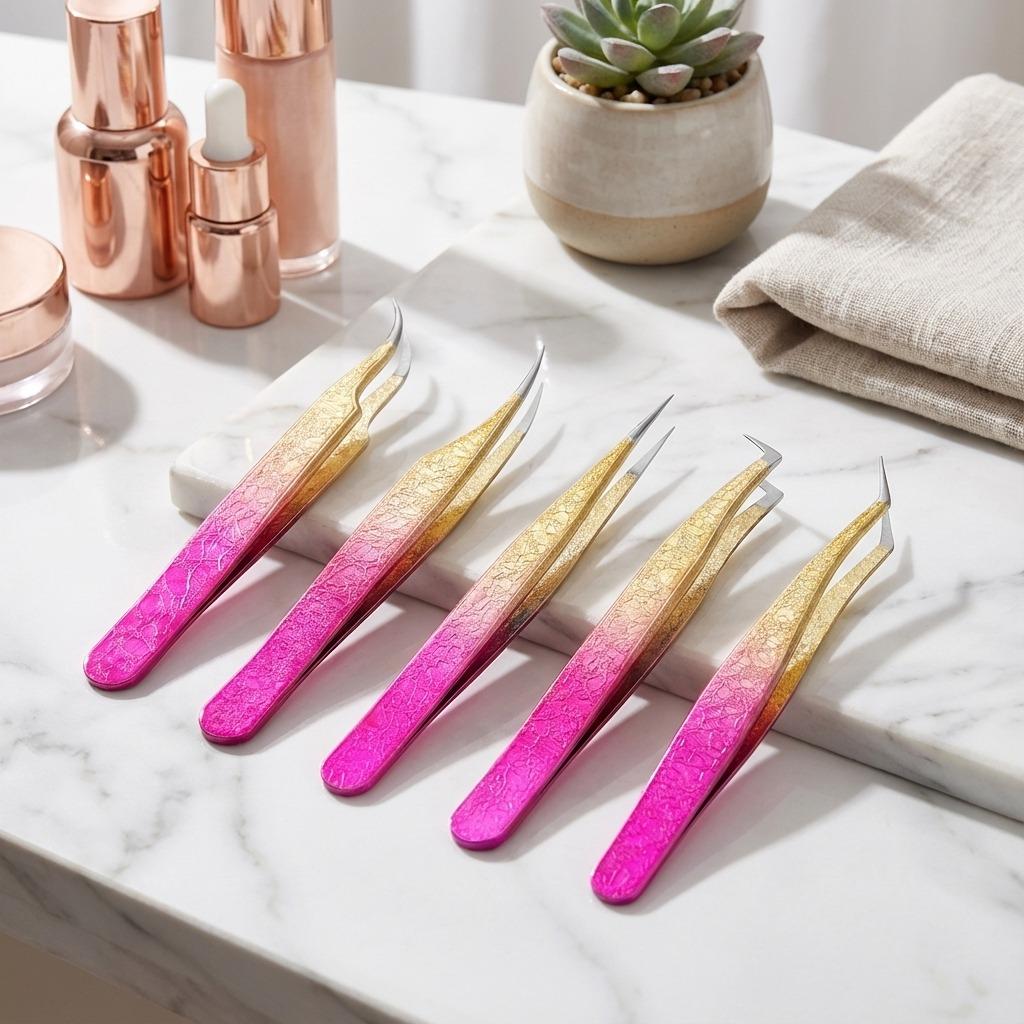
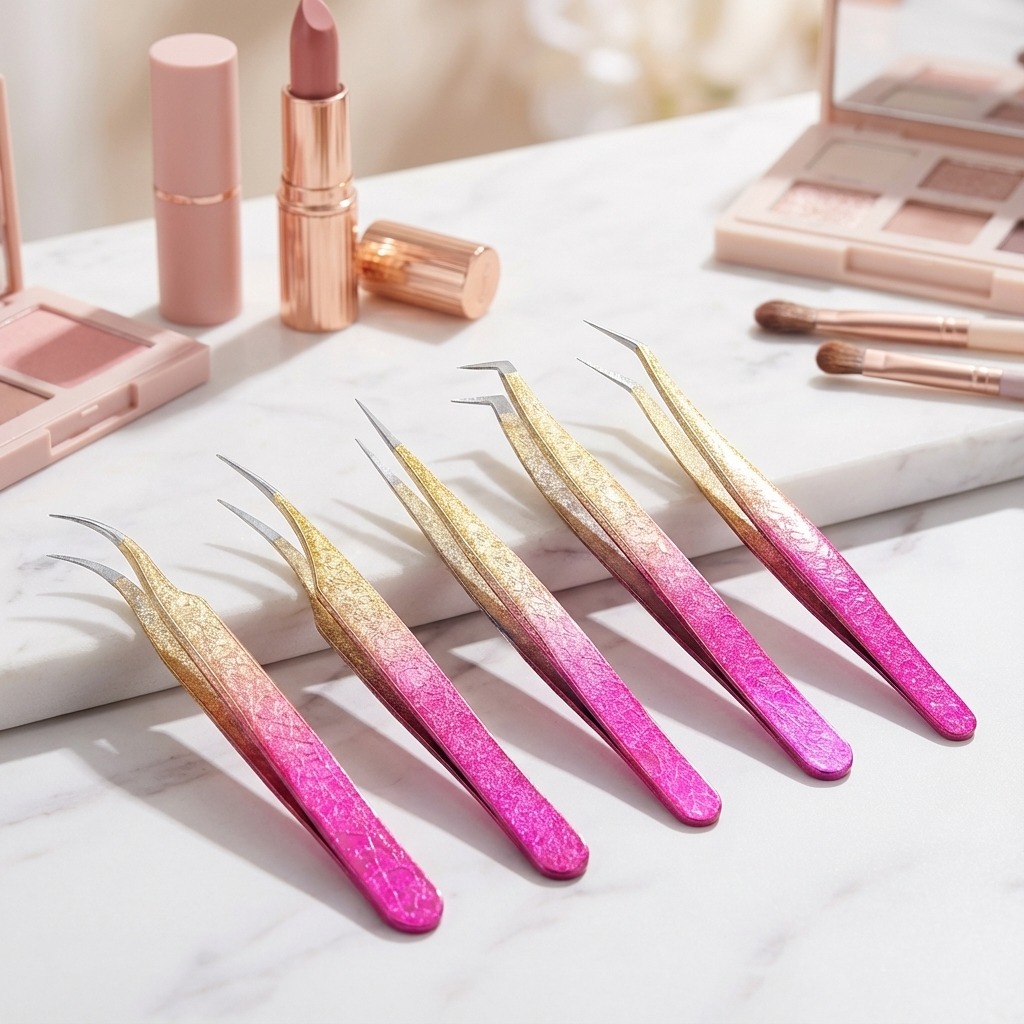
Before requesting a bulk order, define how the tools will be used. A lash artist and a brow specialist may both need precision, but they do not always need the same tip shape, length or hand feel. Olimor Beauty’s existing product focus includes precision beauty tools such as the Glam Precision Tweezer Set and lash extension tweezers with a dual-tone gradient gold-to-pink finish. When assessing any range, the key is to connect each style to a service requirement.
| Tweezer type | Common use | What to check before bulk buying |
|---|---|---|
| Straight tweezers | General handling, isolation and detailed placement | Even closing line, comfortable tension and non-slip control |
| Curved tweezers | Lash extension work and angled access | Tip symmetry, curve consistency and hand clearance during use |
| Slanted tweezers | Brow shaping and hair removal | Clean edge contact, controlled grip and balanced pressure |
| Pointed tweezers | Fine detail work and precision pickup | Tip protection, exact alignment and careful handling procedures |
For lash-focused teams, a 115mm curved tweezer may be relevant where a longer, angled profile supports extension placement. For brow work, slanted tips are often easier for controlled hair removal. For general retail sets, offering multiple shapes can help customers choose based on use rather than appearance alone.
Wholesale vs. Retail: What Changes for the Buyer
Retail purchasing is useful when you need one replacement tool immediately or want to test a single style. However, retail buying can become inefficient for growing businesses. Stock may change without notice, packaging may vary between batches, and the available shapes may not match professional service needs.
A tweezers wholesaler is better suited when you need repeatable supply, multiple shapes and business-oriented communication. Bulk buying also makes it easier to plan inventory around staff count, appointment volume and cleaning cycles. For example, a lash studio may need enough working tweezers for active appointments, a separate group being cleaned, and a reserve group for busy days or dropped tools.
When comparing sources, look beyond the advertised product photo. A practical wholesale evaluation should include:
- Tip alignment: The two sides should meet cleanly where the tool is intended to grip.
- Consistent tension: The tweezer should not feel too loose or overly stiff during repeated use.
- Material statement: The original product information refers to high-grade stainless steel, a common preference for beauty tools because it supports durability and cleaning.
- Surface finish: Decorative finishes, such as a gold-to-pink gradient, should not interfere with grip, cleaning or inspection.
- Packaging suitability: Bulk tools should arrive protected, especially pointed and precision tips.
- Reorder clarity: The source should help you identify the same style again when restocking.
You can review Olimor’s broader beauty tool products to understand available categories, or browse product collections when comparing different tool types for a salon or retail assortment.
How to Evaluate a Top Tweezers Factory or Supplier
The phrase “top tweezers factory” should mean more than attractive photos. For professional buyers, factory capability is about repeatability: whether the next order performs like the first order. Precision tools depend on small details, including tip grinding, spring tension, polishing, inspection and packaging protection.
When evaluating a factory or wholesale partner, use a checklist that focuses on observable quality rather than vague claims. Request clear product descriptions, inspect samples under good lighting and test the tools in the same way your staff will use them. If several artists will use the tweezers, let more than one person test the sample; hand strength and technique vary.
- Check closure: Open and close each sample slowly to see whether the tips meet evenly.
- Test pickup: Use the tool on a fine lash, brow hair substitute or small material similar to your daily work.
- Assess comfort: Hold the tweezer for several minutes to evaluate pressure points and fatigue.
- Inspect edges: Look for roughness, burrs or uneven finishing around the tips and body.
- Review cleaning compatibility: Confirm that your normal salon hygiene process is appropriate for the tool and finish.
- Compare samples: If ordering multiple shapes, test each shape for its intended job rather than judging all styles by one task.
Olimor Beauty positions its tweezer offering around precision, ergonomic handling and salon-focused use. For buyers planning a custom assortment or replenishment order, it is useful to send an inquiry with details such as intended use, preferred shapes and expected packaging needs. If you need help narrowing options, you can also contact Olimor for product guidance.
Bulk Order Planning: Quantity, Mix and Inventory Control
A smart bulk purchase begins with the service mix in your business. A lash studio may prioritize curved and straight tweezers, while a brow bar may require more slanted options. A beauty retailer may prefer sets that offer variety for customers. Avoid ordering only one style unless your use case is very specific and already tested.
Start by mapping your inventory into three groups: active tools, tools in cleaning rotation and backup stock. This helps prevent a common problem: ordering enough tweezers for today’s appointments but not enough to support cleaning, loss, damage or staff expansion. If your team performs high-volume lash or brow services, backup tools are especially important because precision tips can be affected by drops or improper storage.
For retailers and distributors, the assortment should also consider customer education. If you stock curved, straight, slanted and pointed options, product pages or shelf materials should explain the difference. Buyers are more likely to choose correctly when they understand whether a tweezer is meant for lash placement, brow shaping or fine detail work.
Care and Storage That Protect Precision
Even a well-made tweezer can lose performance if it is handled poorly. Precision tips are vulnerable to impact, and tension can be affected by bending or forcing the tool beyond its normal range. Bulk purchasing should therefore include a simple care standard for everyone who handles the tools.
- Store tweezers with tip protection where possible, especially pointed and fine-tip styles.
- Do not toss loose tweezers into drawers where tips can hit metal tools.
- Clean according to your salon hygiene procedure and the tool’s material and finish requirements.
- Dry tools thoroughly before storage to reduce the risk of surface issues.
- Remove damaged or misaligned tweezers from service rather than forcing them into use.
- Train staff to use each tweezer shape for its intended purpose, not as a general prying or scraping tool.
These habits help preserve alignment and reduce replacement waste. They also support a more professional workflow because artists can trust that the tool they pick up is ready for precise work.
Choosing Bulk Tweezers With Confidence
Buying tweezers in bulk is most successful when the decision is based on use, quality checks and repeatability. Look for the right mix of shapes, inspect samples carefully and consider how the tools will move through daily use, cleaning and storage. A decorative finish or elegant profile can be appealing, but professional value comes from controlled grip, reliable closure and comfortable handling over repeated appointments.
For beauty professionals, the best bulk tweezer order is one that saves purchasing time while improving consistency at every workstation. By comparing wholesale options carefully and matching each tool to its real task, salons, lash artists, brow specialists and beauty retailers can build a practical tweezer inventory that supports precise work and dependable service.
Tag: