

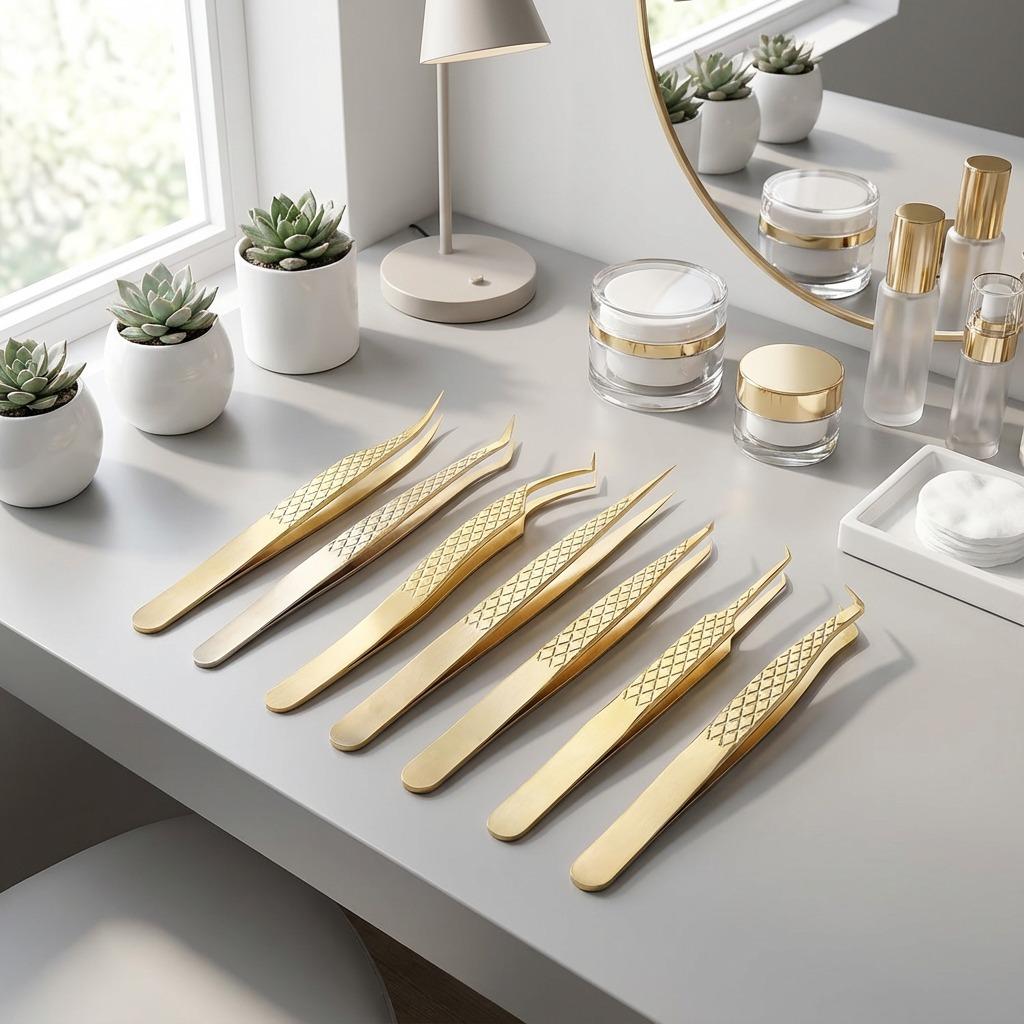
How to Buy Tweezers in Bulk for Professional Beauty Services
Buying tweezers in bulk is a practical decision for lash studios, brow bars, beauty salons, training schools and distributors that need consistent tools across many workstations. The goal is not simply to find the lowest unit price. Professional tweezers must pick up fine hairs cleanly, isolate lashes without slipping, feel stable in the hand and survive repeated cleaning in a busy service environment.
For beauty professionals, bulk purchasing also affects appointment flow. If each technician works with tools that have the same balance, grip texture and tip behavior, training is easier and service results become more predictable. Olimor Beauty supplies eyelash extension tools including stainless steel tweezers with gold finishes, anti-slip grips, precisely aligned tips, tapered tips and diamond grip patterns. The right bulk order starts with knowing which tweezer types your services actually require and how to evaluate quality before committing to a larger purchase.
Who Should Buy Tweezers in Bulk?
Bulk buying is most useful when tweezers are used daily, shared across staff, included in kits or resold to beauty professionals. A single salon may need backup pairs for sanitation rotation, while a lash academy may require sets for every student. A distributor may need stable supply so product photos, packaging expectations and reorder quality remain consistent.
Common buyers include:
- Lash extension studios that need isolation and placement tweezers for multiple artists.
- Brow bars and waxing salons that require reliable hair removal tweezers for detail work.
- Beauty training schools that provide starter tools for students learning hand position and pressure control.
- Retailers and distributors building assortments for professional tool buyers.
- Mobile beauty professionals who carry spare tools for hygiene, travel and emergency replacement.
If your team replaces tweezers only when they are damaged or lost, it is easy to overlook how much variation has entered the tool drawer over time. Bulk ordering allows you to standardize the working feel of your tools and reduce the chance that one station has a sharp, well-aligned pair while another has a pair that struggles to grip.
Match Tweezer Types to Lash and Brow Use Cases
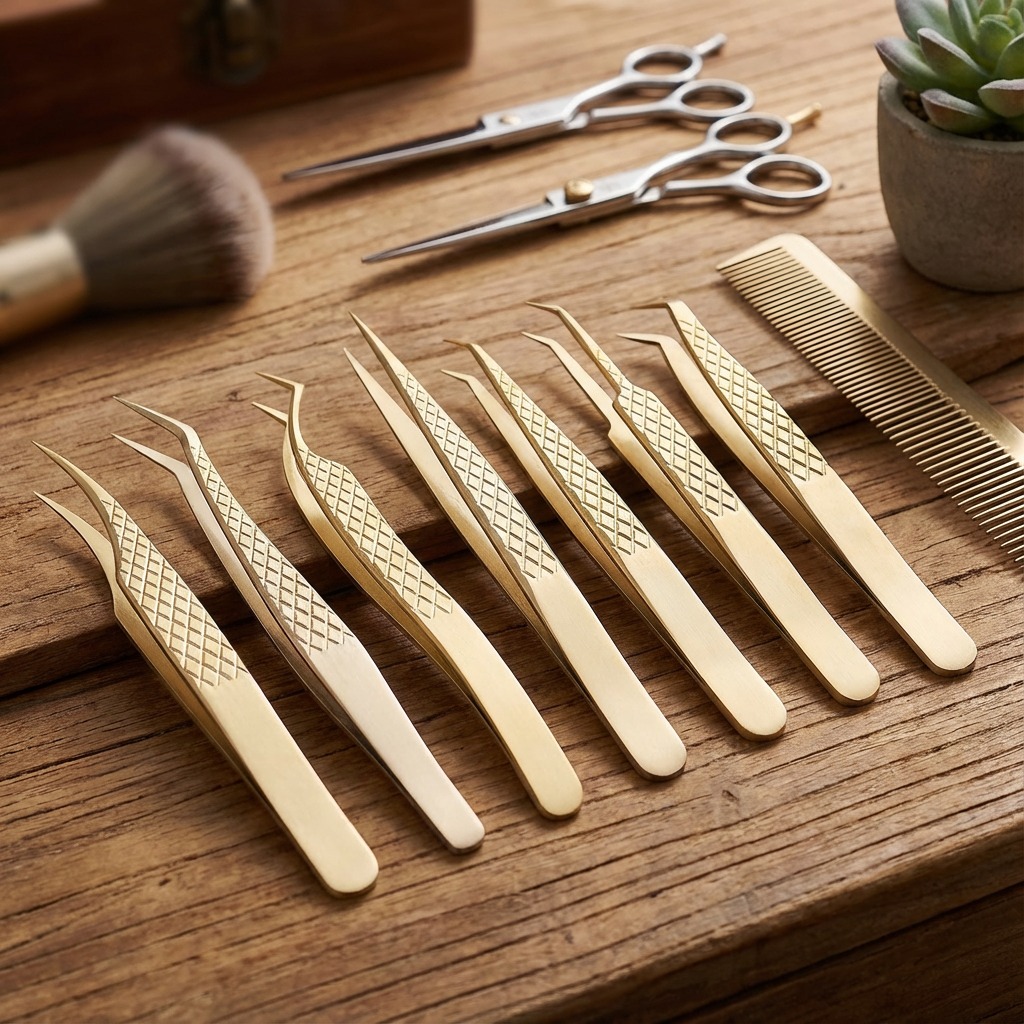
Before comparing wholesale offers, decide which tweezer shapes you need. The original product range referenced straight and curved options in lengths from 110mm to 135mm. Those differences matter because a tweezer that feels excellent for isolation may not be the best choice for pickup, placement or brow cleanup.
| Selection point | Why it matters | What to check before bulk ordering |
|---|---|---|
| Straight or curved shape | Different shapes support isolation, pickup, placement and visibility at different working angles. | Have technicians test the angle during real service motions, not only on a desk. |
| Tip alignment | Precisely aligned tips help grip fine lashes or hairs without excessive hand pressure. | Close the tweezer slowly and check whether both tips meet evenly from the end. |
| Grip texture | Anti-slip grips and diamond grip patterns help reduce movement during long appointments. | Test with dry hands and after typical workstation preparation to assess control. |
| Length and balance | Lengths such as 110mm to 135mm can feel very different in smaller or larger hands. | Let several users compare comfort before choosing one standard length. |
| Material and finish | Stainless steel supports professional durability, while a gold finish may suit a coordinated toolkit. | Confirm cleaning compatibility and inspect the finish for consistency across samples. |
For eyelash extension work, tapered tips are especially important because they influence access to small areas near the lash line. For brow work, the point still matters, but the technician may prioritize controlled hair removal and a comfortable squeeze over extremely fine placement performance. If you serve both lash and brow clients, consider building a mixed bulk order instead of forcing one tweezer design to perform every task.
How to Judge Wholesale Tweezers Beyond Price
The phrase “cheapest wholesale tweezers” can be misleading. A low price is useful only when the product can withstand professional use and maintain a reliable grip. A pair that slips, fatigues the hand or loses alignment quickly creates hidden costs through slower appointments, frustrated technicians and early replacement.
Evaluate wholesale tweezers with a practical checklist:
- Inspect tip closure. The tips should meet cleanly and consistently. Uneven contact makes it harder to grasp fine hairs or lashes.
- Test pickup performance. Use the tweezer on materials similar to your daily work, such as fine lash fibers or brow hairs, instead of judging only by appearance.
- Check spring tension. The squeeze should feel controlled. Too stiff can fatigue the hand; too loose may reduce accuracy.
- Assess grip security. Anti-slip and diamond grip surfaces should help control the tweezer without feeling rough or distracting.
- Review finish consistency. A gold finish should look even across the sample set if appearance matters for retail or studio branding.
- Confirm packaging suitability. Packaging should protect tips in transit and support your storage, retail or kit-building process.
When reviewing beauty tool products, compare the actual use conditions rather than relying only on catalog photos. A tweezer can look polished but still fail if the tips do not align or the balance feels awkward over a full working day.
Why Manufacturer Sourcing Can Improve Consistency
Working with a tweezers manufacturer can help buyers understand how products are controlled from raw materials through packaging. Olimor Beauty describes internal quality assurance that inspects pieces from raw materials to packaging. For bulk buyers, that type of process is relevant because one good sample is not enough; the larger order must remain consistent across many units.
Manufacturer sourcing can also make communication more specific. Instead of requesting “good tweezers,” you can define the features that matter: stainless steel construction, straight or curved style, gold finish, anti-slip grip, diamond grip pattern, tapered tips, tip alignment and preferred length range. This reduces misunderstanding and makes it easier to compare quotations fairly.
Useful manufacturing questions include:
- Which tweezer shapes are available for lash isolation, lash placement and brow work?
- How is tip alignment checked before packaging?
- What packaging protects the tips during storage and export shipping?
- Can samples include the same finish, grip texture and length as the planned bulk order?
- How are mixed orders handled when a buyer needs both straight and curved tweezers?
These questions do not require invented specifications or vague marketing claims. They focus on observable details that affect daily performance. If you are comparing tool categories, browse Olimor product collections to plan which items belong together in a salon supply order or professional kit.
Planning Bulk Orders for Salons, Schools and Distributors
A good bulk order is built around usage rate. Start by counting how many tweezers each workstation needs during a normal day, then add backup pairs for cleaning rotation, travel, training and replacement. For lash studios, separate isolation tweezers from placement tweezers in your count. For schools, plan for student kits, instructor demonstration tools and extras for practice sessions.
Distributors should think differently. Your order must support repeat sales, so consistency in finish, grip, packaging and naming is important. If a buyer reorders a gold stainless steel tweezer with a diamond grip pattern, they expect the next shipment to match the previous one closely. Keeping clear records of the chosen shape, length range, finish and packaging helps avoid confusion later.
Before confirming a large order, create a simple approval process:
- Request samples in the same style you intend to purchase.
- Assign several technicians to test them during typical tasks.
- Record feedback on grip, pressure, tip accuracy and comfort.
- Inspect packaging and tip protection after shipping.
- Approve the final assortment only after the practical test is complete.
This approach is especially helpful when buying for a team. One person’s preferred tweezer may not suit everyone, so feedback from multiple users gives you a more reliable decision.
Export and Logistics Considerations for International Buyers
When sourcing from a tweezers exporter, the product is only one part of the purchase. International buyers also need clear communication about packing, shipping documents, payment terms, delivery timing and import duties. Beauty tools are small, but damaged tips can make a shipment unusable, so protective packaging deserves attention.
International buyers should prepare the following information before requesting a quotation:
- Destination country and preferred shipping method.
- Estimated quantity and whether the order is mixed by shape or length.
- Packaging needs for salon use, training kits or retail resale.
- Any labeling requirements required by the buyer’s local market.
- Preferred timeline for samples, approval and final shipment.
Clear information allows the supplier to quote more accurately and helps you compare offers on the same basis. If you are ready to discuss a bulk purchase, you can send an inquiry with your intended use, quantity range and preferred tweezer styles. For broader questions about sourcing, packaging or product selection, contact Olimor for direct assistance.
Maintaining Bulk Tweezers After Purchase
Professional tweezers should be treated as precision tools. Even a well-made tweezer can lose performance if the tips are dropped, bent or stored loose in a drawer. Bulk buying gives you enough tools to rotate them properly, but your team still needs a care routine.
Store tweezers with the tips protected and avoid mixing damaged pairs with approved service tools. Clean according to the hygiene procedures used in your salon or training environment, and make sure the cleaning method is suitable for the tool finish. Check tip alignment regularly, especially after travel or after a tool has been dropped. If a tweezer no longer grips accurately, remove it from client service and keep it only for non-service practice if appropriate.
The best bulk tweezer purchase balances price, consistency and real working comfort. Focus on the features professionals can feel in the hand: aligned tips, stable grip, suitable shape, manageable length and reliable packaging. With a structured sample review and clear sourcing criteria, salons, schools and distributors can build a tweezer inventory that supports accurate work and efficient daily operations.
Tag: