

Custom Tweezers for Business: A Practical Sourcing Guide for Beauty Brands and Distributors
Custom tweezers are small products, but they carry a surprising amount of brand responsibility. A customer may use the same pair for months or years, often in a detailed beauty routine where grip, alignment and comfort matter. For beauty retailers, salon suppliers, private-label brands and distributors, that makes tweezers more than an add-on item. They can become a repeatable, brand-building tool when the quality is consistent and the customization is appropriate for the target market.
For business buyers, the goal is not simply to find the lowest bulk tweezers price. The stronger purchasing decision is to balance appearance, precision, durability, packaging and supplier communication. A low-cost tool that feels rough, slips on fine hair or arrives inconsistently finished can create service issues and weaken trust. A well-made branded tweezer, by contrast, can support retail kits, promotional campaigns, professional salon use or distributor catalog expansion.
Olimor Beauty works with beauty tools where precision and presentation are important, including stainless steel tweezers with options such as curved and angled tips. If you are comparing beauty tool products for a private-label or wholesale range, use the following criteria to make a more informed sourcing decision.
Why Custom Tweezers Work Well for B2B Beauty Programs
Tweezers are easy to underestimate because they are compact and familiar. However, that is exactly why they work well in B2B beauty programs. They fit into many product strategies without requiring the buyer to educate the market from zero. Consumers, salon technicians and beauty enthusiasts already understand the function of tweezers; the question is whether the tool performs cleanly and feels worth keeping.
For distributors, tweezers can support several commercial roles. They can be sold as standalone accessories, included in eyebrow grooming sets, bundled with lash or skincare tools, or used as branded gifts in retail promotions. For beauty brands, customized tweezers can reinforce a more complete grooming category without adding bulky inventory. For salons and training programs, a reliable tweezer can become part of a professional kit where consistency matters across multiple users.
The branding benefit is also practical. A branded beauty tool stays visible in a bathroom drawer, salon workstation or travel pouch. When the finish, alignment and hand feel are positive, the brand impression is repeated each time the customer uses it. That type of daily interaction is difficult to achieve with disposable packaging or one-time promotional items.
Tip Shape, Grip and User Scenario Should Guide Selection
Before requesting a quotation or confirming artwork, define how the tweezer will be used. A distributor serving professional salons may prioritize firm control and reliable tip contact. A retail beauty brand may focus on comfort, appearance and everyday brow maintenance. A promotional gift buyer may need a design that is simple, attractive and easy to pack with other products.
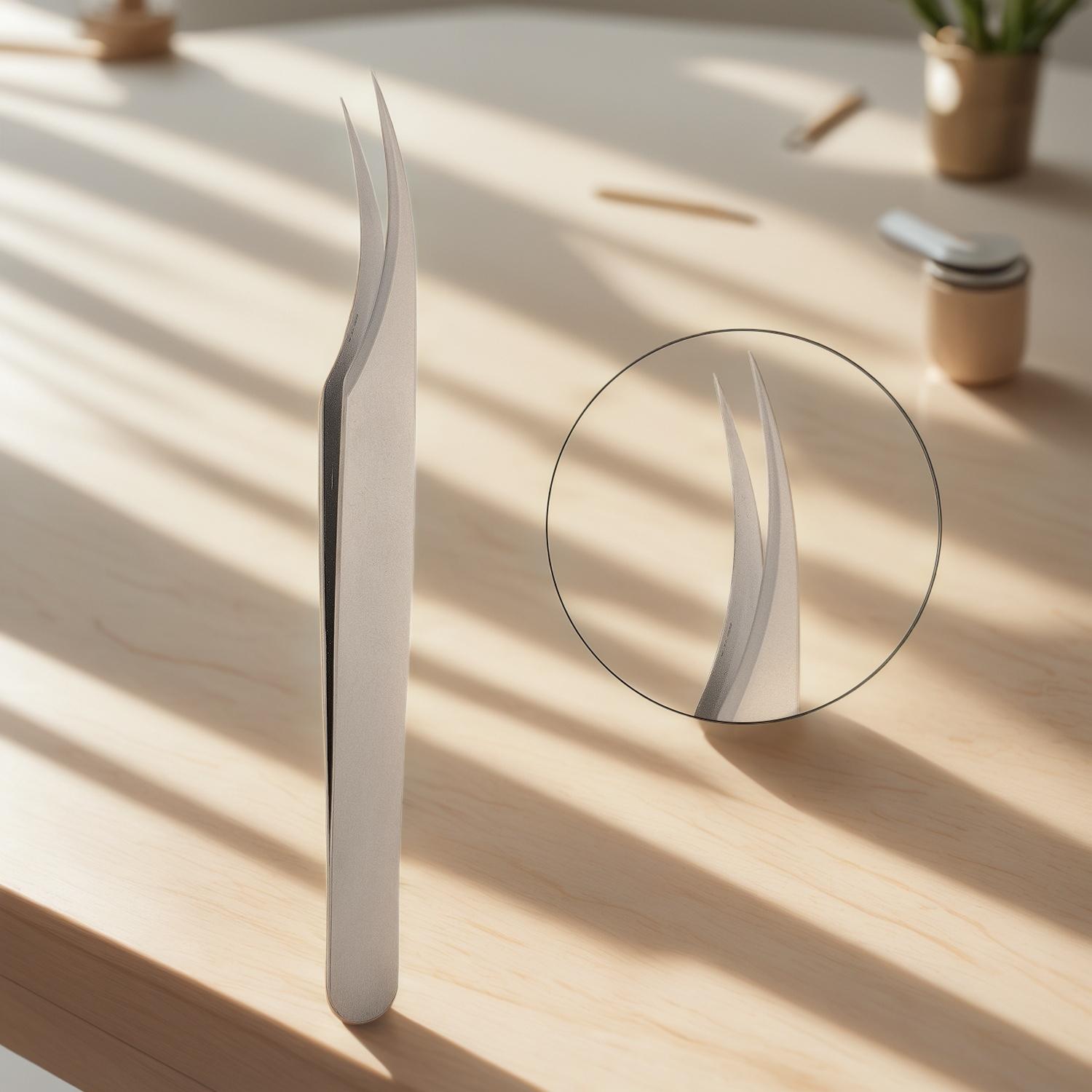
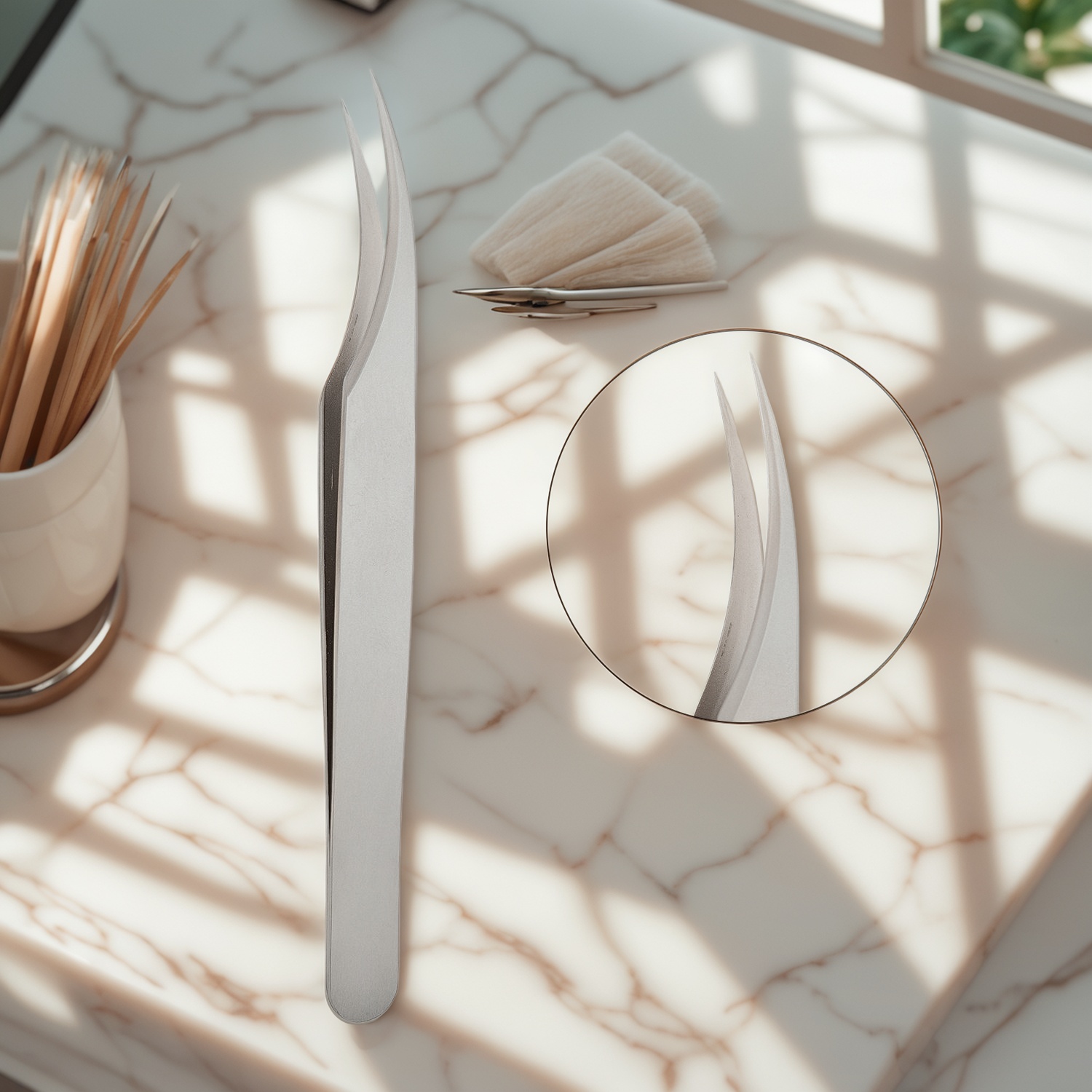
The original product information mentions curved and angled tips, both of which can serve different grooming preferences. Angled tips are commonly chosen for eyebrow shaping because the slant can help users approach hair from a comfortable angle. Curved tips may be preferred for certain delicate handling tasks, depending on the user’s technique and product positioning. Since exact use cases can vary by market, buyers should evaluate samples in realistic conditions instead of selecting only from photos.
- Tip alignment: The two ends should meet evenly so the tool can grip fine hair without excessive pressure.
- Edge feel: Tips should feel precise but not rough or unfinished when handled carefully.
- Hand comfort: The body shape should allow a stable hold for both quick touch-ups and longer grooming sessions.
- Tension: The tweezer should open and close smoothly, with enough resistance to feel controlled.
- Finish consistency: Surface color, polish or coating should match the intended retail quality level across the order.
These checks sound simple, but they are where many bulk sourcing decisions succeed or fail. A beautiful logo cannot compensate for poor tip contact, and a low unit cost becomes less attractive if customers return the product or stop trusting the brand.
What to Review Before Confirming Custom Branding
Customization can include visual identity, packaging direction and assortment planning. The exact available methods depend on the product and production arrangement, so the safest approach is to prepare a clear brand brief and evaluate what is suitable for the tweezer surface and target price point. Avoid treating customization as decoration only. The brand mark, color direction and packaging should all support the way the customer will buy and use the tool.
For retail channels, the packaging needs to explain the tool quickly. A customer should be able to identify the tip style, intended use and care expectations without confusion. For distributor catalogs, product naming and specifications should be consistent so sales teams can compare options accurately. For salon kits, packaging may need to be efficient and protective rather than overly decorative.
When reviewing a custom tweezer sample, consider these business questions:
- Does the logo or brand mark remain readable at the actual tool size?
- Does the finish match the brand position: professional, minimal, colorful, luxury or practical?
- Will the packaging protect the tweezer tips during shipping and storage?
- Can the same visual system work across related tools if the range expands later?
- Is the product description accurate without making unsupported claims?
Buyers building a broader grooming range can also compare related product collections to keep packaging, naming and category logic consistent across multiple beauty tools.
Quality Control Matters More Than the Lowest Bulk Tweezers Price
Bulk pricing is important, especially for distributors and private-label buyers working with margin targets. But price should be evaluated together with defect risk, usability and customer perception. A small tool with poor finishing can still create a large after-sales problem if many units reach customers with misaligned tips or inconsistent tension.
The supplied product information highlights Olimor Beauty’s internal quality control process, including inspection from raw material selection to final packaging. For B2B buyers, this type of process is valuable because tweezers depend on small tolerances. A slight difference in tip contact can change the user experience. Packaging checks also matter because tips can be damaged if the tool moves excessively during transport.
When comparing suppliers, a useful purchasing file should include more than a unit price. It should record sample comments, packaging notes, acceptable appearance standards and any market-specific labeling requirements. This helps procurement, marketing and quality teams make the same decision from the same evidence.
| Evaluation Area | What to Check | Why It Matters |
|---|---|---|
| Material and finish | Confirm stainless steel appearance, surface smoothness and consistency | Supports durability perception and retail presentation |
| Tip performance | Check alignment, grip and closing feel on sample units | Determines whether users trust the tool for detailed grooming |
| Customization | Review logo size, placement and readability | Protects brand image on a small product surface |
| Packaging | Check protection, labeling space and display suitability | Reduces transit damage and improves channel readiness |
| Batch consistency | Define acceptable variation before bulk production | Helps distributors maintain predictable customer satisfaction |
How Distributors Can Position Branded Tweezers
Distributors often need products that are easy to explain to different customer types. Custom tweezers can be positioned in several ways, depending on the sales channel. For professional beauty suppliers, the message may focus on precision, stainless steel construction and dependable daily use. For retail buyers, the emphasis may be on brow grooming, compact storage and attractive branded packaging. For promotional programs, the value may come from usefulness and long product life compared with disposable giveaways.
It is also worth considering assortment depth. A single tweezer style may be enough for a starter program, while a more developed line may include different tip shapes or finishes if demand supports it. The key is not to overcomplicate the range before confirming what customers actually buy. Start with the product configuration that best matches the core audience, then expand only when sales data or distributor feedback supports the decision.
For online listings, use accurate product language. Avoid broad claims that cannot be verified. Instead, describe the tip shape, material category, intended grooming use, packaging format and customization options that are actually confirmed. Clear product pages reduce buyer hesitation and help sales teams answer questions consistently.
Care Instructions That Improve Customer Satisfaction
Even a well-made tweezer performs better when customers care for it correctly. Including simple care guidance in packaging or product pages can reduce complaints and extend the perceived life of the item. Care instructions do not need to be long, but they should be practical.
- Wipe the tweezer clean after use to remove cosmetic residue or skin oils.
- Keep the tips protected during storage so they do not become bent or dulled.
- Avoid dropping the tweezer onto hard surfaces, as impact can affect alignment.
- Store in a dry place when possible, especially after cleaning.
- Use the tool for its intended grooming purpose rather than as a general household tool.
These points are especially useful for retail brands because they help the customer understand that precision tools require basic protection. They also support distributors selling to salons, where multiple tools may be stored together in busy workstations.
Building a Better Custom Tweezer Brief
A clear sourcing brief saves time and reduces misunderstandings. Before beginning a custom tweezers project, prepare your target user, sales channel, preferred tip style, branding artwork, packaging expectations and estimated order planning. You do not need to have every technical answer at the beginning, but you should know what the product must achieve commercially.
Include the brand position as well. A minimalist skincare brand, a professional brow supplier and a colorful youth-focused retailer may all choose different finishes and packaging even if the basic tool function is similar. The more clearly the intended market is defined, the easier it is to judge whether a sample is suitable.
If you are planning a private-label tweezer range, coordinating a distributor order or comparing beauty accessories for a catalog, you can send an inquiry with your target channel and customization needs. For questions about available beauty tool sourcing support, you can also contact Olimor. A practical discussion should focus on product use, quality expectations, packaging and brand presentation rather than price alone.
Custom tweezers can be a strong B2B product when they are sourced with attention to detail. By evaluating tip performance, stainless steel finish, branding suitability, packaging protection and quality consistency, businesses can offer a tool that customers actually keep and use. That long-term usefulness is where branded tweezers create their real value.
Tag: