

Custom Tweezers for Business: How to Source Better Branded Beauty Tools
Custom tweezers can be a small product with a serious impact on how customers remember a beauty business. For salons, brow studios, cosmetic retailers, grooming brands, and distributors, tweezers are easy to display, simple to bundle, and useful enough to earn repeat attention. The challenge is not simply ordering a low-cost tool with a logo on it. A good B2B tweezer program should consider grip, tip alignment, finish, packaging, reorder reliability, and how the product fits your wider brand offer.
For businesses that sell or use beauty tools every day, custom tweezers for business can support several goals at once: retail add-on sales, private label product lines, promotional kits, staff tools, and distributor assortments. The best sourcing decisions start with a clear understanding of the customer, the use case, and the quality level your brand is expected to represent.
Why Custom Tweezers Work Well for Beauty and Grooming Businesses
Tweezers are familiar, compact, and practical. Unlike trend-based beauty accessories, they remain relevant across brow shaping, lash preparation, facial hair grooming, personal care kits, travel pouches, and professional treatment rooms. This makes them a flexible product for both service-based and retail-focused businesses.
A salon may sell branded tweezers at checkout after a brow appointment. A cosmetics brand may include them in a gift set. A distributor may offer multiple colors or finishes to suit different retail customers. A grooming brand may use tweezers as part of a men’s care kit. The same core tool can be positioned differently depending on packaging, design, and price point.
Customisation also turns an everyday product into a brand reminder. A customer may use the tweezer weekly, keep it in a makeup bag, or carry it while traveling. When the tool feels solid and works accurately, the brand gains a positive association through repeated use. When it feels weak or misaligned, the opposite happens. That is why quality and branding need to be considered together.
Key Quality Factors to Check Before Buying B2B Tweezers
In professional beauty tools, small details make a noticeable difference. The original product information highlights stainless steel, ergonomic design, and internal quality control from raw materials to final packaging. Those are important starting points, but buyers should still define what quality means for their own market before placing a bulk order.
For tweezers, the most important performance area is the tip. The tips should meet evenly, hold fine hairs securely, and avoid sharp irregularities that make the tool uncomfortable or unsafe. A smooth spring action is also important: the tweezer should not feel too stiff for repeated use, but it should have enough resistance for controlled grip.
- Tip alignment: Check whether both ends meet evenly without gaps or crossing.
- Grip comfort: Evaluate whether the shape supports steady handling during detailed grooming work.
- Surface finish: Look for clean edges, consistent coating or polish, and no rough areas.
- Material suitability: Stainless steel is valued in beauty tools because it is durable and practical for routine care.
- Packaging condition: Confirm that tools arrive clean, protected, and presentation-ready.
- Batch consistency: Review whether multiple units have the same feel, tension, and finish.
For salons and brow professionals, comfort matters because staff may use tweezers many times in a day. For retailers and distributors, consistency matters because the end customer will judge the entire brand from one product experience. For promotional buyers, appearance may seem like the main priority, but a promotional tweezer still needs to function well enough to protect the brand reputation.
Branding Choices That Make Custom Tweezers More Sellable
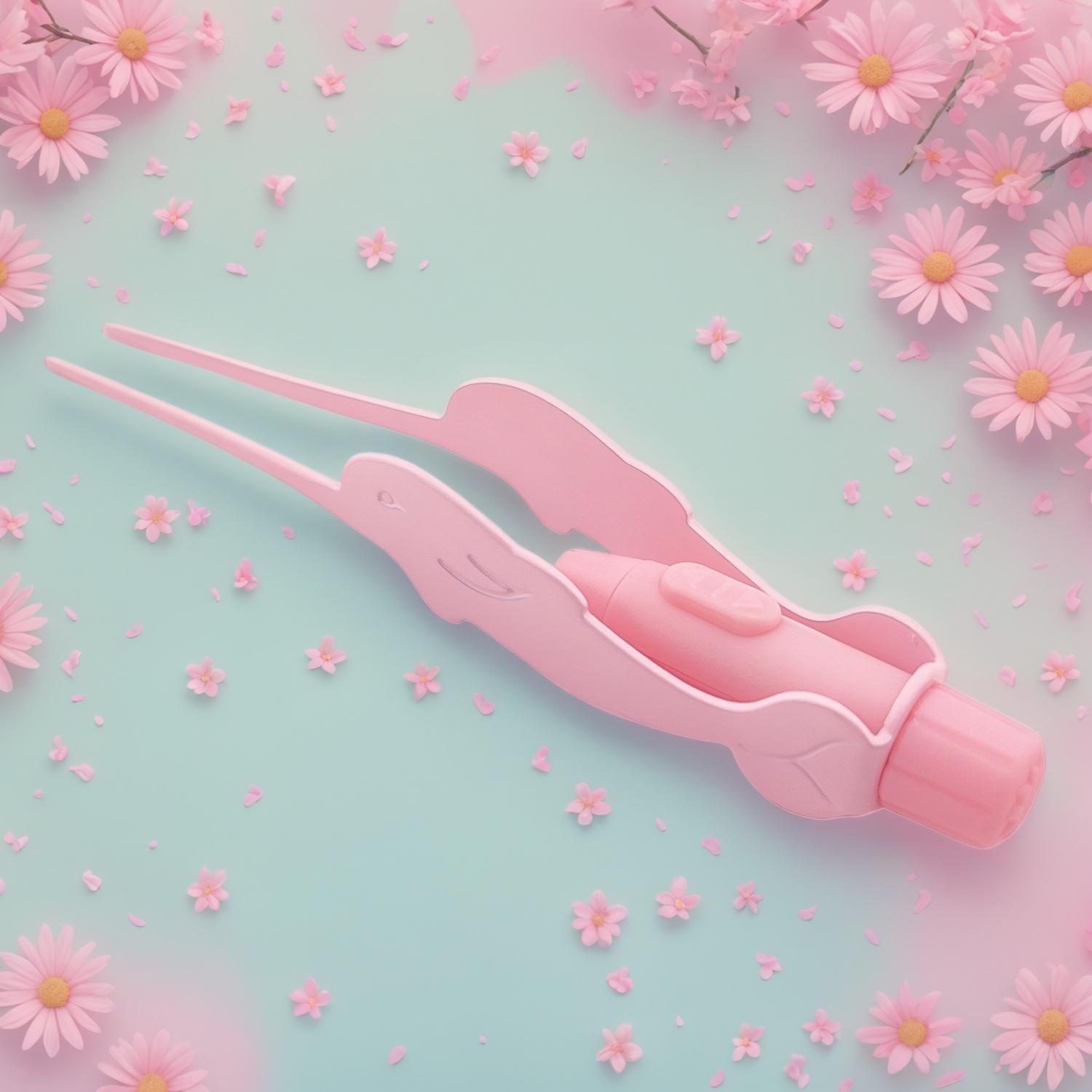
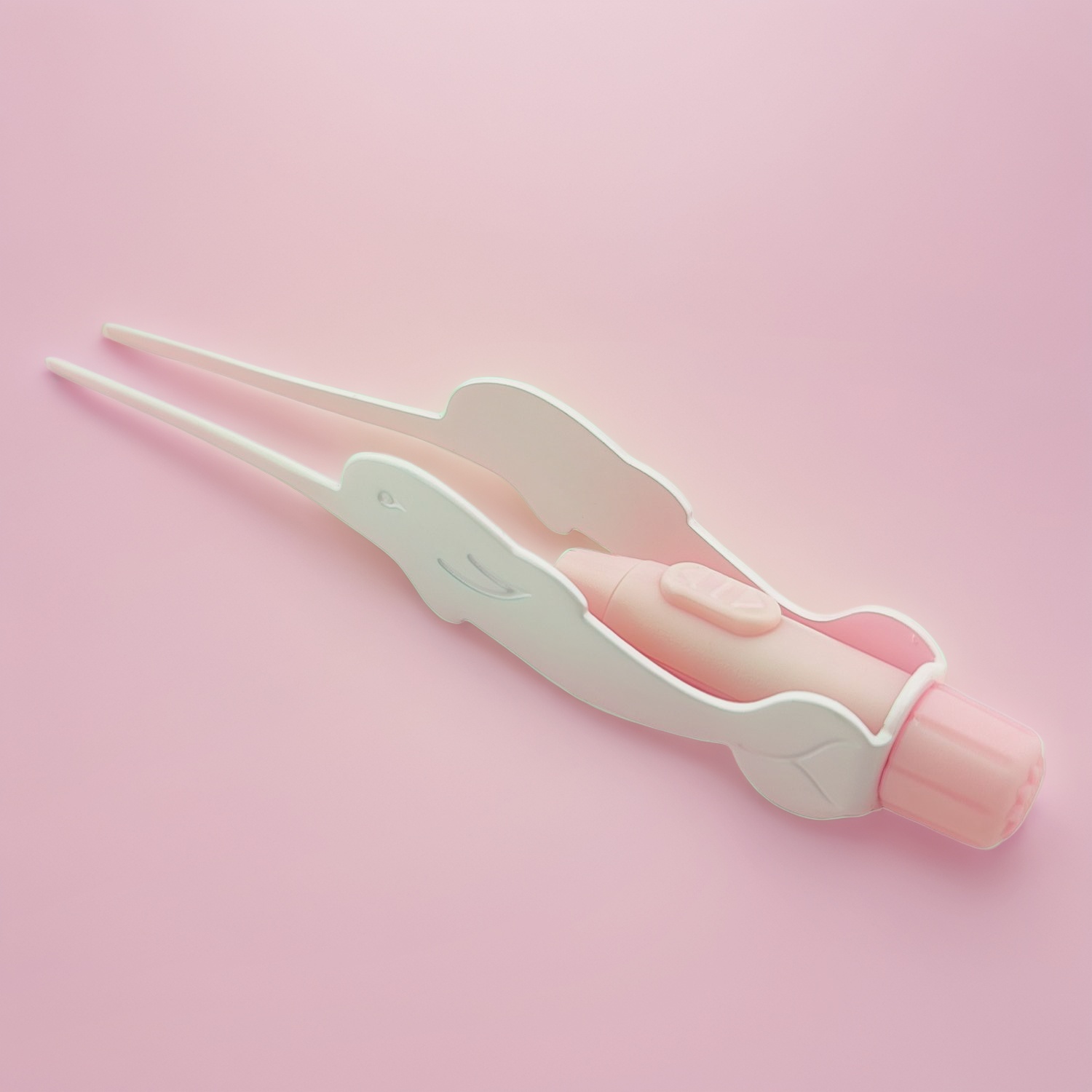
Branding is more than adding a name to the handle. The visual direction should match the sales channel and the type of buyer you want to reach. A playful design, such as the Pink Dolphin Tweezers mentioned in the product context, may suit giftable beauty products or youthful retail displays. A minimal metal finish may be better for professional salons or premium grooming kits. A bright color can help a product stand out online, while a classic finish may work better in spa or boutique environments.
Before deciding on a design, map the product to its purpose. If the tweezer is sold as a stand-alone retail item, packaging and shelf appeal become more important. If it is included in a kit, the color and finish should coordinate with the other tools. If it is for distributor resale, consider whether the design is broad enough for multiple customer types.
Useful branding decisions include:
- Logo placement: Choose an area that remains visible without interfering with grip.
- Color direction: Match brand guidelines, seasonal promotions, or retail display needs.
- Packaging style: Decide whether the product needs simple protection, a retail card, or a more giftable presentation.
- Assortment planning: Offer a focused range instead of too many variations that are hard to reorder.
- Market positioning: Decide whether the product is a value add-on, professional tool, private label item, or promotional gift.
For more context on available beauty tool categories, buyers can browse Olimor’s beauty tool products or review broader product collections when planning kits and assortments.
How to Evaluate Bulk Tweezers Price Without Buying Only on Cost
Bulk tweezers price is important for every business, but the lowest unit price is not always the best commercial choice. A tweezer that creates complaints, returns, or poor customer reviews can become more expensive than a better-made option. Instead of looking only at unit cost, evaluate the total value of the purchase.
For retailers, margin depends on landed cost, packaging, retail price, and sell-through speed. For salons, value is tied to durability and staff confidence. For distributors, reliability and repeat ordering are often as important as the first price quote. A product that can be reordered consistently is easier to include in a catalog or sales program.
| Buying factor | Why it matters | What to review |
|---|---|---|
| Unit cost | Directly affects margin and retail pricing | Compare cost against quality, packaging, and order volume |
| Tool performance | Influences customer satisfaction | Check tip closure, grip comfort, and finish consistency |
| Branding method | Shapes perceived value | Review logo clarity, color match, and durability expectations |
| Packaging | Protects the product and supports selling | Confirm whether packaging fits retail, kit, or promotional use |
| Reorder planning | Supports long-term sales programs | Keep approved samples, artwork files, and order records organized |
A practical way to compare options is to build a simple scoring sheet. Rate each sample for appearance, comfort, tip alignment, packaging, and expected retail fit. This helps remove guesswork and gives purchasing, marketing, and sales teams a shared basis for decision-making.
Smart Use Cases for Salons, Retailers, Beauty Brands, and Distributors
Different business types use custom tweezers in different ways. A salon or brow studio may focus on professional credibility and retail add-on sales. A beauty brand may want a branded accessory that complements cosmetics. A distributor needs items that are easy to present to multiple clients and simple to reorder. Understanding the use case helps determine design, packaging, and quantity planning.
Salons and brow studios: Branded tweezers can be sold after services or offered as part of aftercare recommendations. The key is performance, because the tool reflects the professional standard of the service provider.
Cosmetic and skincare brands: Tweezers can be bundled with lash, brow, or grooming-related products. A coordinated color and packaging style helps the tool feel like part of the brand family rather than a random accessory.
Retailers: Compact tools are useful for checkout displays, travel sections, gift sets, and seasonal promotions. Retail packaging should clearly communicate the product’s purpose and protect the tips from damage.
Distributors: Tweezers for distributors should balance broad appeal with enough differentiation to support sales conversations. Reliable supply, consistent quality, and clear product presentation are critical.
Maintenance Guidance to Reduce Complaints and Extend Product Life
Even a well-made tweezer performs best when customers care for it properly. Brands and retailers can reduce avoidable complaints by including simple care guidance on packaging, inserts, or product pages. The advice does not need to be complicated; it should focus on keeping the tips clean, protected, and aligned.
- Wipe the tips after use to remove residue from cosmetics, oils, or skin care products.
- Store the tweezer with a tip protector or in packaging when possible.
- Avoid dropping the tool, as impact can affect tip alignment.
- Do not use beauty tweezers for non-grooming tasks such as prying or scraping hard materials.
- Keep tools dry after cleaning to support long-term surface condition.
These instructions are especially helpful for private label tweezers because the end user associates the full experience with your brand. A small care note can protect both the product and the customer relationship.
Questions to Settle Before Placing a Custom Tweezer Order
A successful order starts with clear internal decisions. Before finalising artwork or quantities, identify the sales channel, target customer, desired price position, packaging expectations, and reorder plan. If multiple teams are involved, align marketing and purchasing early so the product is both attractive and commercially workable.
Consider these buyer checklist questions:
- Will the tweezers be used professionally, sold at retail, bundled in kits, or given as promotional items?
- What look best matches the brand: minimal, colorful, playful, premium, or practical?
- Does the packaging need to hang on a retail display, fit inside a kit, or ship in bulk?
- What quality checks will be used to approve the first sample and later batches?
- How will approved artwork, color references, and packaging details be documented for reorders?
- Who will review samples: purchasing, brand, sales, or professional users?
Olimor Beauty supports B2B buyers looking for custom beauty tools, including tweezers suitable for branded programs and distributor channels. To discuss a project direction, buyers can contact Olimor or send an inquiry with their preferred style, intended use, and packaging needs.
Building a Custom Tweezer Program That Supports Your Brand
The strongest custom tweezer programs combine practical performance with thoughtful branding. Stainless steel construction, ergonomic handling, consistent quality control, and suitable packaging all contribute to a product that customers can trust. At the same time, design choices such as color, logo placement, and presentation help the item fit your market rather than look like a generic tool.
For beauty brands, salons, retailers, and distributors, custom tweezers can be a focused, useful addition to a broader product strategy. Treat them as a real product, not just a small accessory. Define the buyer, test the feel, review the finish, protect the tips, and make sure the branding supports the way the product will actually be sold or used. That approach leads to a more reliable B2B purchase and a better experience for the customer who eventually holds the tool in hand.
Tag: