

How to Choose a Tweezers Manufacturer for Precision Beauty Tools
For a beauty brand, salon supplier, lash studio, or accessories distributor, tweezers are small tools with a large impact on customer satisfaction. A pair that looks polished but fails to grip consistently can create returns, complaints, and a weaker professional impression. A reliable tweezers manufacturer should do more than produce a sharp-looking tool; it should understand alignment, tension, surface finishing, packaging, and how the tool will be used in real beauty work.
Olimor Beauty focuses on beauty tools for professional and retail channels, including precision tweezers for detailed applications. If you are comparing options in the wholesale market, the right question is not simply which supplier offers the lowest unit price. The better question is whether the product, production control, and customization process support your brand over repeated orders. This guide explains what to review before choosing a long-term tweezers supplier and how to evaluate details that often separate dependable tools from generic bulk stock.
Start With the Real Use Case, Not Just the Shape
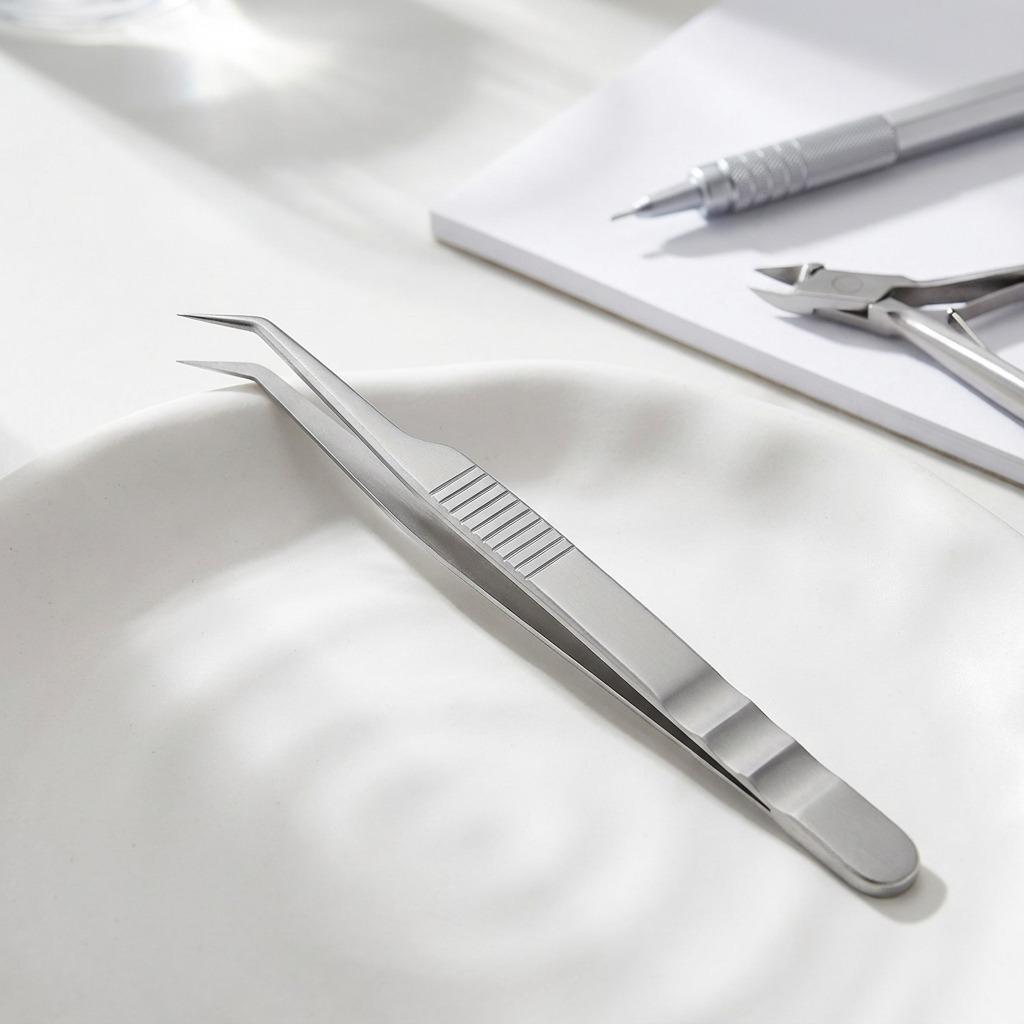
Tweezers may appear similar in a product photo, but performance depends heavily on the intended application. Lash placement, brow grooming, jewelry handling, nail art, and general beauty retail all require slightly different handling characteristics. For example, the Elite Curved Precision Tweezer mentioned by Olimor Beauty is positioned around controlled, detail-focused work, with a curved tip form that can help users approach fine items from an angle. That type of design is different from a broad, flat tweezer intended for general gripping.
Before comparing factories, define what the buyer or end user actually needs. A lash artist may prioritize precise tip contact and reduced hand fatigue during long sessions. A retail beauty brand may care about a comfortable grip, attractive finishing, and consistent packaging presentation. A distributor may prioritize repeatable quality across cartons and low defect rates at receiving inspection. When these use cases are clear, it becomes easier to judge whether a manufacturer is providing an appropriate tool rather than a generic item with a new logo.
Key Quality Points to Check in Precision Tweezers
Quality in tweezers is visible in small details. The tool should close cleanly, grip predictably, and feel controlled in the hand. Olimor Beauty emphasizes stainless steel construction, ergonomic design, curved pointed tips, and textured handles in its tweezers positioning. These are useful features, but buyers should still evaluate every production sample with practical tests rather than relying on appearance alone.
- Tip alignment: The two tips should meet evenly when light pressure is applied. Misalignment can cause slipping or uneven pickup.
- Grip consistency: Test the tweezer on fine fibers, lashes, or small beauty accessories similar to the final use case.
- Tension: The tweezer should not feel too stiff or too loose. Excessive tension can tire the hand; weak tension can reduce control.
- Edge and point safety: Precision tips should be fine and accurate without rough burrs or inconsistent edges.
- Handle texture: Textured handles can improve control, especially in salon or detailed craft environments.
- Finish uniformity: Metallic finishes should look even and resist obvious marks during normal handling and packaging.
- Packaging fit: Inserts, sleeves, or boxes should protect the tips from bending during transport.
These checks are simple, but they reveal whether a supplier understands the product beyond basic stamping or finishing. If a sample performs well but bulk goods vary widely, the issue is usually production control rather than design concept.
Comparing Wholesale Tweezers Suppliers Beyond Unit Price
The wholesale tweezers market includes many bulk exporters, trading companies, and beauty tool factories. Some offer plain, unbranded stock for quick purchasing, while others provide custom logo tweezers and more controlled presentation options. A low price may be useful for certain promotional programs, but it should be weighed against the cost of inconsistent tension, weak finishing, poor packaging, or customer dissatisfaction.
For brand buyers, the supplier comparison should include the complete purchasing experience: sample approval, logo placement, finishing consistency, carton labeling, packaging protection, and communication during production. Olimor Beauty’s product direction includes customization and export-oriented quality control, making it relevant for buyers who want tweezers that can support branded retail or professional use rather than anonymous bulk resale.
| Evaluation Area | Why It Matters | What to Review |
|---|---|---|
| Sample accuracy | Prevents surprises in bulk production | Tip shape, tension, finish, logo position, packaging |
| Material and finish | Affects durability and user confidence | Stainless steel use, surface smoothness, visible defects |
| Customization process | Protects brand presentation | Logo method, artwork approval, color or finish limitations |
| Inspection approach | Reduces inconsistent shipments | Checks from raw material through finished packaging |
| Reorder consistency | Supports long-term wholesale planning | Ability to match approved samples across repeat orders |
Custom Logo Tweezers: Branding Without Sacrificing Function
Custom logo tweezers can help a beauty brand create a more complete product line, but branding should never interfere with the tool’s function. A logo that looks attractive in a mockup may not be suitable if it is placed where the user grips the handle, if it wears quickly, or if it disrupts the overall finish. Good customization starts with understanding where the brand mark belongs and how it will appear on the selected surface.
When planning custom logo tweezers, review artwork size, contrast, finish compatibility, and packaging design together. A metallic tweezer with a subtle logo may suit a premium brow or lash brand, while a brighter finish may suit retail beauty accessories. However, the chosen look should still protect the practical details: clean tip closure, comfortable grip, and safe packaging. Buyers can explore broader beauty tool products to consider whether tweezers should match other items in a coordinated line.
Manufacturing and Inspection Questions Worth Asking
A dependable tweezers manufacturer should be able to explain how it controls quality without hiding behind vague claims. Buyers do not need to know every technical step of production, but they should understand what is checked, when it is checked, and how nonconforming pieces are handled. This is especially important for precision tweezers, where a tiny alignment issue can make the tool frustrating to use.
- Confirm the approved sample: Keep one signed or clearly documented reference sample for comparison with bulk goods.
- Define critical defects: Tip misalignment, weak closure, burrs, poor finish, loose packaging, and incorrect logo placement should be treated as important issues.
- Review packaging protection: Precision tips need protection during storage and export shipping, not only a good appearance at packing.
- Check batch consistency: Pull pieces from different inner boxes or cartons, not only from the top of one box.
- Document acceptable variation: Minor finish shade differences and logo tolerance should be clarified before production when customization is involved.
These steps help both the buyer and manufacturer avoid misunderstandings. They also make repeat orders easier because expectations are not recreated from memory each time.
Choosing a Long-Term Tweezers Supplier
A long-term supplier relationship is valuable when the product is part of an ongoing beauty tool program. Reordering should not feel like starting from zero. The manufacturer should be able to maintain the approved style, communicate clearly about available customization, and support consistent packaging requirements. For distributors and brand owners, this consistency can matter more than a small difference in initial unit cost.
Olimor Beauty is a relevant partner for buyers seeking wholesale tweezers, custom logo options, and beauty tool sourcing support. The best results come when buyers provide clear target use cases, expected presentation level, and inspection priorities from the start. If you are planning a broader range, reviewing Olimor’s product collections can help you think about how tweezers fit with other beauty accessories.
Care, Handling, and After-Sale Considerations
Even well-made tweezers need proper handling. Retail packaging should protect fine tips, and salon users should avoid dropping the tool or storing it loosely with heavier metal items. For professional use, cleaning and storage routines should follow the standards appropriate for the service environment. A damaged tip can make even a high-quality tweezer feel inaccurate, so protective caps, sleeves, or fitted packaging are practical details rather than decorative extras.
For brand owners, after-sale feedback is also a source of product improvement. Track whether customers mention tip alignment, grip strength, comfort, finish durability, or packaging damage. These comments can guide future orders and help refine the exact tweezer style your audience prefers. If a product will be sold under your own brand, a short care note in the packaging can reduce misuse and improve customer satisfaction.
Final Buying Checklist
Before placing a wholesale tweezer order, focus on the combination of product function, brand presentation, and repeatability. A strong manufacturer should provide a sample that performs well, customization that looks professional, and quality checks that support consistent bulk delivery. The goal is not to choose the most complicated tweezer; it is to choose the right one for the buyer’s intended market.
Use this final checklist before moving forward: confirm the tweezer shape fits the use case, test grip and tension with realistic materials, review stainless steel and finish expectations, approve logo placement with a physical or production-ready sample, check packaging protection, define inspection priorities, and confirm how reorders will match the approved sample. For specific sourcing questions or to discuss custom logo tweezers, you can contact Olimor or send an inquiry with your target application and branding requirements.
Tag: