

Choosing a Tweezers Manufacturer for Quality, Design and Reliable Wholesale Supply
For beauty brands, salon suppliers, private-label buyers and grooming tool distributors, tweezers are small products with a large impact on customer satisfaction. A tweezer that looks polished but fails to grip fine hair, slips during use or corrodes after cleaning can quickly damage trust in a product line. Choosing the right tweezers manufacturer is therefore not only a sourcing task; it is a decision about precision, repeat purchase potential and brand reputation.
Olimor Beauty focuses on beauty tools for buyers who need practical performance as well as marketable presentation. When evaluating stainless steel tweezers, custom logo tweezers or wholesale tweezers for distribution, buyers should look beyond surface appearance and compare tip alignment, tension, grip comfort, finishing consistency and inspection process. The best supplier for your business is the one that can support the way your customers actually use the tool: daily brow shaping, salon grooming, lash work, hair removal or detailed beauty care.
What Makes a Tweezer Manufacturer Worth Comparing?
A reliable tweezers manufacturer should understand that the tool’s performance depends on small details. Two tweezers may appear identical in a catalog image, but the user experience can be completely different if the tips are not accurately aligned, the arms flex unevenly or the gripping surface feels unstable. For professional and retail buyers, these details affect reviews, returns and repeat orders.
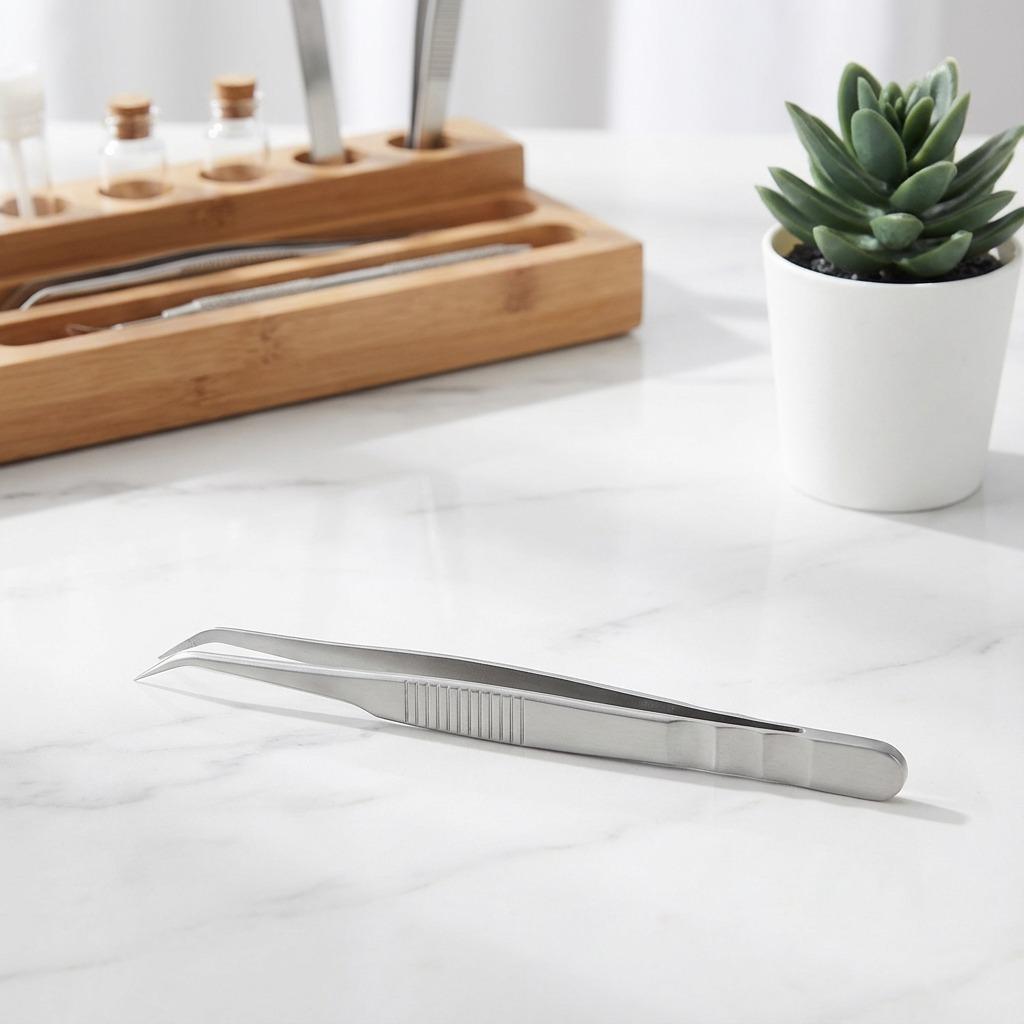
Olimor Beauty’s tweezers offering includes stainless steel tweezers with angled tips, designed for accurate grooming work. Angled tips are popular because they allow the user to approach the hair at a controlled angle while still seeing the target area clearly. For brow shaping and facial hair removal, that visibility matters. Buyers comparing suppliers should also consider whether the tweezer body provides a secure hold. Ergonomic grooves or grip-friendly shaping can help reduce slipping, especially when the tool is used repeatedly in a salon or beauty counter environment.
Quality should not be judged by a single sample alone. A well-made sample is useful, but the real question is whether bulk production can remain consistent. When reviewing beauty tool products, buyers should compare how each supplier manages raw material inspection, production checks and packaging review before shipment.
Key Selection Criteria for Wholesale Tweezers
Wholesale tweezers are often purchased for retail shelves, e-commerce bundles, salon supply programs or promotional beauty kits. In each case, the buyer needs consistency across a batch, not just a good-looking product. A small variation in tip contact or tension can create uneven user feedback across the same SKU.
Use the following criteria when shortlisting a tweezers supplier:
- Material suitability: Stainless steel is commonly chosen for tweezers because it supports durability, cleaning and corrosion resistance when properly finished and maintained.
- Tip alignment: The two tips should meet evenly without visible offset. Poor alignment makes it difficult to grip fine or short hairs.
- Tension feel: The arms should close smoothly with enough resistance for control, but not so much that repeated use becomes tiring.
- Edge finishing: Tips should feel precise, not rough or overly sharp against the skin. Fine-tuned edges support better gripping performance.
- Grip security: Grooves, texture or body shaping can help the user maintain control during detailed grooming.
- Cleaning practicality: A smooth finish and corrosion-resistant construction make the tool easier to maintain in daily beauty use.
- Packaging compatibility: Retail buyers should confirm whether the tool presentation suits their intended channel, whether that is a carded display, pouch, box or beauty kit.
Wholesale decisions should also account for the end user. A brow studio may prioritize precision and hand comfort, while a mass retail program may need clean presentation, clear instructions and stable batch quality. For a product bundle, the tweezer may need to match other items visually across the same collection. Buyers can explore related product collections to think through how tweezers fit into a broader beauty tool assortment.
Custom Logo Tweezers: Branding Without Sacrificing Function
Custom logo tweezers can be a strong addition to a private-label beauty line, salon merchandise program or promotional kit. However, branding should never come at the expense of the tweezer’s core function. A logo may help the product look proprietary, but the customer will judge the tool by how well it grips, how comfortable it feels and how long it remains usable with proper care.
When planning custom logo tweezers, buyers should consider logo placement, finish, contrast and packaging as part of one complete presentation. A subtle mark on a polished or matte-looking surface may suit a professional beauty brand, while a more visible logo may be useful for promotional distribution. The right approach depends on the sales channel and the buyer’s positioning.
Before confirming a custom order, prepare a simple branding checklist:
- Confirm the tweezer style and tip type required for the target use.
- Decide whether the logo should be discreet, retail-facing or promotional.
- Check that the marked area does not interfere with grip comfort.
- Review the finish and color direction against the rest of the product range.
- Confirm packaging artwork, barcode needs and any market-specific labeling requirements.
- Inspect a pre-production sample for both visual accuracy and gripping performance.
Olimor Beauty supports custom logo tweezers for buyers who need brand-specific presentation. For new sourcing projects, it is useful to share intended quantity range, target market, packaging expectations and whether the tweezers will be sold alone or as part of a set. You can send an inquiry with project details so the conversation begins with the practical requirements that affect product development.
Precision, Grip and Tip Design: Details Buyers Should Test
The most important test for tweezers is simple: can they grip the type of hair or material your customer expects to remove or handle? Beauty tweezers are commonly used for eyebrow shaping and fine facial grooming, where short hairs and precise placement matter. Angled tips can be especially useful because they combine access and visibility. Still, the angle alone is not enough. The two tips need accurate contact and balanced pressure.
During sample evaluation, test the tweezer in more than one way. Close the tips slowly and look for even contact. Use the tool on fine hair or a similar test fiber to see whether it grips without cutting or sliding. Hold the tweezer for a few minutes to judge comfort, especially if the product is intended for professionals. Check whether the surface provides secure handling when the fingers are dry and when there may be light skincare residue present.
The following comparison table can help organize sample feedback across suppliers:
| Evaluation point | What to look for | Why it matters |
|---|---|---|
| Tip contact | Tips meet evenly without gaps | Improves grip on fine or short hairs |
| Tension | Smooth closing with controlled resistance | Reduces hand fatigue and improves accuracy |
| Grip area | Secure hold through grooves or shaping | Helps prevent slipping during detailed work |
| Finish | Clean surface with no rough edges | Supports user comfort and retail presentation |
| Cleaning | Surface is easy to wipe and maintain | Important for salon and repeated personal use |
This type of structured evaluation helps buyers avoid choosing only by price or appearance. It also creates clearer communication with the manufacturer if adjustments are needed before bulk production.
Quality Control Questions for Export-Ready Tweezers
Export buyers need predictable product quality, packaging readiness and communication throughout the order process. For tweezers, quality control should cover both functional inspection and cosmetic inspection. Functional checks focus on tip alignment, gripping performance, tension and safe finishing. Cosmetic checks focus on surface consistency, logo placement, packaging condition and overall presentation.
Useful sourcing questions include: How are stainless steel materials checked before production? At what stage are tip alignment and tension reviewed? How is logo placement confirmed for custom logo tweezers? What packaging checks are completed before shipment? How are defective pieces separated from acceptable goods? These questions are neutral and practical; they help establish whether a supplier has a repeatable process rather than relying on random inspection at the end.
Olimor Beauty emphasizes quality checks from raw materials to packaging. For buyers building a long-term wholesale program, this type of process attention matters because a stable supply chain depends on repeatability. A buyer may tolerate a small issue during sampling if it is corrected clearly, but recurring inconsistency in bulk orders can create costly after-sales problems.
Maintenance Guidance That Improves Customer Satisfaction
Even well-made tweezers need proper care. Retail buyers and distributors can reduce customer complaints by including simple maintenance instructions on packaging, inserts or product pages. Cleaning guidance is especially important for beauty tools that touch the skin.
Recommend that users wipe the tweezer after use, keep the tips dry before storage and avoid dropping the tool on hard surfaces because impact can affect tip alignment. If the tweezers are used in a salon environment, they should be cleaned according to the salon’s hygiene practices and local requirements. The tips should be protected in storage so they do not become bent or blunted by contact with other tools.
Clear care instructions also support the value of stainless steel tweezers. Corrosion resistance and easy cleaning are advantages, but they work best when users maintain the tool sensibly. For brands, this is an inexpensive way to improve the ownership experience.
Building a Long-Term Tweezers Supply Partnership
The right tweezers manufacturer should be able to support both product performance and commercial planning. For a buyer, that means more than receiving a quotation. It means discussing the intended market, the tweezer style, logo needs, packaging format, inspection expectations and future reorder consistency. A supplier that understands these details can help reduce misunderstandings before production begins.
When comparing manufacturers, avoid focusing only on the lowest unit cost. Tweezers that slip, feel uncomfortable or arrive with inconsistent finishing may cost more over time through returns, discounts and damaged customer trust. A better approach is to evaluate total value: functional precision, material suitability, finishing quality, branding options, packaging readiness and communication.
If you are planning a wholesale tweezers order or developing custom logo tweezers for a beauty brand, prepare your target use case and preferred presentation before requesting samples. To discuss options with Olimor Beauty, you can contact Olimor with your sourcing goals, market channel and branding requirements. A clear brief helps match the tweezer design to the people who will actually use it.
Tag: