

How to Choose a Tweezers Manufacturer for Professional Beauty Tools
For beauty brands, lash supply distributors, salon chains, and private-label buyers, tweezers are small tools with large consequences. A tweezer that feels balanced, closes evenly, and maintains tip alignment can support fast, clean work. A poorly made one can slow technicians down, damage delicate lash work, or create inconsistent customer feedback across batches.
Olimor Beauty manufactures precision tweezers for professional beauty use, including designs suited to lash extensions and detailed grooming. The right sourcing decision is not only about finding an attractive finish or a low unit cost. It requires looking closely at material choice, tip geometry, hand comfort, quality inspection, customization options, and the manufacturer’s ability to support repeat wholesale orders. This guide explains what serious buyers should evaluate before adding professional tweezers to a product line or distributor catalog.
Start with the Real Use Case: Lash Work, Grooming, or Multi-Purpose Retail
Before comparing tweezer styles, define exactly how the tool will be used. Lash extension artists may need different tip shapes for isolation, classic placement, volume fan creation, or hybrid application. Retail grooming customers may care more about clean brow shaping, splinter removal, or general household precision. A distributor serving both professional and consumer channels may need several styles instead of one universal option.
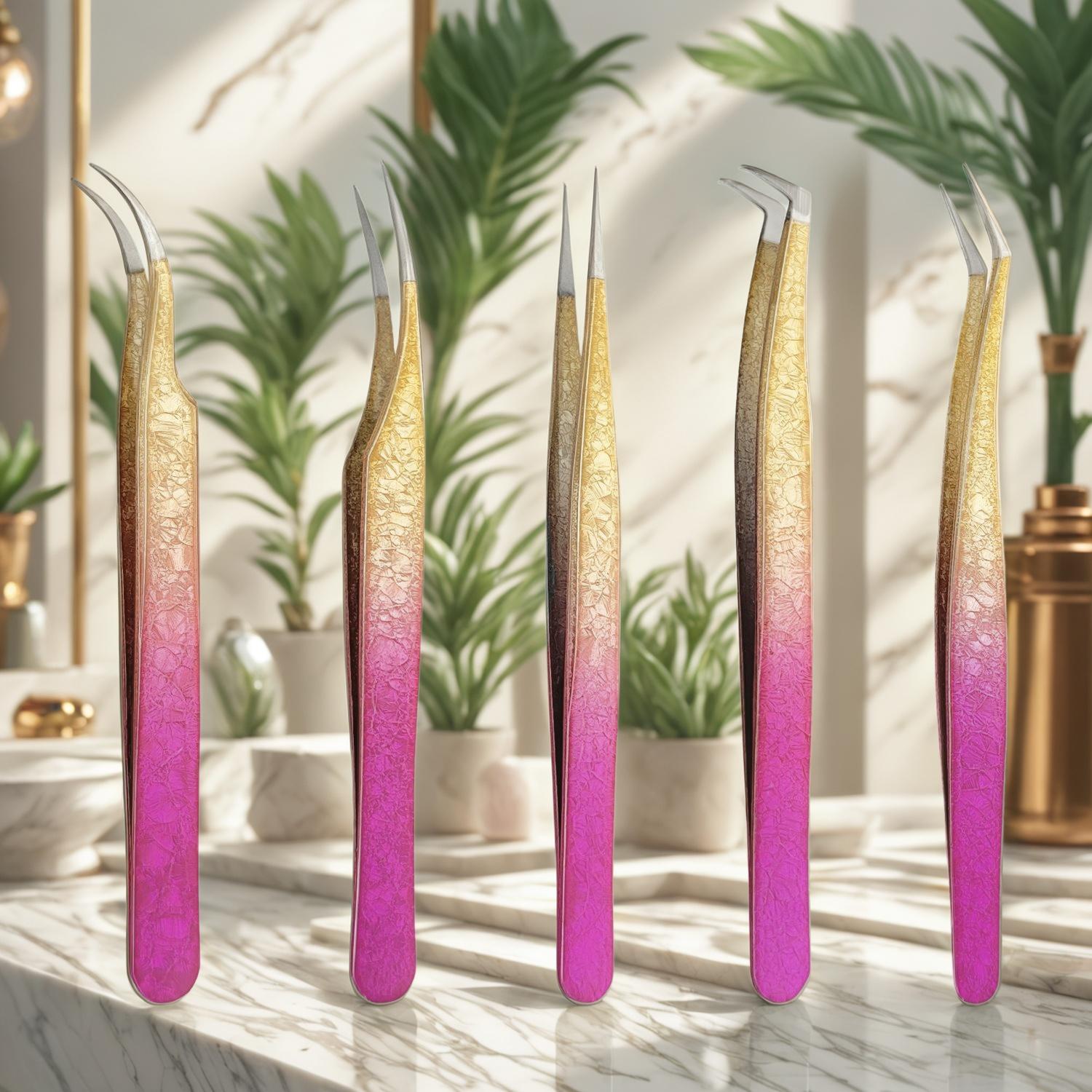
The original Olimor Beauty range described curved, straight tip, and angle tweezers for classic, volume, or hybrid lash applications. Those general categories are useful starting points, but buyers should still evaluate each tool in hand. A tweezer that performs well for one technician’s grip style may not be ideal for another. For professional channels, sampling multiple shapes is often more reliable than choosing based on appearance alone.
- Curved tweezers: often considered for lash placement, separation, or work that benefits from visibility around the tip.
- Straight tip tweezers: useful where direct alignment and simple control are priorities.
- Angled tweezers: commonly selected for detailed grooming or lash tasks that require access at a specific working angle.
- Textured grip tweezers: helpful for users who work for long sessions and need more secure handling.
If your business is comparing product options now, browse Olimor’s beauty tool products to understand how different tool categories can fit into a broader professional assortment.
Material and Finish: What Buyers Should Look For
The supplied product information identifies premium stainless steel as a key material for Olimor Beauty tweezers. Stainless steel is widely used in professional beauty tools because it can support durability, corrosion resistance, and a clean working surface when properly manufactured and maintained. For wholesale buyers, the important question is not only whether stainless steel is used, but how the finished tweezer performs after repeated handling, cleaning, packaging, and transport.
Finish also matters. The existing Olimor article mentioned an ombre gradient collection transitioning from gold to magenta. Decorative finishes can make a product stand out in retail displays, salon kits, and private-label presentations. However, appearance should never replace performance checks. The coating or surface treatment should feel smooth, should not interfere with tip closure, and should be consistent across the visible areas of the tool.
When reviewing stainless steel tweezers, include these practical checks:
- Tip closure: the tips should meet cleanly without a visible gap when light pressure is applied.
- Alignment: both sides should remain even from the handle through the tip.
- Spring tension: resistance should be firm enough for control but not so stiff that it causes fatigue.
- Surface finish: edges should be smooth, with no rough burrs or distracting marks.
- Grip area: textured areas should improve control without feeling sharp.
- Packaging compatibility: tips should be protected so they do not bend or dull during shipping.
Tip Precision Is the Core Quality Measure
For a professional tweezer, the tip is the product. Attractive colors, logo placement, and packaging can support sales, but repeat customers usually return because the tweezer closes accurately and holds fine material securely. For lash work, technicians depend on predictable contact at the tip. For grooming, users expect the tool to grasp fine hairs without slipping or cutting them.
A strong manufacturer should be able to discuss the manufacturing steps and quality checks used to control tip performance. Olimor Beauty’s existing product information emphasizes precise manufacturing steps and internal quality assurance, including raw material inspection and final packaging checks. Buyers can use that as a framework for their own evaluation process: inspect incoming samples, test multiple units from the same batch, and document any variation in closure, tension, and finish.
One useful approach is to create a simple sample scorecard. Rate each tweezer from 1 to 5 on tip alignment, closing force, grip comfort, finish consistency, and packaging protection. This converts subjective feedback from lash artists or retail testers into structured purchasing data. If several team members test the same samples, patterns become easier to see.
Wholesale Buyers Need Batch Consistency, Not Just a Good Sample
A single sample can show what is possible, but wholesale success depends on repeatability. Distributors and private-label brands need products that remain consistent after larger orders, seasonal promotions, and reorder cycles. Inconsistent tension or uneven finish can lead to returns, poor reviews, and extra inspection work at the buyer’s warehouse.
When evaluating a tweezers manufacturer, focus on the controls that protect consistency from raw material to shipment. Olimor Beauty describes internal quality assurance from raw material inspections to final packaging. Buyers can build their purchase requirements around measurable expectations without inventing unnecessary complexity.
| Evaluation Area | Why It Matters | Practical Buyer Check |
|---|---|---|
| Material condition | Supports durability and corrosion resistance | Review sample surface, edges, and cleaning response |
| Tip alignment | Determines gripping accuracy | Check multiple units under good lighting |
| Tension consistency | Affects hand comfort during long sessions | Compare opening and closing feel across samples |
| Grip texture | Helps reduce slipping during detailed work | Test with dry and gloved hands where relevant |
| Packaging protection | Prevents bent tips in transit | Confirm tip guards, inserts, or secure placement |
For buyers planning a wider assortment, reviewing related product collections can help align tweezer finishes, packaging direction, and companion beauty tools into a more coherent catalog.
Custom Logo Tweezers: Branding Without Compromising Function
Custom logo tweezers can be valuable for salons, lash academies, distributors, gift sets, and private-label beauty brands. A logo turns a functional tool into a visible brand asset, especially when technicians use it daily in front of clients. Olimor Beauty’s supplied information confirms that custom logo tweezers are part of its offering.
The most important sourcing principle is simple: branding should not interfere with performance. Logo placement should avoid the precision tip area and should not create roughness where the user grips the tool. If the tool uses a decorative finish, logo contrast and durability should be reviewed on a physical sample rather than judged only from a digital mockup.
Before approving a custom logo order, prepare artwork in the requested format and confirm these details internally: logo size, position, color or marking style, packaging artwork, barcode needs, warning text if applicable, and the exact tweezer shape being customized. Keeping these decisions organized reduces revision cycles and helps the finished item match your retail or professional channel requirements.
Ergonomics for Long Lash and Grooming Sessions
Hand fatigue is a real concern for lash professionals who use tweezers throughout the workday. The existing Olimor description mentions a secure textured grip intended to reduce hand fatigue during long sessions. Buyers should treat ergonomics as a core product feature, not a secondary detail.
Good tweezer ergonomics involve more than grip texture. The length, weight distribution, spring tension, width, and surface feel all influence comfort. A tool that is too stiff may strain the hand. A tool that is too loose may reduce control. A surface that is too smooth may slip, while an overly aggressive texture can irritate fingers over time.
Professional testers should use samples in realistic conditions. For lash buyers, that may mean isolation and placement practice over an extended period rather than a quick pinch test. For retail grooming buyers, it may mean testing on fine and coarse hair types. Structured feedback from actual users is one of the best ways to avoid selecting a tweezer that looks good but performs poorly in daily work.
Maintenance Guidance Protects the Customer Experience
Even well-made stainless steel tweezers need proper care. Including clear maintenance guidance with wholesale or private-label tools can reduce avoidable complaints and extend the useful life of the product. Maintenance instructions should be accurate for the specific finish and packaging selected.
General buyer-facing care guidance can include wiping the tool after use, keeping tips protected when stored, avoiding drops, and separating precision tweezers from heavier tools that may bend the tips. If the tweezer is used in a professional setting, the salon or technician should follow the cleaning and hygiene procedures required for their local business environment and product application.
Storage matters because tweezer tips are delicate. A small deformation can change how the tool closes. Packaging with a protective sleeve, cap, or secure insert can help preserve the tip during shipping and after purchase. For retail sets, visible protection also communicates that the tool is a precision instrument rather than a disposable accessory.
Building a Long-Term Supplier Relationship
The best tweezers manufacturer for your business is not simply the one that can produce an attractive first order. It is the manufacturer that can support your product goals over time: stable quality, practical customization, clear communication, and suitable packaging for your channel. Olimor Beauty presents itself as a long-term tweezers supplier for buyers seeking consistent export-quality beauty tools.
For a new sourcing project, prepare a concise specification sheet before starting discussions. Include the intended market, tweezer shape, finish preference, logo needs, packaging type, quality expectations, and any retail compliance requirements your own company must meet. A clear brief helps both sides evaluate feasibility and prevents misunderstandings later.
If you are ready to discuss a professional tweezer program, you can send an inquiry with your project details or contact Olimor for guidance on available beauty tool options. The strongest results come from matching the right tweezer design to the real working habits of your customers, then protecting that performance through careful quality checks and packaging decisions.
Tag: