

Wholesale Beauty Tools Buying Guide: Eyelash Curlers, Pedicure Supplies and Personal Care Tools
Buying beauty tools wholesale is different from buying a few items for personal use. A salon, retailer, distributor, beauty school, spa operator or online seller needs products that feel consistent in the hand, work reliably during repeat handling, present well to customers and fit the intended sales channel. The right buying decision is not only about unit cost; it is about comfort, material choice, finishing, packaging, quality checks and whether the assortment solves real customer needs.
This guide focuses on three practical wholesale categories: eyelash curlers bulk, pedicure supplies wholesale and personal care tools wholesale. Each category has a different use case, so buyers should not apply the same checklist to every item. Eyelash curlers are used close to the eye and require smooth control. Pedicure supplies are used for longer grooming routines and need dependable surfaces and comfortable handling. Personal care tools cover broader daily grooming needs, so range planning and clear product purpose are especially important.
Olimor supports wholesale buyers looking for beauty tool categories such as eyelash curlers, pedicure tools and everyday grooming accessories. You can review current beauty tool options through the Olimor product range when comparing categories for a retail, salon or e-commerce assortment.
Start With the Customer, Not the Catalog
The best wholesale beauty tool selection starts with the end user. A makeup beginner, a salon technician, a beauty school student and a distributor buying for resale may all purchase similar tools, but they evaluate them differently. A consumer may first notice color, packaging and ease of use. A professional user will pay more attention to repeated handling, cleaning, storage and long-term comfort. An e-commerce seller may care about whether the item photographs clearly, ships safely and can be explained in a short product description.
Before ordering, define the main selling channel and daily use case. For quick makeup preparation, eyelash curlers may be a strong starting point because they are compact, familiar and easy to demonstrate. For spa-at-home and nail care customers, files, buffers and related pedicure supplies may create a more complete grooming routine. For travel, gift sets or broad retail assortments, personal care tools can support add-on sales when the purpose of each item is clear.
A useful assortment does not simply include more tools. It includes tools that do not overlap unnecessarily. Group products by customer need: lash and brow care, nail and foot care, facial grooming, travel maintenance, salon backbar supply or giftable self-care sets. This helps purchasing teams avoid stocking low-value duplicates and makes the final display easier for customers to understand.
Why Eyelash Curlers Work Well for Bulk Beauty Tool Orders
Eyelash curlers are a practical wholesale item because they appeal to several audiences at once: makeup users, salons, beauty retailers, gift set buyers and private-label accessory programs. They are small, easy to package, simple to explain and often requested as an everyday makeup accessory. When selected carefully, they can become a steady replenishment product rather than a one-time novelty purchase.
Because eyelash curlers are used close to the eye, customers judge them quickly. A good curler should open and close smoothly, feel controlled in the hand and apply pressure evenly through the pad. For wholesale buyers, the focus should be on batch consistency: the frame should not feel twisted, the hinge should not be loose or overly stiff, and the cushion pad should sit securely in its channel.
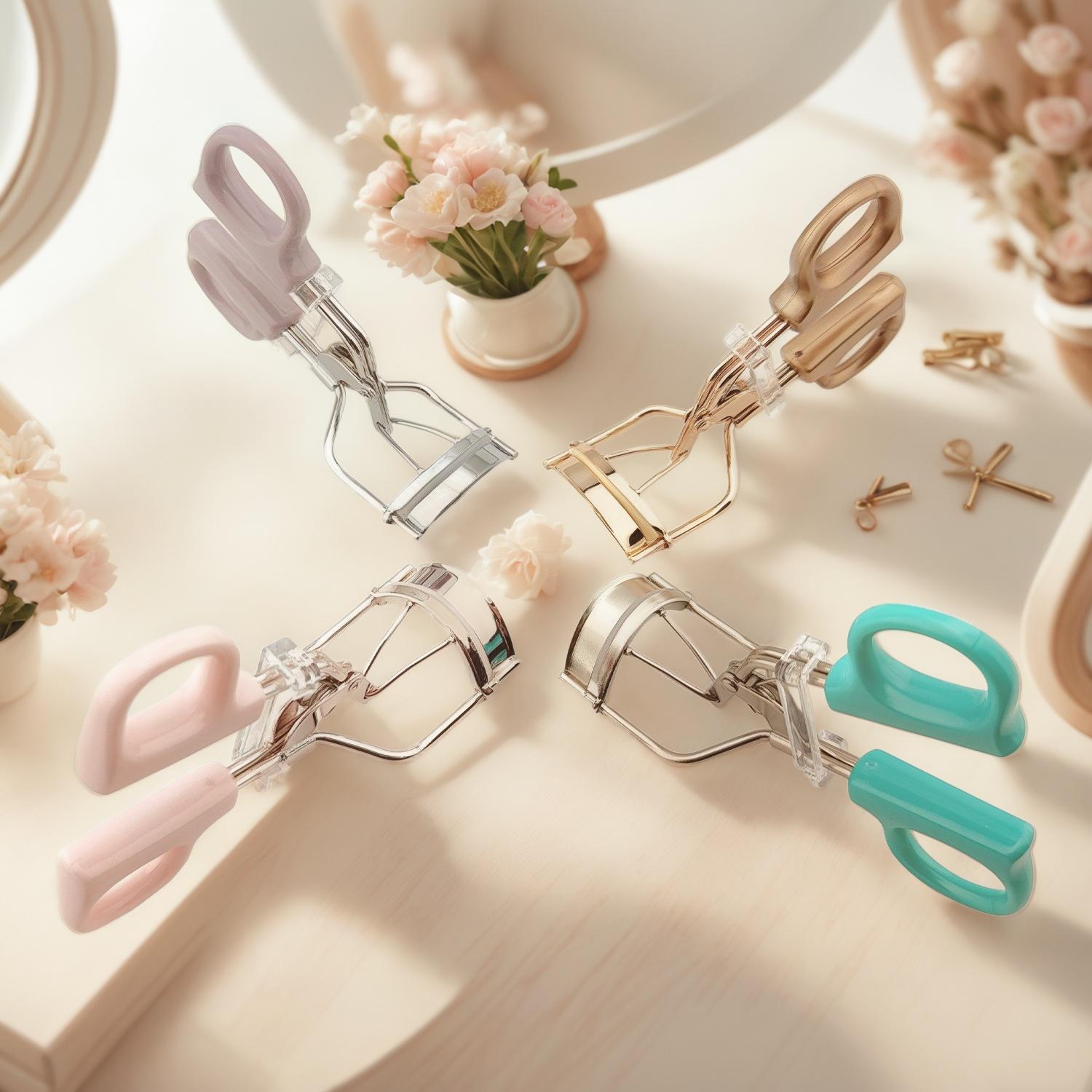
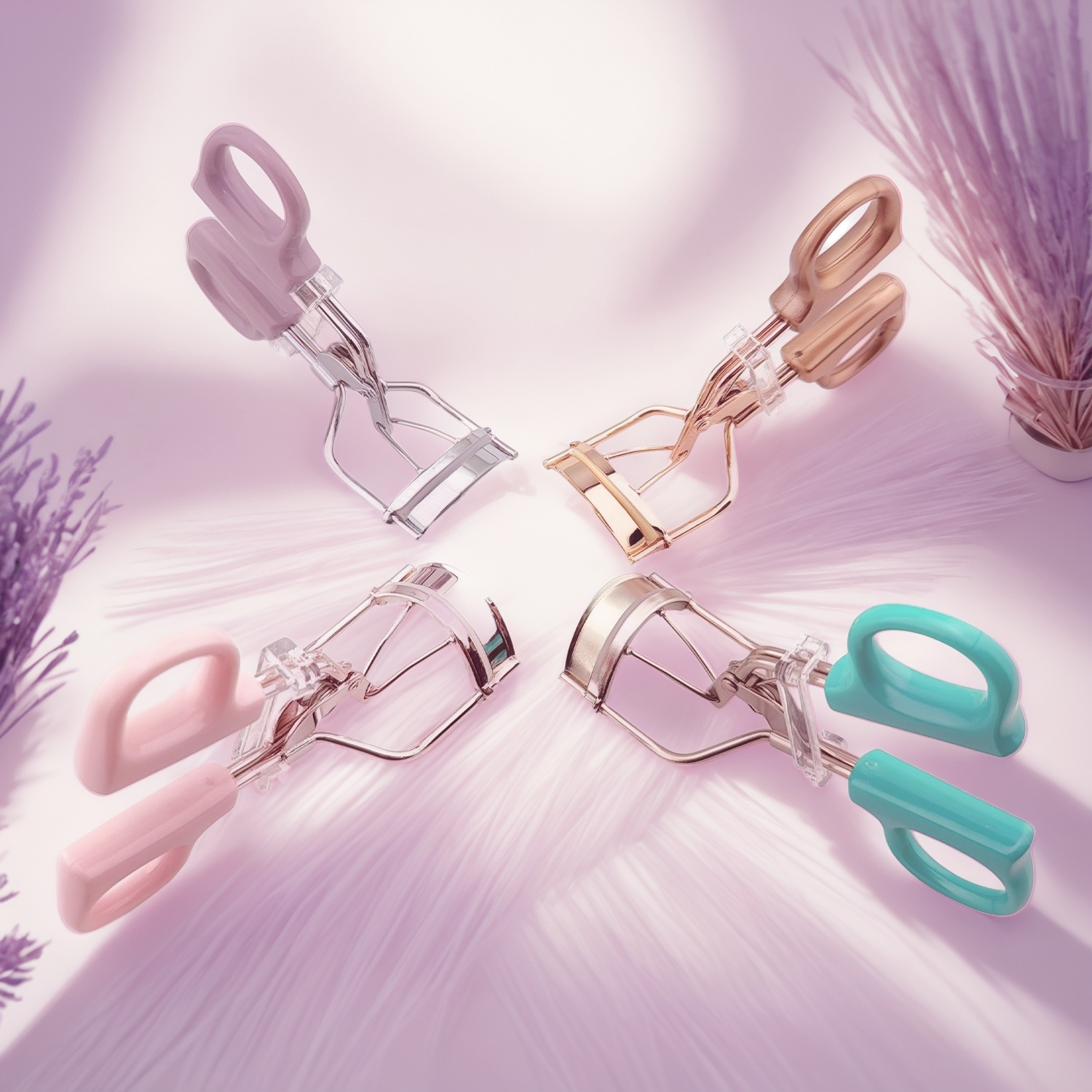
Olimor eyelash curler options described for wholesale use include stainless steel construction, ergonomic handles, finishes such as polished silver and rose gold, and color options such as pastel pink and teal. These details are useful for assortment planning, but appearance should never be checked in isolation. A bright finish may help retail presentation, while a classic polished look may suit a professional display, yet the user experience still depends on grip comfort, frame alignment, pad seating and smooth closure.
Wholesale Eyelash Curler Selection Checklist
- Grip comfort: Finger loops and handles should allow steady pressure without slipping or uncomfortable edges.
- Opening and closing action: The tool should move smoothly, without loose, stiff or uneven motion.
- Frame alignment: The upper frame and pad area should meet evenly so pressure is distributed across the lashes.
- Pad quality: Soft silicone pads described for Olimor curlers are intended to help reduce harsh contact; buyers should inspect pad seating, cushioning and surface cleanliness.
- Finish consistency: Polished silver, rose gold, pastel pink, teal or other finishes should look consistent across samples and shipment lots.
- Packaging compatibility: Decide whether the curler will be sold individually, placed in a makeup kit or bundled with other accessories.
For salons and makeup artists, cleaning and repeated handling should be part of sample review. For retailers, packaging visibility and care instructions can influence conversion. For e-commerce sellers, compact packaging, clear product photos and simple usage notes reduce confusion after purchase.
Pedicure Supplies Wholesale: Build a Complete Foot Care Routine
Pedicure supplies wholesale require a different evaluation process from lash tools. Foot care tools are often used for longer sessions and may involve repeated friction, pressure and contact with damp environments during care routines. A buyer may need files, buffers, cuticle tools, separators, brushes or related accessories depending on the final assortment. The goal is to support a complete routine: preparation, shaping, smoothing and finishing.
Files and buffers should be reviewed for surface consistency. Abrasive areas should appear even and securely attached, with no peeling corners, rough glue marks or loose layers. Handles should be comfortable enough for several minutes of use, because pedicure work often involves repetitive motion and changing angles. If a tool bends too easily, sheds quickly or has rough finishing, the apparent savings from a lower unit cost can disappear through complaints, replacements and poor repeat sales.
Hygiene positioning is also important. Some tools may be intended for personal home use, while others may be selected for professional environments where cleaning, drying and storage are more important. Buyers should ask suppliers how tools are intended to be used and maintained, and should make sure product descriptions do not overpromise. If an item is disposable or semi-disposable, the packaging and sales copy should make that positioning clear.
Planning Pedicure Assortments by Channel
- Retail stores: Offer simple single tools for replacement purchases and small sets for home pedicure routines.
- Salon suppliers: Prioritize hand comfort, repeatable quality, case organization and easy replenishment.
- Beauty schools: Look for practical tools that help students learn routine steps without confusing product variation.
- E-commerce sellers: Use clear images and product descriptions that explain the tool purpose, surface type and care expectations.
Pedicure supplies can also support seasonal or spa-at-home promotions, but the core buying logic should remain evergreen: comfort, surface reliability, clean finishing and clear use case. Buyers comparing wider assortments can browse Olimor beauty tool collections to see how eye, nail and personal care categories may sit together.
Personal Care Tools Wholesale: Match Each Tool to a Clear Purpose
Personal care tools wholesale can include a wide range of grooming and beauty accessories, from facial-care tools to hair-removal tools, brow tools and everyday maintenance items. This broadness is useful, but it can also create sourcing drift. A strong range should be easy for customers to understand. If the assortment is too scattered, customers may not see the connection between products. If it is too narrow, order value and repeat purchase opportunities may be limited.
Versatility is valuable only when the tool still has a defined purpose. A precise grooming tool should provide control. A tool intended for repeated handling should have a secure grip. Source information for Olimor personal care tools highlights non-slip grips and sturdy construction, which are practical features for buyers who need tools to feel stable and dependable during everyday use.
For retailers, personal care tools can be grouped by routine: lash and brow care, nail and foot care, facial grooming or travel essentials. For salons, grouping by service area may be clearer. For online sellers, the most important step is to explain what each tool does, who it is for and how it fits into a routine. Good product organization reduces customer hesitation and makes it easier to build bundles without confusing the buyer.
Comparison Table for Wholesale Beauty Tool Buyers
| Category | Main customer need | Key quality checks | Best sales use | Common buyer concern |
|---|---|---|---|---|
| Eyelash curlers bulk | Fast lash shaping before makeup | Frame alignment, hinge movement, pad comfort, grip feel and finish consistency | Makeup accessories, retail displays, beauty kits and salon retail add-ons | Pinching, uneven curl, loose hinge or poor pad seating |
| Pedicure supplies wholesale | Foot care, smoothing, grooming and routine maintenance | Abrasive consistency, handle comfort, surface bonding, clean edges and storage suitability | Home pedicure sets, salon supply, beauty school kits and spa-at-home promotions | Weak handling, peeling surfaces, poor comfort or unclear replacement expectations |
| Personal care tools wholesale | Daily grooming and beauty support | Safe-feeling edges, non-slip grip, sturdy construction, compact storage and clear instructions | Travel kits, self-care bundles, broad retail assortments and add-on sales | Confusing assortment, inconsistent finish or unclear use case |
Wholesale Quality Checks Before You Commit
Beauty tools may look simple in photos, but small details have a direct effect on customer satisfaction. A structured sample review can prevent many common problems before a larger order is placed. The process does not need to be complicated; it needs to reflect how the customer will actually hold, use, clean, store and receive the item.
- Inspect samples by hand: Hold each tool as the customer would. Look for sharp-feeling edges, awkward angles, weak grip areas or uncomfortable pressure points.
- Test movement: For hinged tools such as eyelash curlers, open and close the item repeatedly to check smoothness and alignment.
- Review contact surfaces: Check silicone pads, abrasive surfaces, buffers and tool edges for secure placement, clean finishing and consistency.
- Check packaging fit: Packaging should protect the tool, keep contact areas clean and match the way the item will be displayed or shipped.
- Compare units, not just one sample: Wholesale buyers should review multiple pieces where possible to understand consistency across a small batch.
- Document approval criteria: Keep notes on acceptable finish, movement, grip, packaging and labeling so future orders can be compared consistently.
If your business sells into regulated markets or to larger retail accounts, ask what documentation may be relevant for the product type and destination market. Public frameworks such as ISO 9001 for quality management systems or EU REACH requirements for chemical substances may be part of a buyer’s supplier-evaluation checklist where applicable. Buyers should verify the current applicable version, market requirements and supplier documentation. This is not a substitute for legal or compliance review, and no certification should be assumed unless the supplier provides valid evidence.
Cost Factors Beyond Unit Price
Wholesale beauty tool cost should be evaluated as total commercial value, not just the number on a quotation. A cheaper tool can become expensive if it creates returns, replacement requests, poor reviews or slow sell-through. Conversely, a well-chosen tool with practical finishing and appropriate packaging may support stronger customer confidence even if the initial unit cost is higher.
Key cost factors include material and construction, finish complexity, packaging format, customization requirements, order quantity, inspection expectations and shipping volume. For example, a compact eyelash curler may ship efficiently, but decorative finishes or branded packaging can affect the final cost. Pedicure sets may have more components, which means buyers should inspect consistency across every piece, not only the main tool. Personal care tool assortments may require more packaging planning because the range can include different shapes and uses.
When comparing suppliers, ask questions that connect price to practical risk: What material and finish are used? How are tools packed to prevent damage? Can samples be reviewed before a bulk order? What customization options are available? How are quality concerns handled? Are product photos, packaging information or use instructions available for resale channels? These questions help separate a low quotation from a reliable sourcing plan.
Supplier Evaluation for B2B Beauty Tool Purchasing
A wholesale supplier should help you choose products that fit your market rather than simply pushing the largest possible order. For B2B buyers, useful supplier evaluation includes communication clarity, sample availability, category knowledge, packaging support, customization discussion and a realistic quality-check process. The best supplier conversation should cover both product appearance and user experience.
Ask for details relevant to your channel. A salon distributor may need repeatable supply and tools that are comfortable for professional handling. A retailer may need attractive colors, clear packaging and coordinated assortments. An online seller may need compact packaging and accurate product descriptions. A promotional buyer may need finish and branding options that support a campaign without compromising tool function.
Olimor can support buyers reviewing wholesale beauty tool categories and assortment structure. If you are planning a new range or comparing eyelash, pedicure and personal care tools, you can send sourcing questions through the Olimor wholesale inquiry page or contact the team through Olimor contact support.
Practical Buying Flow for a Wholesale Order
A clear buying flow reduces sourcing mistakes and keeps the purchase focused on one search intent: finding dependable wholesale beauty tools for resale or professional supply. Start by defining the customer and sales channel. Then choose the category mix, request product information, review samples, confirm packaging requirements and document quality expectations before moving toward a larger order.
For eyelash curlers bulk, prioritize smooth action, pad comfort, frame alignment and finish consistency. For pedicure supplies wholesale, focus on grip, surface quality, tool comfort and cleaning or replacement expectations. For personal care tools wholesale, confirm that each item has a clear purpose and that the range feels coherent. This practical process helps buyers build an assortment that looks good, works well and supports repeat business.
FAQ
Can wholesale buyers request samples before placing a larger order?
Sample availability should be discussed with the supplier before purchase. Samples are useful for checking hand feel, hinge movement, pad seating, surface quality, packaging fit and overall presentation before committing to a larger wholesale order.
What MOQ should I expect for eyelash curlers or other beauty tools?
MOQ can vary by product, finish, packaging and customization requirements. Buyers should confirm the applicable MOQ directly with Olimor for the specific beauty tool category and order plan under review.
Can beauty tools be customized for retail or promotional programs?
Customization may depend on the product type, finish, packaging format and order requirements. Buyers should share the intended channel, branding needs and packaging expectations so the supplier can advise what is practical.
What quality checks matter most before shipment?
Important checks include grip comfort, smooth movement for hinged tools, pad or surface placement, finish consistency, clean edges, packaging protection and comparison across multiple units. Buyers should agree on inspection expectations before bulk production or shipment.
How should I evaluate lead time?
Lead time depends on product availability, order quantity, packaging, customization and shipping arrangement. Rather than relying on a generic estimate, confirm the schedule for the exact products and documentation required for your order.
Tag: