

Beauty Tools Manufacturer Guide for Precision Grooming Kits
For retailers, spa operators, beauty distributors, and private-label buyers, a grooming kit is not simply a group of small tools in a pouch. It is a compact product that customers handle closely, judge quickly, and often carry for years. The difference between a kit that feels dependable and one that feels disposable usually comes down to the manufacturer’s approach to tool geometry, material selection, finishing, packaging, and inspection.
Olimor Beauty focuses on personal care tools where precision and consistency matter. A nail clipper should cut cleanly without crushing the nail edge. Tweezers should meet evenly at the tip. Scissors should open smoothly and feel controlled in the hand. A pouch should protect the tools while keeping the set easy to store or travel with. These details are especially important when buying grooming tools wholesale, because a small weakness repeated across a full shipment can affect reviews, returns, and the reputation of the buyer’s own brand.
What Makes a Grooming Kit Worth Sourcing?
A well-planned grooming kit should solve a clear customer need: everyday nail care, travel grooming, spa retail add-ons, gift sets, or personal care essentials for hotels and wellness businesses. Before comparing finishes or pouch colors, buyers should decide how the kit will be used and who will use it. A travel-focused kit needs compact organization and secure tool placement. A spa retail kit may need a more polished presentation. A value-focused personal care set still needs reliable cutting edges and safe handling.
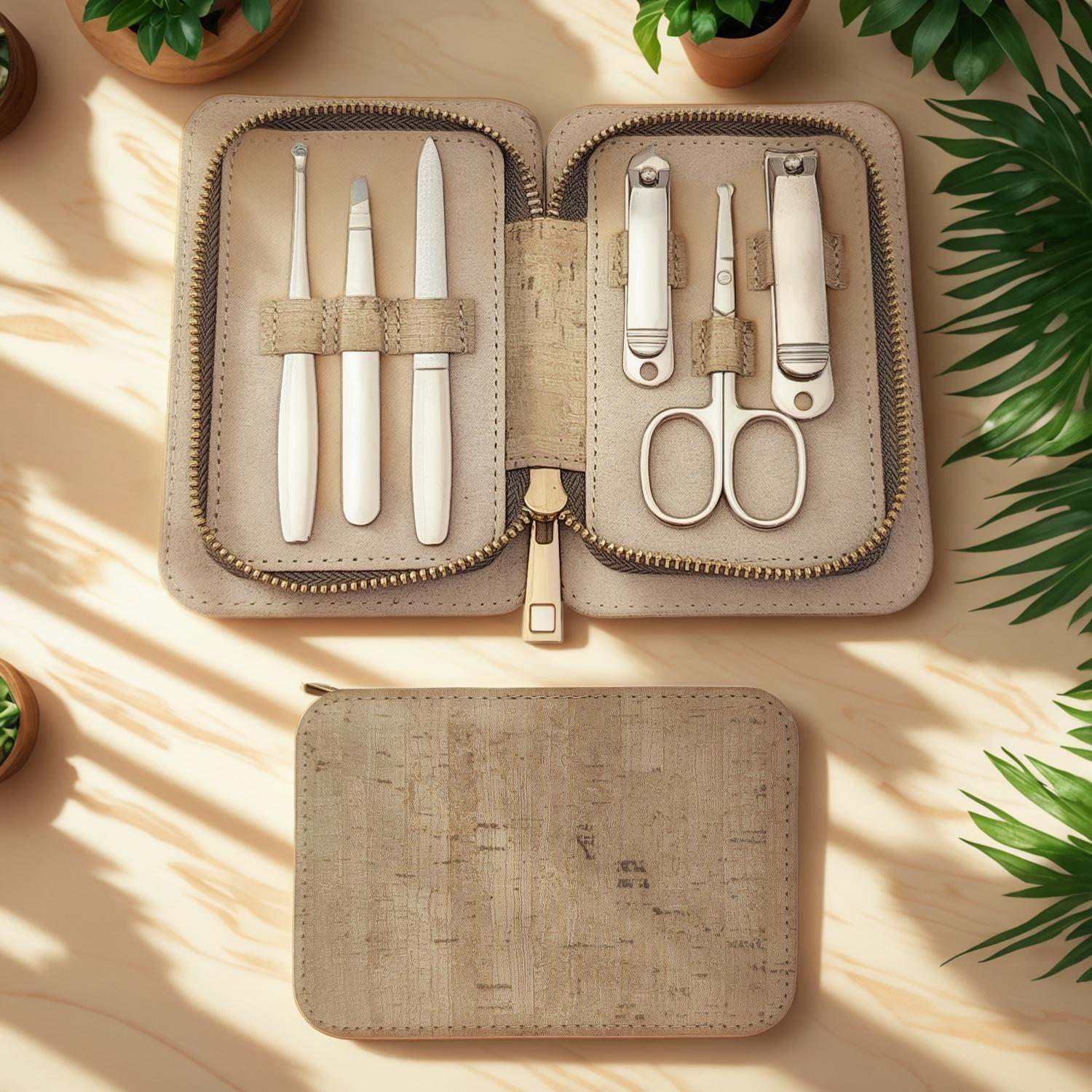
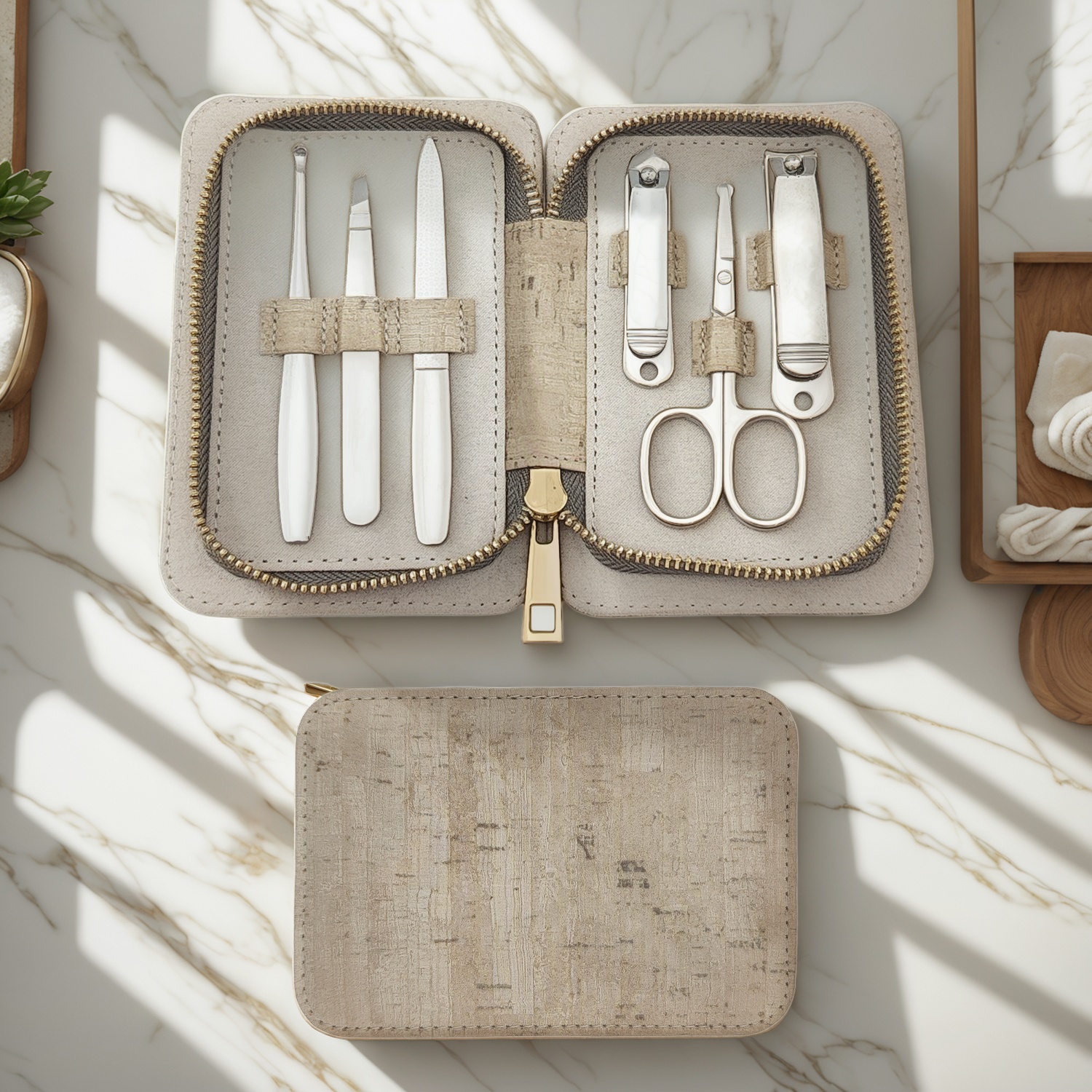
The original LuxeMani Grooming Kit shows the kind of product structure many buyers look for: a portable kit housed in a cork-textured faux leather pouch, with stainless steel grooming tools including a precision cuticle pusher, slant tweezers, a dual-sided nail file, sharp scissors, and two sizes of nail clippers. That combination covers common manicure maintenance tasks without adding unnecessary pieces that may increase cost or confuse the end user.
For buyers reviewing beauty tool products, the most useful question is not “How many pieces are included?” but “Does each piece have a clear purpose and a reliable feel?” A smaller kit with practical tools often performs better than a larger set filled with low-use accessories.
Key Tool Details Buyers Should Inspect
Stainless steel tools are common in grooming sets because they can offer a clean appearance, strength, and easy wiping after use. However, not every stainless steel tool feels the same. Buyers should examine the shaping, alignment, edge finishing, and comfort of each item rather than relying only on the material description.
- Nail clippers: Check whether the upper and lower cutting edges align evenly. The lever should move smoothly and return without wobbling. Two sizes of clippers can make the kit more versatile for fingernails and larger nails.
- Slant tweezers: The tips should meet cleanly across the contact surface. Poorly aligned tips can slip, pinch unevenly, or fail to grip fine hairs.
- Cuticle pusher: The working edge should be smooth enough for controlled use, with no rough burrs that could scratch the nail surface.
- Scissors: Open and close the scissors several times. Movement should feel steady, not loose or gritty. The tips should be protected during packaging.
- Dual-sided nail file: Check the abrasive surfaces and the edge finish. A practical file should be easy to hold and suitable for routine nail shaping.
Inspection should also include the overall hand feel. Tools that are too thin, slippery, or poorly balanced can reduce user confidence even when the cutting edge is acceptable. Ergonomic design does not have to mean a complicated shape; it means the tool supports controlled use for its intended task.
Why the Pouch Matters as Much as the Tools
In a grooming kit, the pouch is part of the product experience. It protects the metal tools, keeps the set organized, and influences how the item looks online and on a retail shelf. The LuxeMani Grooming Kit uses a cork-textured faux leather pouch, a detail that gives the set a distinctive surface appearance while remaining portable. For buyers building a grooming or spa personal care line, pouch design can affect perceived value as much as the tool count.
A good pouch should hold each tool securely enough to prevent rubbing and movement during shipping. Elastic loops, fitted slots, or pockets should be checked for tightness and stitching quality. If the pouch is difficult to open, overly bulky, or unable to stay flat during use, customers may not enjoy using it even if the tools themselves are acceptable.
Packaging choices should also match the sales channel. E-commerce sellers may prioritize compact shipping, clear product photography, and protection against scratches. Spa and salon retailers may care more about display presentation and giftability. Travel-oriented sets need secure closure and a shape that fits easily into a bag. Olimor Beauty’s product collections can help buyers compare different personal care tool formats before narrowing the selection.
Quality Control Points for Wholesale Grooming Tools
Wholesale sourcing requires more than approving one attractive sample. A manufacturer’s consistency across repeated production is what protects the buyer’s business. Quality checks should begin with incoming materials and continue through forming, polishing, assembly, pouch production, tool fitting, and final packing. Even when exact specifications vary by product, the inspection logic remains the same: tools should function correctly, look clean, and arrive protected.
Buyers can use the following checklist when evaluating samples or shipment criteria:
- Visual finish: Look for stains, scratches, dents, sharp burrs, uneven polishing, or inconsistent color between pieces.
- Functional performance: Test each clipper, tweezer, scissor, pusher, and file for its intended use. Do not judge only by appearance.
- Alignment: Confirm that cutting edges and tweezer tips meet evenly, because small alignment problems can make a tool frustrating.
- Safety: Check exposed points and edges. Sharp tools should be effective but not carelessly finished.
- Pouch fit: Make sure tools stay in place and do not scratch each other during handling or transport.
- Packaging protection: Review whether the kit can withstand normal shipping and storage without damage to the pouch or tools.
- Batch consistency: Compare multiple units, not only one sample, to see whether the look and function remain stable.
This kind of inspection is practical for retail buyers, distributors, and professional service suppliers because it connects directly to customer satisfaction. A grooming kit is touched piece by piece; every component can become either a reason for repeat purchase or a reason for complaint.
How to Match a Kit to Your Sales Channel
Different buyers need different grooming kits. A spa may want a refined personal care set that complements its service menu. A retailer may want a practical product with strong shelf appeal. A travel goods seller may prioritize portability. A distributor may need a dependable kit that fits several customer types without being too specialized.
Use cases can guide product decisions:
- Retail gift set: Choose a pouch and tool layout that photographs well and feels complete at first glance.
- Spa personal care tools wholesale: Prioritize clean finishing, comfortable handling, and a professional appearance that reflects the spa’s own standards.
- Travel grooming kit: Focus on compact size, secure closure, and tool retention inside the pouch.
- Everyday nail care: Make sure the clippers, file, and cuticle pusher are practical for routine maintenance, not just decorative.
- Brand extension: Select a set that matches the tone of your existing product range, from understated to premium-looking.
The best sourcing decision is usually the one that balances appearance, function, and target customer expectations. Adding more pieces is not always the answer. A coherent kit with dependable basics can be easier to market, easier to explain, and easier for customers to keep using.
Sourcing Questions Before Placing an Order
Before moving from sample review to a wholesale order, prepare a clear evaluation plan. This helps both sides avoid confusion and keeps the project focused on measurable product quality. Instead of relying only on broad claims, define what matters for the kit: tool mix, pouch material and texture, finish level, packaging method, inspection standards, and intended sales channel.
Useful sourcing questions include: Which tools are included in the set? Are the tools stainless steel? How are tweezer tips and clipper edges checked for alignment? How are the scissors protected in the pouch? What packaging format is suitable for shipping and retail display? Can multiple samples be reviewed to compare consistency? Are there options within existing product ranges that suit the buyer’s channel better than a fully new configuration?
If you are comparing grooming tools wholesale or planning a spa personal care tools program, share the intended use, customer profile, and packaging expectations early. Olimor Beauty can then help identify relevant options and practical considerations. To discuss a project, contact Olimor or send an inquiry with your target product type and sourcing requirements.
Building Confidence Through Practical Product Design
A grooming kit earns trust through small, repeatable details: a clean clip, a secure tweezer grip, a smooth scissor action, a pouch that closes neatly, and a layout that makes sense. For beauty businesses, those details become part of the customer’s impression of the brand selling the kit. That is why choosing a beauty tools manufacturer should involve more than comparing photos or piece counts.
The LuxeMani Grooming Kit demonstrates a focused approach: stainless steel personal care tools organized in a portable cork-textured faux leather pouch, with essential items for nail and grooming maintenance. For buyers, the broader lesson is clear. Select tools with purpose, inspect function as carefully as finish, and match the pouch and packaging to the way customers will buy and use the product. With that approach, a grooming kit can become a dependable part of a beauty, spa, or personal care assortment.
Tag: