Beauty Tools Exporter Guide for Manicure and Grooming Kits
A beauty tools exporter is not only shipping small metal implements inside a case. For B2B buyers, the real decision is whether the finished kit arrives consistent, presentable, secure in transit and practical enough for resale or immediate consumer use. Manicure and pedicure grooming kits are often affordable retail items, but they are also highly visible. A weak zipper, uneven polish, loose tool retention or poorly aligned clipper can affect the buyer's whole impression of the product.
This guide focuses on compact manicure and pedicure grooming kits supplied in a zippered carry case. It is written for importers, distributors, beauty retailers, pharmacy buyers, gift set buyers and salon resale teams who need to compare suppliers without relying only on catalog photos. The goal is simple: understand what to check before placing an order, what questions to ask, and how to match the kit to the right sales channel.
If you are shortlisting beauty accessories, you can start by reviewing Olimor's wider beauty tool product range and then use the inspection points below to evaluate samples with more confidence.
What Buyers Are Really Sourcing
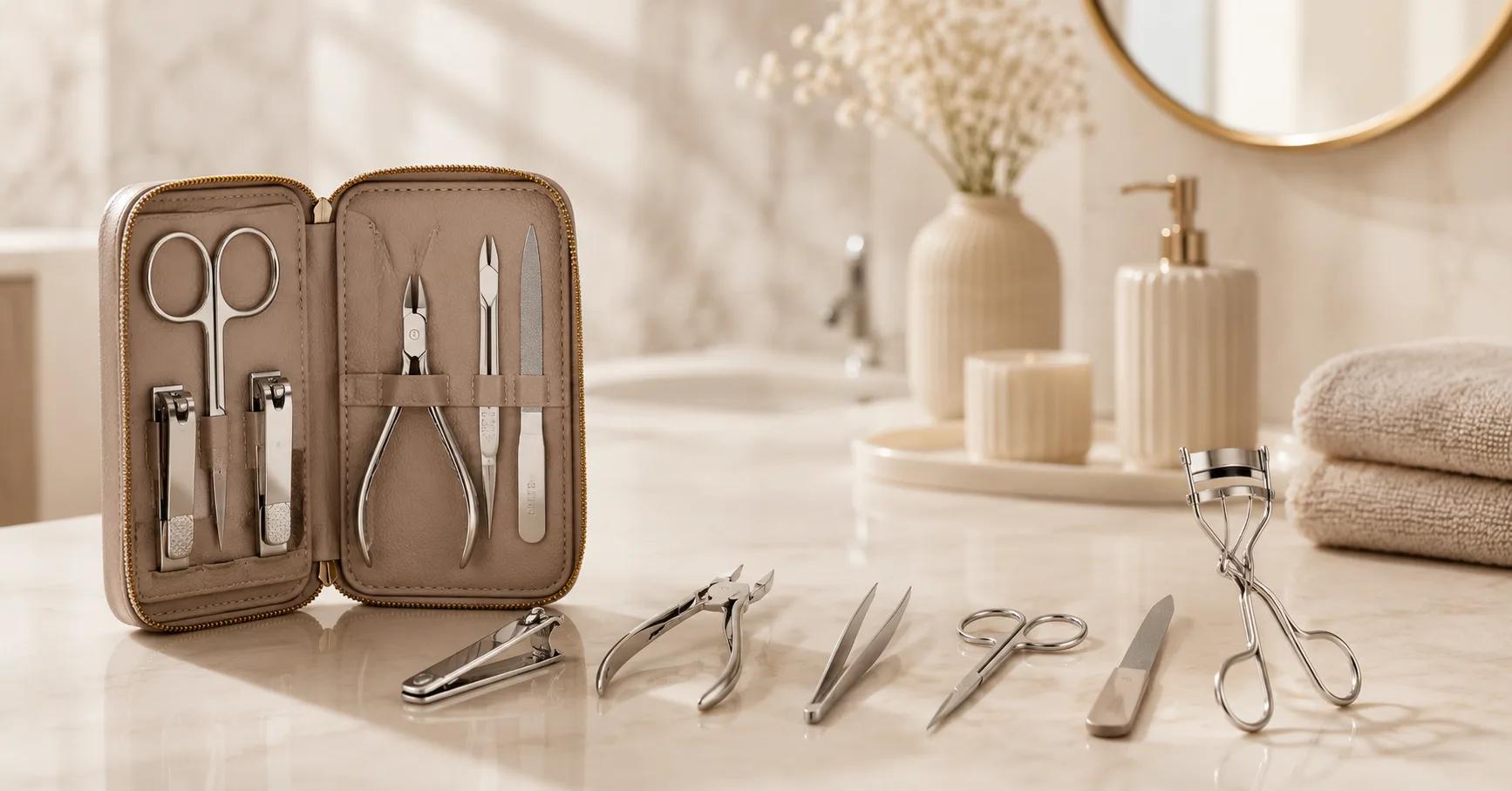
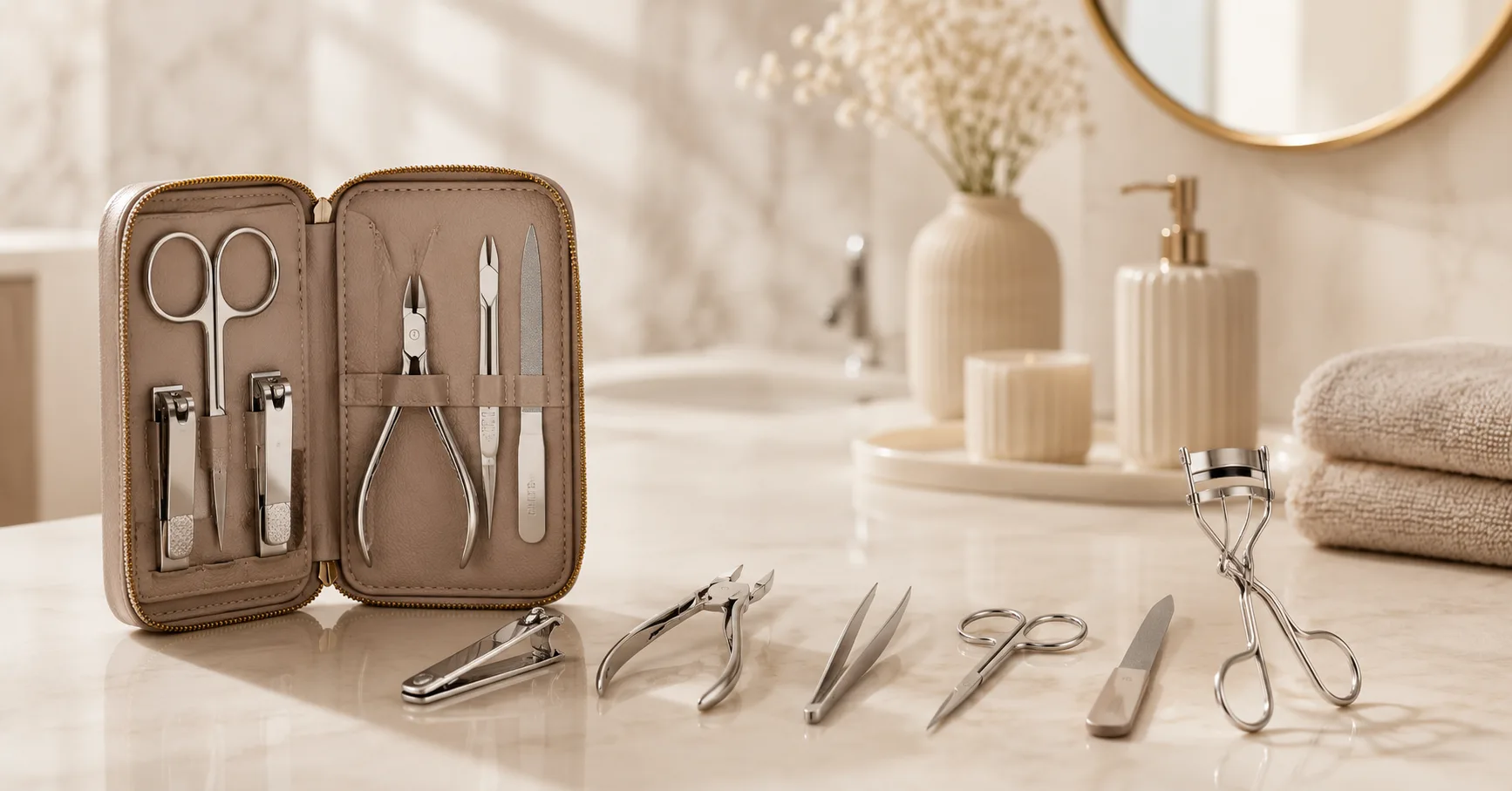
The product category is a compact grooming set arranged in a clamshell-style carry case with rounded corners and a full zip closure. The case format matters because it turns separate tools into a self-contained retail product. When opened, the interior layout is organized rather than loose: larger nail clippers are mounted on one side, while smaller hand tools sit under stitched pockets and elastic straps on the other.
Visible tools in this type of kit include scissors, nail clippers, a cuticle nipper or plier, tweezers, a nail file, another tweezer-like or cuticle tool, and an eyelash curler. That combination supports basic nail trimming, cuticle care, shaping, eyebrow grooming and travel face-care convenience. It is broader than a single-purpose nail clipper set, but it should still be evaluated as a grooming kit rather than as a professional salon instrument set unless the supplier provides documents and specifications supporting that positioning.
The tools appear to use stainless steel with a polished or satin metallic finish. The case appears to be beige or tan synthetic leatherette, likely a PU-style material, with a gold-tone zipper. These details suggest a consumer-facing set with an orderly, giftable presentation. Buyers should still verify actual material descriptions, packaging details and finished samples before making product claims in their own channels.
Why the Case Is Part of the Product
In small grooming kits, the case is not secondary packaging. It protects the contents, improves the retail presentation and helps prevent pieces from going missing after opening. A zippered case also supports travel use because the customer can keep all implements together in a bag, drawer or suitcase.
The interior arrangement does practical work. Elastic retention bands and stitched pockets reduce tool movement during shipping and handling. They also create a better opening impression. When the buyer or consumer opens the kit and the tools remain aligned, the set feels intentionally assembled. If the tools slide out, rub against each other or sit unevenly, the product feels cheaper even if the metal tools are acceptable.
However, a neat case can hide weak tools. Buyers should not approve a sample only because the outside looks attractive. Open and close the zipper several times, remove every tool, return each tool to its holder, and check whether the pockets and bands keep the layout stable. The best case design supports both retail appearance and daily use.
Tool Mix and Use Positioning
The right tool assortment depends on how the kit will be sold. A pharmacy impulse item, an online gift set, a travel grooming kit and a salon resale accessory may all use a similar case, but buyers judge them differently. A gift buyer may prioritize symmetry, color and presentation. A nail-care retailer may focus on clipper function, cuticle tool action and file finish. A travel retailer may care most about compact size, secure closure and easy storage.
For this type of grooming kit, buyers should look at the role of each visible item:
- Nail clippers: Check closure alignment, lever action and whether the cutting edges meet cleanly.
- Scissors: Check opening and closing smoothness, point finish and whether blades rub or feel loose.
- Cuticle nipper or plier: Check spring action, jaw alignment and overall handling comfort.
- Tweezers: Check tip symmetry, grip tension and whether the ends meet evenly.
- Nail file: Check edge smoothness and whether the file is securely finished without rough burrs.
- Eyelash curler: Check hinge movement, pad seating and whether the part sits securely in the case.
Do not evaluate the kit by piece count alone. A higher piece count can look attractive on a product page, but one poorly made tool can cause complaints. A well-selected, coherent tool mix is usually more valuable than adding extra items that do not match the use case.
Manufacturing and Finish Details to Inspect
Production for this category commonly involves metal forming, edge grinding, polishing or satin finishing, individual tool assembly, case cutting, sewing or lamination, and final kit packing. None of these steps is unusual, but each one can create visible issues if not controlled. Small grooming tools are unforgiving because defects are easy to see and easy to feel in the hand.
Metal finish is one of the first inspection points. Stainless steel tools should look even across the set, without obvious stains, rough edges, patchy sheen or handling scratches. Polished surfaces can support a premium look, while satin surfaces may make minor fingerprints less obvious. The key point is consistency. If the clippers look bright but the tweezers look dull, the set feels like mixed inventory rather than a designed kit.
Functional alignment is just as important. Clippers should close cleanly. Tweezers should meet at the tips. Nippers should open and close without awkward resistance. Scissors should not feel loose at the pivot. For a consumer grooming set, the buyer is usually not trying to prove extreme performance; the buyer is trying to avoid obvious dissatisfaction during normal use.
The case should also be inspected as a manufactured component. Check the edge finishing, lamination, zipper track, corner shape, stitching and elastic retention. A PU-style synthetic case can be suitable for retail presentation, but it must be cleanly made. Buckled corners, uneven stitching or a catching zipper can damage the perceived value of the whole kit.
Sample Inspection Checklist for Importers
Before comparing quotations, request physical samples and evaluate them in a structured way. Photos are useful for early screening, but they cannot confirm tool action, zipper feel, retention strength or surface finish. Use the following checklist during sample review and keep notes for supplier comparison.
| Inspection area | What to check | Why it matters |
|---|---|---|
| Tool finish | Even polish or satin finish, no visible stains, burrs or deep scratches | Creates the first quality impression and affects retail acceptance |
| Clipper function | Clean closure, stable lever action and aligned cutting edges | Clippers are a core part of the kit and often drive user satisfaction |
| Tweezer and nipper alignment | Tips or jaws meet evenly and move without excessive looseness | Small alignment issues are easy for consumers to notice |
| Case construction | Clean stitching, smooth zipper, finished edges and stable shell shape | The case is part of the product's retail and travel value |
| Interior retention | Elastic bands and pockets hold each tool securely after repeated opening | Prevents shifting in transit and supports a tidy unboxing impression |
| Retail presentation | Closed case appearance, color consistency and arrangement when opened | Important for gifting, online images and shelf display |
| Documentation | Material descriptions, packing details and any claimed compliance documents | Helps buyers avoid unsupported product claims |
If a supplier refers to quality management systems, product safety requirements or market compliance, ask for current supporting documents and verify that they apply to the product being purchased. Public frameworks such as ISO 9001 for quality management systems and the EU General Product Safety Regulation may be relevant depending on market and claims, but buyers should always check current versions and supplier-specific paperwork. Do not assume certification or compliance from appearance alone.
How to Compare Beauty Tools Export Offers
When comparing beauty tools export offers, do not start only with unit price. Price matters, but it is shaped by tool mix, finish level, case material, internal construction, packaging, customization, inspection requirements and order quantity. A low quotation may be appropriate for a price-sensitive retail channel, but it may not support a giftable or premium-positioned program.
Use these comparison points before narrowing your supplier list:
- Tool assortment: Does the kit cover the grooming tasks your customers expect, or does it include extra tools that add little practical value?
- Finish consistency: Do all visible metal pieces look like they belong to the same set?
- Case quality: Is the zippered case strong enough for storage and travel, and does it look clean when closed?
- Assembly discipline: Are tools placed straight and held securely by elastic bands and pockets?
- Channel fit: Is the kit better suited for travel retail, home grooming, beauty shop resale, gifting or salon counter sales?
- Claim support: Can the supplier support any material, compliance, packaging or performance claims you need to make?
- Communication quality: Does the supplier answer technical and packing questions clearly, or only provide catalog descriptions?
For buyers building a wider assortment, the beauty tools collection can help compare kit formats and related accessories. The final selection should still be based on sample handling and written order specifications.
Cost Factors Without Guesswork
Exact pricing depends on the supplier quotation, but buyers can still understand the main cost drivers. Tool count is one factor, but not the only one. Metal finishing, tool complexity, hinge parts, cuticle nipper construction, case material, zipper selection, stitching detail, internal bands, packaging inserts and customization all influence cost.
Customization can also change cost and production complexity. A buyer may request a different case color, logo placement, retail packaging, insert layout or tool combination. These changes should be confirmed through samples and written artwork approval. Avoid assuming that a change is simple because the product is small. A different case surface, for example, may affect printing method, color consistency and packaging presentation.
Inspection requirements may also influence commercial terms. If you need additional checks, third-party inspection, special packing or market documentation, discuss these requirements before confirming the order. It is easier to include expectations at the quotation stage than to correct them after production has started.
Common Sourcing Problems and How to Avoid Them
The most common mistake is treating all small grooming kits as interchangeable. A manicure and pedicure kit, a broader cosmetic tool set and a travel beauty kit can overlap, but they are not the same purchase. Define the main selling point first: nail care, travel convenience, gifting, beauty counter impulse sale or salon resale.
A second mistake is ignoring ergonomics because the product is compact. Small clippers can feel awkward if leverage is poor. Tweezers with weak tension are frustrating even at a low price. A cuticle nipper that opens unevenly can damage the user's trust in the entire kit. Handle every sample rather than judging only the closed case.
A third mistake is over-claiming. If a supplier has not provided material grades, dimensions, test data, sterilization information or certification documents, do not create those claims in your listing. Ask for the information you need and keep product descriptions accurate. This protects both the buyer and the supplier relationship.
A fourth mistake is approving the first sample without defining an approved standard. Keep an approved sample, confirm packaging layout, and state what visible differences are acceptable. For a product where presentation is central, small changes in color, finish or tool arrangement can affect sell-through.
Questions to Ask a Beauty Tools Exporter
Before placing an export order, ask direct questions that connect product function, presentation and supply terms. Strong suppliers should be able to answer clearly, or explain what must be confirmed through sampling.
- Are all visible tools stainless steel, and how is the material described in the product specification?
- Is the case made from PU-style synthetic material or another material, and how are the edges finished?
- How are the tools fixed inside the case during shipment?
- Can you provide a sample showing the actual tool arrangement, case color and retail packing?
- What visual checks are performed on polished surfaces, tool alignment, elastic retention and zipper function?
- Can the tool mix, case color, logo or packaging be customized for the intended channel?
- What documents can you provide to support any compliance, quality or material claims?
If you are ready to discuss a specific kit, send your preferred tool mix, target channel and packaging expectations through the product inquiry form. For broader sourcing questions, you can also contact the team through Olimor contact support.
FAQ
Can buyers request samples before ordering?
Yes. Samples are the best way to check zipper action, tool alignment, finish consistency, retention strength and the actual retail presentation. Confirm whether the sample represents the final materials, color and packing before using it for approval.
Is there a fixed MOQ for manicure and pedicure grooming kits?
MOQ depends on the product configuration, customization requirements and supplier arrangement. Buyers should ask for the applicable MOQ for the exact tool mix, case style and packaging option they want, rather than assuming one quantity applies to every kit.
Can the kit be customized with different tools or packaging?
Customization may be possible, including tool assortment, case color, logo placement or retail packing. Each change should be confirmed with the supplier, reviewed through artwork or sample approval, and written into the order specification.
How should buyers judge quality before mass production?
Review physical samples, test every tool by hand, inspect the case and zipper, check the interior retention, and confirm written specifications. If any certification, compliance or quality system claim is important for your market, ask for current documents and verify that they apply to the product.
What affects lead time for this category?
Lead time can be affected by sample approval, tool mix, case material, packaging design, customization, inspection requirements and production scheduling. Buyers should confirm timing directly with the supplier for the specific order rather than relying on general assumptions.
Next Step for B2B Buyers
The best sourcing decision starts with a clear use case. Decide whether the kit is intended for everyday home grooming, travel retail, gifting, beauty shop resale or salon counter sales. Then evaluate samples against that purpose. A travel-oriented retail kit should be compact, secure and neat. A giftable kit should look consistent and polished. A nail-care-focused kit should place more emphasis on clipper, nipper and file function.
For manicure and pedicure grooming kits, the details are the product: the way the tools close, the way the zipper moves, the way elastic bands hold each item, and the way the case looks when opened. A good beauty tools exporter helps buyers confirm those details before the order is placed, not after the shipment arrives.
Tag: