

B2B Nail Clipper Solutions for Retail, Wholesale, and Grooming Businesses
For distributors, retailers, salons, and grooming supply buyers, a nail clipper is not just a small accessory. It is a repeat-purchase product that can influence customer trust, shelf performance, and brand perception. The right B2B nail clipper should be easy to use, durable enough for regular handling, safe to store, and consistent from batch to batch. When buyers compare suppliers, the decision should go beyond unit price and include construction, grip comfort, packaging readiness, customization potential, and inspection standards.
Olimor Beauty supplies beauty tools for business buyers looking to build practical grooming assortments. If you are planning a private label program, expanding a wholesale catalog, or selecting grooming tools for retail shelves, this guide explains how to evaluate a nail clipper for commercial use without relying on vague claims or generic product descriptions.
Where B2B Nail Clippers Fit in a Grooming Product Line
Nail clippers work well in multiple business channels because they are compact, easy to merchandise, and relevant to a wide customer base. A distributor may sell them to pharmacies, supermarkets, salons, travel retailers, pet grooming stores, or online sellers. A retail buyer may use them as a low-space grooming category that supports steady basket additions. A salon or grooming business may need them as everyday functional tools rather than display products.
The most useful B2B nail clipper programs usually focus on a clear end user. A travel-focused assortment may prioritize compact size and a locking mechanism. A salon channel may look more closely at cutting control and comfortable grip. A pet grooming buyer may pay attention to safety guards and spring-loaded mechanisms, especially where the clipper is positioned for controlled trimming. Defining the channel first helps prevent overbuying features that do not matter to your customers.
Buyers can also compare nail clippers with related items in the wider Olimor range by reviewing beauty tool products or browsing product collections when building a coordinated grooming offer.
Key Product Features to Review Before Buying in Bulk
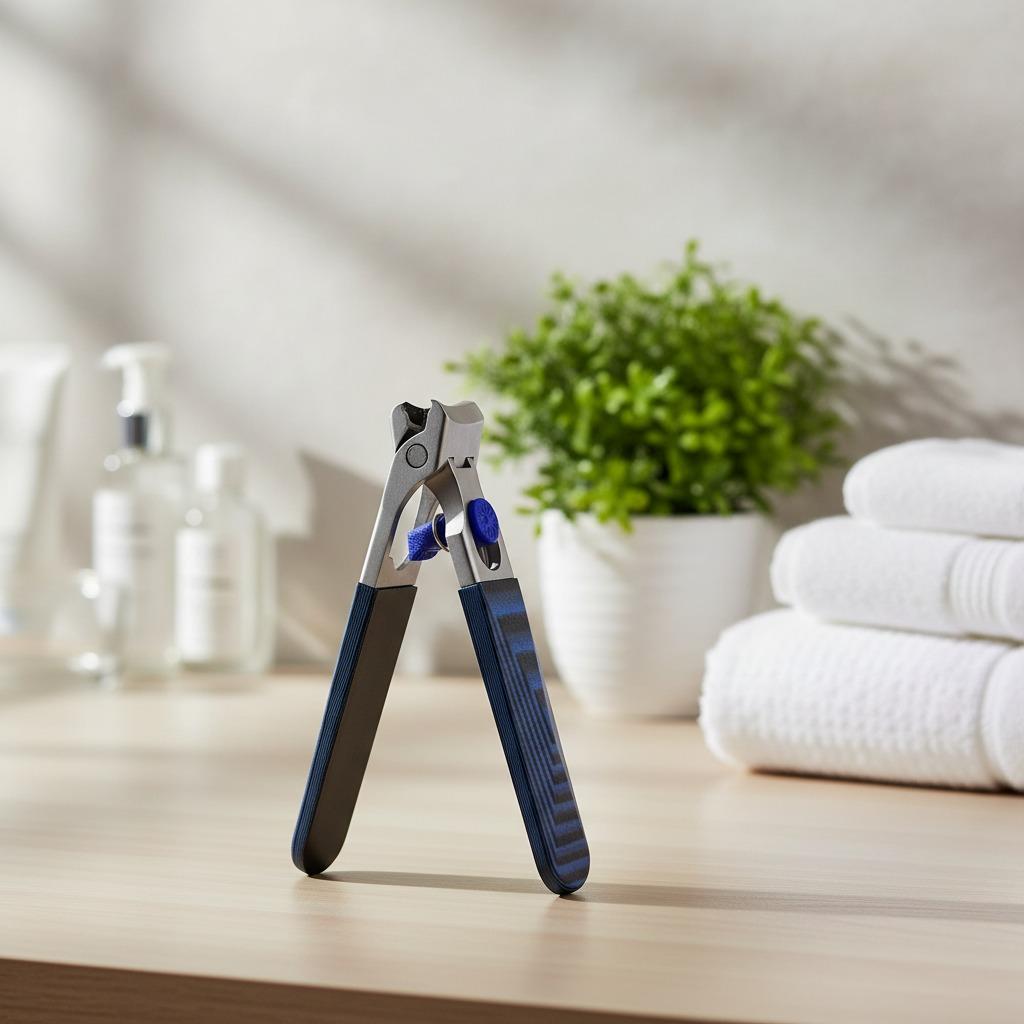
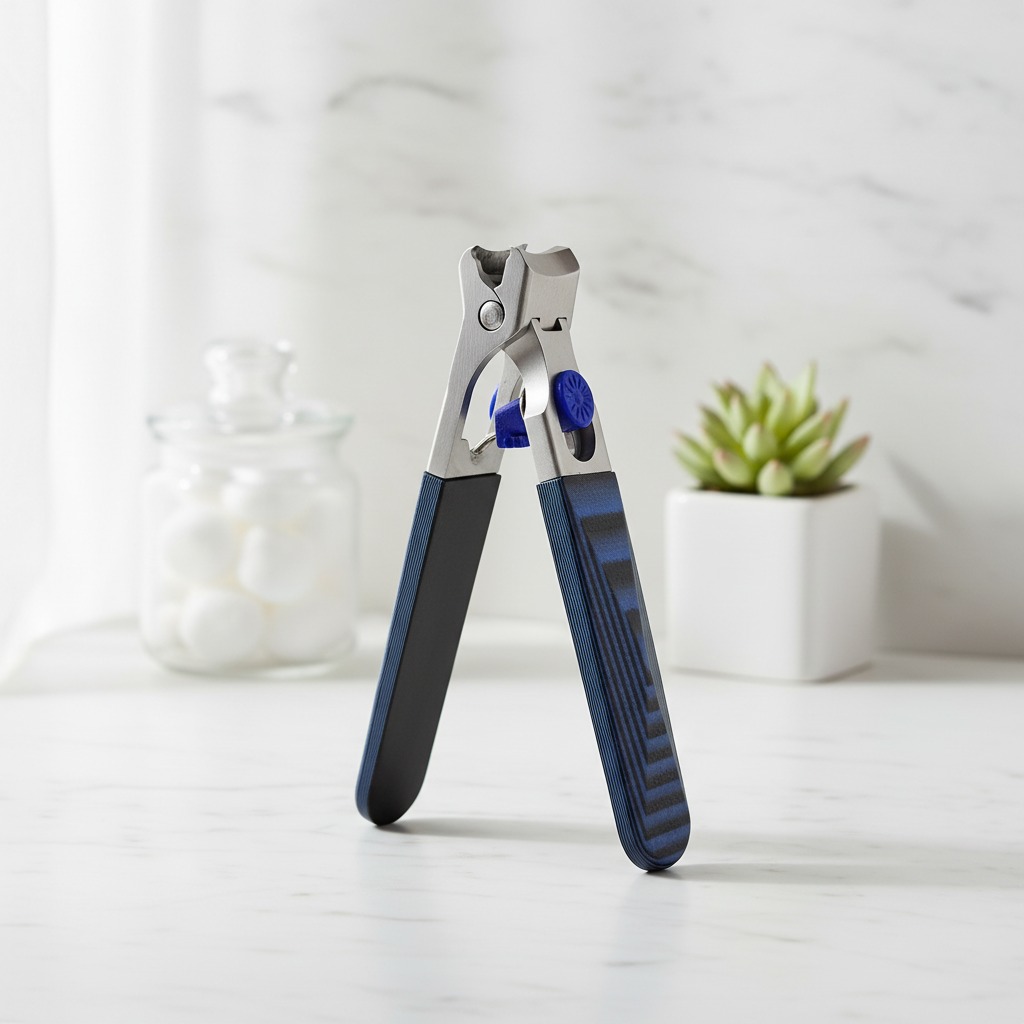
A good bulk purchase starts with a physical review of the product. Photos can show finish and shape, but they cannot confirm cutting feel, spring response, or how stable the tool feels in the hand. The supplied Olimor Beauty nail clipper details include stainless steel construction, robust metal blades, textured or matte grips, blue accents, geometric styling, curved blades, and a locking mechanism. These are practical features to examine because they affect both usability and perceived quality.
For business sourcing, review these points before confirming a large order:
- Cutting performance: The blades should align cleanly and cut without requiring excessive pressure. Curved blades can help follow the nail shape more naturally.
- Grip comfort: Textured or matte grips can reduce slipping, especially in salon or grooming environments where tools are handled repeatedly.
- Safety and storage: A locking mechanism helps keep the clipper closed when packed, shipped, displayed, or stored in a kit.
- Weight and portability: The original product information lists a lightweight 28g design, which can suit travel kits, counter displays, and online shipping programs.
- Size suitability: The listed 86mm by 15mm format is compact enough for personal grooming sets while still giving the user a stable hold.
- Mechanism feel: Spring-loaded mechanisms should move smoothly and return consistently without feeling loose or overly stiff.
These details matter because nail clippers are judged quickly by end users. A product that looks attractive but feels unstable can lead to returns, weak reviews, or slow reorders. For distributors, consistency across cartons is as important as the first sample.
Customization Choices for Private Label and Retail Programs
A custom nail clipper for business use can support brand recognition, but customization should be planned around the sales channel. A pharmacy buyer may want simple, clean packaging with easy product information. An online seller may need strong product photos, compact packaging, and a design that ships efficiently. A salon distributor may prefer professional-looking finishes and practical handling features over decorative packaging.
The supplied product details mention sleek metallic finishes, blue accents, and textured grips. These design elements can make the clipper easier to position as a modern grooming tool without relying on complicated decoration. If branding is required, buyers should consider where the logo will appear, how it will look at small size, and whether the packaging will need multilingual information, barcode space, or usage warnings.
For a stronger custom program, prepare a simple buying brief before requesting samples. Include the target channel, expected retail positioning, preferred finish, packaging format, logo placement needs, and any restrictions your market requires. This keeps the discussion focused and helps compare supplier responses fairly. If your team is ready to discuss a custom project, you can send an inquiry with your preferred product direction and target use case.
How to Evaluate Bulk Nail Clipper Price Without Choosing the Cheapest Option
Bulk nail clipper price is important, but the lowest quoted unit cost does not always produce the best landed value. A buyer should compare the full cost of getting a sellable product into inventory. That includes the base product, packaging, customization, inspection requirements, freight method, import costs where applicable, and the likely cost of defects or returns.
The following table gives a practical way to compare quotations from different suppliers:
| Cost factor | Why it matters | What to check |
|---|---|---|
| Material and blade quality | Affects cutting performance and customer satisfaction | Confirm construction, blade alignment, and cutting feel through samples |
| Customization | Impacts brand presentation and resale positioning | Review logo method, finish options, and packaging artwork requirements |
| Packaging | Influences shelf display, shipping protection, and compliance information | Check dimensions, barcode area, labeling space, and protective inserts |
| Inspection process | Reduces the risk of inconsistent batches | Define appearance, function, locking mechanism, and packaging checks |
| Freight and handling | Changes total landed cost and delivery planning | Compare carton size, weight, delivery timing, and storage needs |
When reviewing a quote, separate necessary features from optional extras. For example, a locking mechanism may be useful for safety and storage, while a more complex package may not be needed for a budget retail channel. On the other hand, a distributor serving salons may benefit from a stronger finish and more professional presentation because the customer expects tools to look and feel reliable.
Quality Checks That Help Protect Distributor Relationships
Distributors need products that perform consistently after they leave the warehouse. A nail clipper may be small, but quality problems are visible immediately: uneven blade alignment, rough edges, loose mechanisms, weak springs, scratched finishes, or packaging damage. These issues can affect buyer confidence even when the defect rate is not high.
Before scaling an order, review a sample set rather than a single unit. Test cutting action several times, open and close the locking mechanism, inspect the finish under normal retail lighting, and check whether the grip surface feels secure. If the clipper will be sold online, photograph the sample to see whether the finish, blue accents, and geometric styling are represented accurately. Product images should not create expectations that the production goods cannot meet.
For incoming inspection, create a checklist your warehouse or quality team can repeat. Include blade alignment, spring movement, lock function, surface finish, packaging condition, and carton labeling. This makes it easier to communicate requirements and resolve issues quickly. Businesses that need help selecting a nail clipper specification or comparing sourcing options can contact Olimor for product discussions.
Matching Nail Clippers to Sales Channels
Not every channel needs the same product story. The buyer’s job is to match the tool to the customer’s reason for purchase. A compact 86mm by 15mm clipper with a 28g weight can fit travel and everyday personal care assortments. Textured grips and curved blades can support a more practical grooming message. Safety guards and spring-loaded mechanisms may be relevant where controlled trimming is important, such as specific grooming service environments.
For retail shelves, packaging clarity matters. Customers should immediately understand whether the clipper is for personal grooming, travel, salon use, or another intended setting. For distributors, sales teams should be able to explain the difference between a basic clipper and a more ergonomic design. For private label sellers, the focus may be on balancing a clean branded look with dependable handling and consistent production quality.
A simple channel plan can prevent inventory problems. Choose one core nail clipper for broad distribution, then add variations only when the customer base justifies them. Too many similar SKUs can slow stock turnover and complicate reordering. A focused assortment is often easier to sell, easier to explain, and easier to replenish.
Practical Next Steps for B2B Buyers
Before placing a bulk nail clipper order, define the target channel, confirm the features that matter most, and test samples against a written checklist. Review total landed cost instead of unit price alone, and make sure packaging, branding, and inspection expectations are clear before production. A well-chosen B2B nail clipper can support repeat sales because customers regularly replace, gift, or add grooming tools to kits.
Olimor Beauty’s nail clipper options, including the Advanced Ergonomic Nail Clippers described with stainless steel construction, metal blades, locking mechanism, textured grip details, and compact dimensions, can be considered by buyers building distributor, retail, or grooming assortments. By focusing on function, consistency, and channel fit, businesses can source nail clippers that are easier to sell and more likely to earn repeat orders.
Tag: