

B2B Beauty Supplies: How to Source Professional Eyebrow Tweezers
For retailers, salon suppliers, lash and brow studios, and private-label beauty businesses, tweezers may look like a small item in the purchasing plan. In practice, they have an outsized effect on customer satisfaction. A tweezer that grips cleanly, feels balanced in the hand, and holds its alignment after repeated use can become a repeat-purchase product. A poorly made tweezer creates complaints quickly: slipping hair, pinching skin, uneven tension, or tips that no longer meet after short use.
When building a dependable B2B beauty supplies assortment, eyebrow tweezers deserve the same evaluation process as higher-ticket tools. Professional users need precision, while retail customers want a tool that makes grooming easier at home. The best buying decisions come from checking material, tip geometry, alignment, finishing, comfort, packaging readiness, and supplier consistency before placing a wholesale order.

Why Tweezers Matter in a B2B Beauty Supply Range
Eyebrow tweezers are often an entry-point beauty tool. They fit into many product channels: salon backbar use, brow bar retail, e-commerce bundles, travel grooming kits, gift sets, and general beauty accessories. Because the tool is easy to understand, buyers sometimes treat it as a commodity. That approach can weaken a product line. The difference between a professional tweezer and a low-grade tweezer is immediately felt by the end user.
For a salon professional, an unreliable tweezer slows service time and makes detailed shaping harder. For a consumer, it can turn routine brow maintenance into an irritating task. In both cases, the brand selling the tool is blamed. A strong wholesale tweezer program helps protect brand perception by giving customers a product that works consistently.
Olimor Beauty focuses on beauty tools for professional and retail channels, including tweezers for eyebrow grooming. Buyers comparing beauty tool products should look beyond appearance and consider whether the tool can perform under repeated, real-world use.
Key Features of Professional Eyebrow Tweezers
The original purpose of an eyebrow tweezer is simple: grip a hair at the root and remove it cleanly. Achieving that result depends on several design details working together. A shiny finish or attractive color is not enough if the tips cannot close evenly.
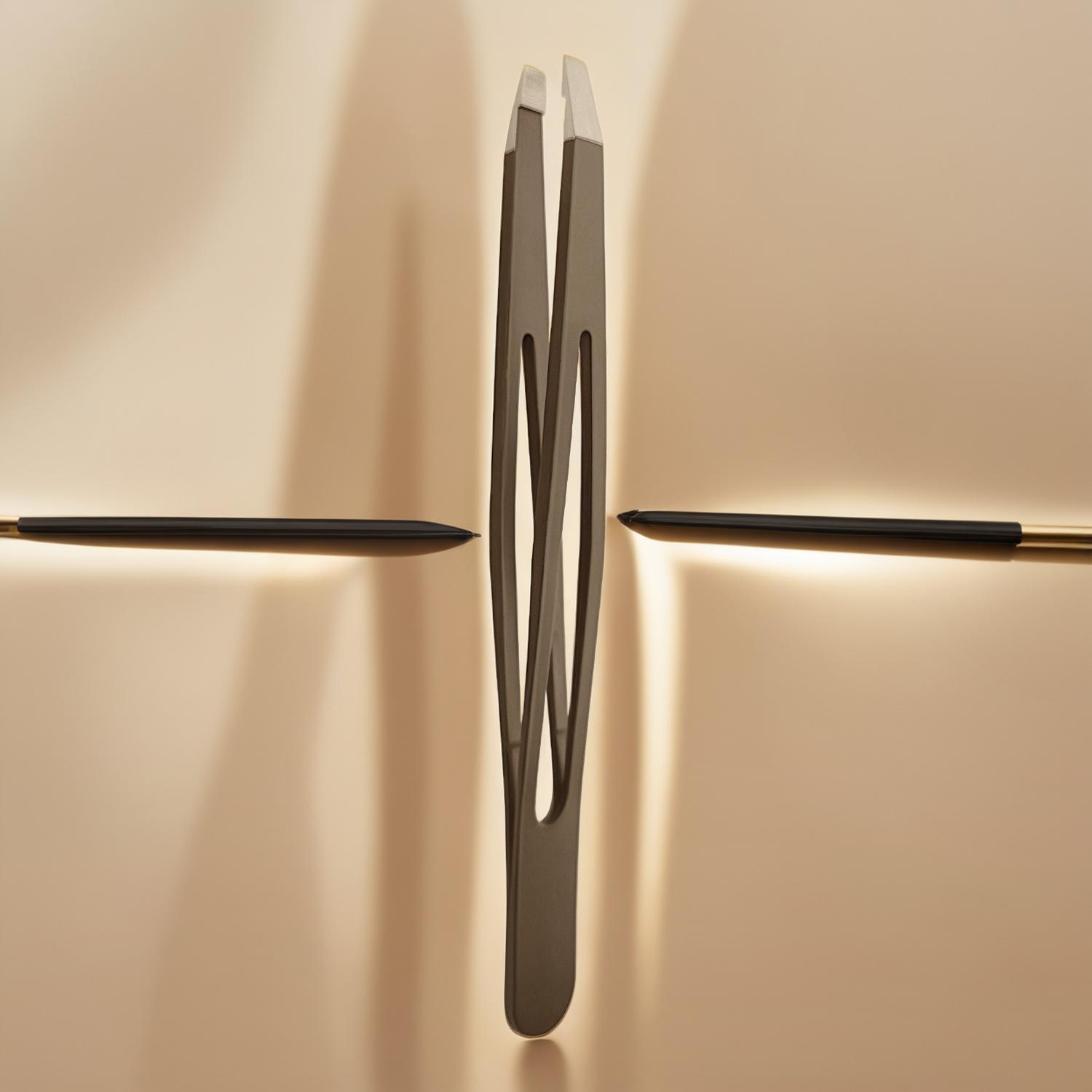
- Slanted tips: Slanted tips are widely used for eyebrow shaping because they allow both broader grooming strokes and more controlled isolation of individual hairs. The angle helps users approach hairs from a comfortable direction without blocking visibility.
- Aligned gripping edges: The two tips should meet evenly along the gripping surface. Misalignment causes slipping, hair breakage, or uneven pressure.
- Stainless steel construction: Stainless steel is commonly selected for beauty tweezers because it offers durability and is suitable for frequent cleaning. Buyers should evaluate finish quality and edge consistency rather than relying on material claims alone.
- Controlled tension: A tweezer should not feel too loose or too stiff. Professional users need enough spring resistance for accuracy without causing hand fatigue during multiple services.
- Ergonomic handling: Shape, length, weight, and surface texture influence control. A tool that feels stable in the hand is easier to use for detailed brow work.
These criteria are especially important when sourcing wholesale quantities. A sample may perform well, but the real test is whether the supplier can maintain the same alignment and finishing quality across production batches.
How to Evaluate Tweezer Samples Before Wholesale Ordering
Sample evaluation should be structured. If several team members test different samples without a checklist, feedback can become subjective and difficult to compare. A clear assessment process helps purchasing teams identify which tool best fits their audience.
- Check visual symmetry. Hold the tweezer under bright light and inspect whether both arms are even and the tips meet properly. The slanted edges should look clean and consistent.
- Test gripping performance. Try the tweezer on fine hair, short regrowth, and a slightly thicker hair type if available. The tool should grip without requiring excessive pressure.
- Evaluate hair breakage. A tweezer that cuts or snaps hair instead of pulling it cleanly may have overly sharp or poorly finished gripping edges.
- Assess comfort over time. Open and close the tweezer repeatedly. A good professional tool should feel controlled, not harsh on the fingers.
- Inspect the finish. Look for rough edges, uneven coating, stains, burrs, or sharp areas outside the gripping surface.
- Review packaging compatibility. Consider whether the tool is suitable for retail display, e-commerce shipping, salon kits, or private-label packaging plans.
This process is useful for salons selecting tools for in-house use and for distributors preparing a larger B2B beauty supplies range. It also helps separate marketing language from measurable performance.
Choosing Tweezers for Different Buyer Profiles
Not every customer buys tweezers for the same reason. A beauty retailer may prioritize shelf appeal and consumer-friendly packaging. A salon supplier may care more about repeat performance and easy reordering. A brow studio may need tools that feel precise in the hand during daily services. Understanding the end user helps define the right product mix.
For retail channels, a slanted stainless steel tweezer is often a practical core item because it is familiar and versatile. Buyers may pair it with scissors, brow brushes, mirrors, or grooming kits depending on the market. For professional channels, tip accuracy and tension become even more important because the tool is used frequently and customers judge results closely.
For e-commerce businesses, product photos and descriptions should clearly explain the functional benefits without overpromising. Instead of vague claims, describe the tip type, intended use, grip control, and care guidance. This helps reduce returns and improves buyer confidence.
Supplier Questions That Protect Product Quality
When sourcing from a beauty tool manufacturer, the supplier relationship is as important as the sample itself. A professional manufacturer should be able to discuss production consistency, inspection points, packaging options, and communication processes clearly. Buyers do not need to demand unrealistic guarantees; they need transparent information that supports a responsible purchasing decision.
Use the following checklist when comparing suppliers:
- How is tip alignment checked during production and before shipment?
- What finishing steps are used to remove rough edges or burrs?
- Can the supplier provide samples that represent normal production quality?
- How are cosmetic defects, tension issues, or tip irregularities handled?
- What packaging formats are available for retail, salon, or distributor use?
- How should artwork, labeling, and shipping marks be reviewed before production?
- What communication timeline should buyers expect from sampling through order confirmation?
Olimor Beauty serves buyers looking for wholesale beauty tools and sourcing support. Businesses reviewing broader product collections can compare tweezers with complementary beauty tools to create a more complete assortment.
Maintenance Guidance to Reduce Customer Complaints
Even a well-made tweezer needs proper care. Including simple care instructions in product listings, packaging inserts, or salon training materials can reduce avoidable complaints and extend the useful life of the tool. Many tweezer problems come from dropping the tool, storing it unprotected, or allowing residue to build up on the gripping edges.
Recommended care guidance can be straightforward: clean the tips after use, keep the tweezer dry before storage, avoid using it for non-beauty tasks, and protect the tips from impact. If the tool includes a tip cover or protective packaging, encourage customers to use it. The gripping edges are the most important part of the tool, and a small bend can affect performance.
Professional users should also separate personal grooming tools from salon service tools according to their hygiene procedures. Retailers can communicate that tweezers are precision tools, not general household pliers. This positioning helps customers treat the product correctly and appreciate its value.
Building a Strong Wholesale Tweezer Program
A successful B2B tweezer program is not built from a single attractive product photo. It depends on selecting tools that fit the channel, confirming performance with samples, preparing clear product information, and working with a supplier that understands consistency. The most reliable wholesale decisions are made when buyers evaluate both the tool and the process behind it.
For eyebrow grooming, the most important characteristics remain practical: slanted tips, accurate alignment, stainless steel construction, comfortable tension, and a finish that feels clean in the hand. These are the details that determine whether customers use the tweezer once or keep it in their regular routine.
If your business is comparing B2B beauty supplies or planning a wholesale tweezer order, Olimor Beauty can help you review suitable beauty tool options for your market. To discuss sourcing needs, packaging direction, or product selection, contact Olimor or send an inquiry with your requirements.
Tag: