

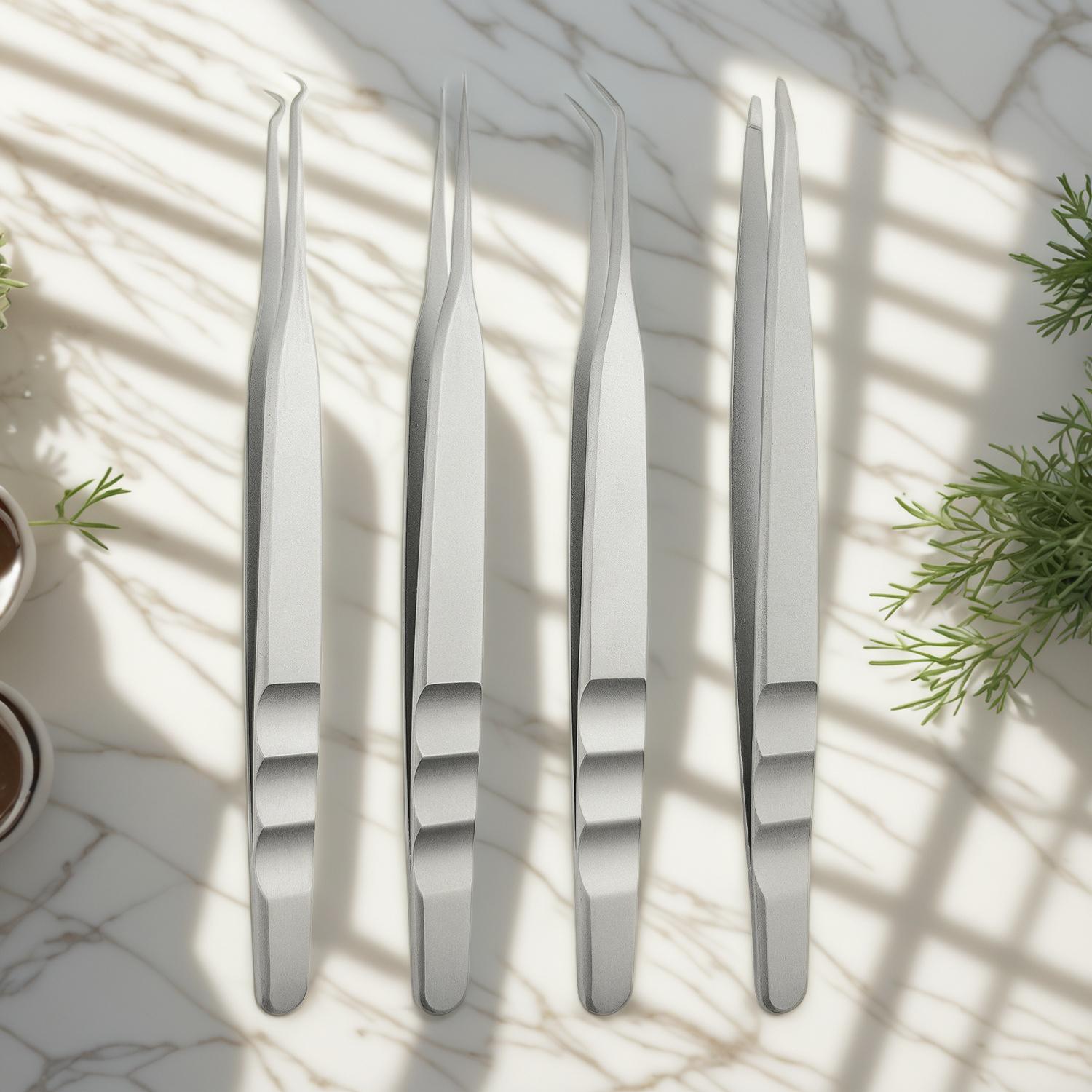
Eyelash Extension Tweezers for B2B Salon Supplies
Eyelash extension tweezers are working instruments, not simple accessory items. For a salon, lash studio, beauty academy or distributor, the right tweezer affects isolation, pickup, placement, comfort during long appointments and the consistency of the service from one technician to another.
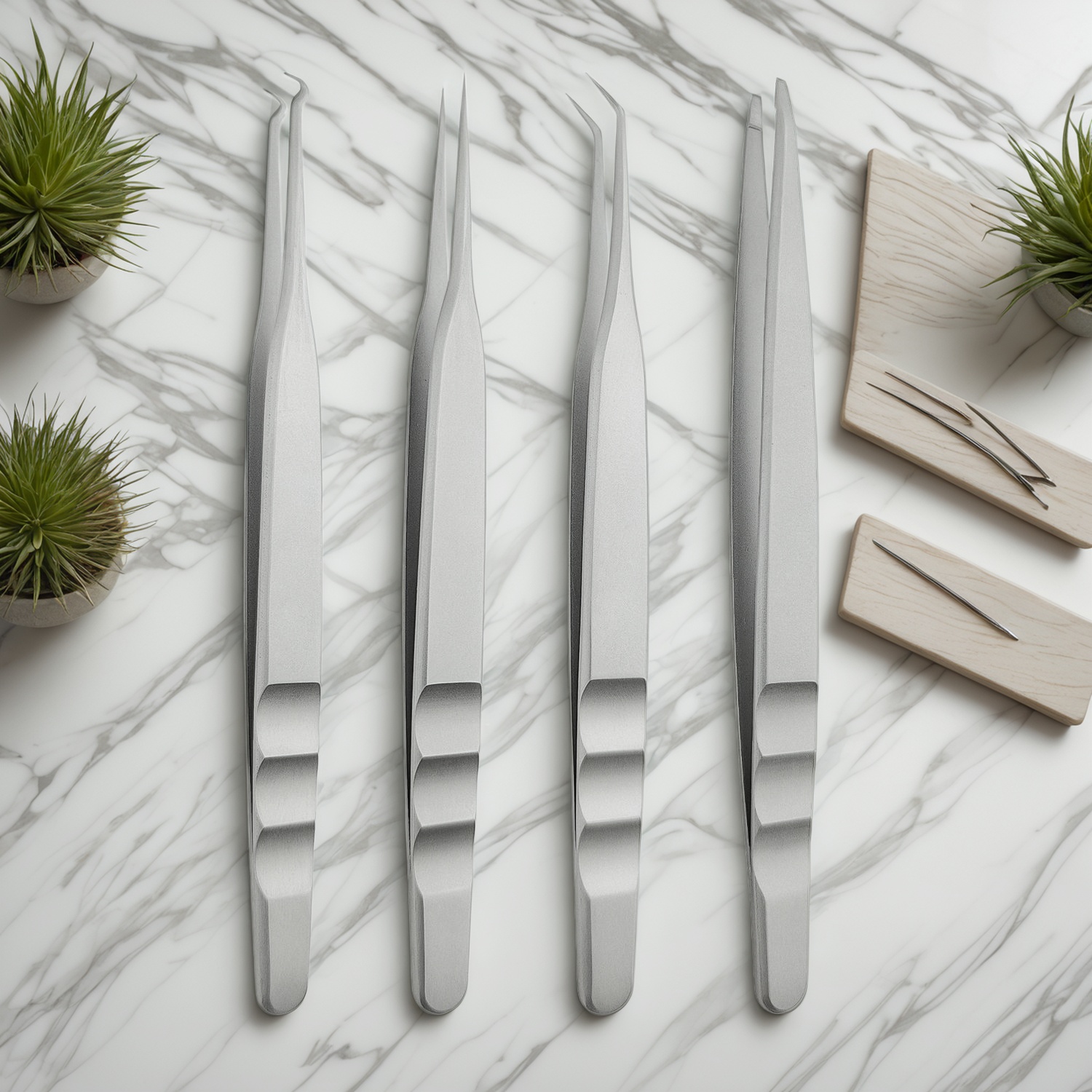
This guide explains how B2B buyers can evaluate professional eyelash extension tweezers before bulk purchasing. It focuses on practical selection, inspection, daily use, maintenance and supplier questions, using Olimor Beauty’s Ultimate Precision Tweezer Set as a relevant example for businesses that need professional lash application tools.
What B2B Buyers Need from Eyelash Extension Tweezers
The primary job of an eyelash extension tweezer is to support controlled, repeatable hand movement. During a lash service, one tool may be used to isolate natural lashes while another is used to pick up and place extension fibers. These steps require accurate tip contact, stable grip and comfortable handling over many repeated movements.
For B2B purchasing, the question is not only whether one tweezer looks good on a product page. The buyer needs to know whether the tool is suitable for daily service use, whether multiple pieces can be supplied consistently, and whether technicians can work with them without unnecessary hand strain. A distributor also needs to consider whether the product is clear enough to present to salon customers and easy enough to manage in stock.
Olimor Beauty supplies professional beauty tools, including the Ultimate Precision Tweezer Set for eyelash extension application. The product is positioned for precise application and control, with stainless-steel construction and ergonomic handling. Those points matter because lash work combines fine detail with long appointment times, so a small weakness in the tip or hand feel can become a repeated operational problem.
Why Precision and Alignment Matter in Lash Application
Precision begins at the tip. If the tweezer tips do not meet cleanly, the technician may struggle to isolate a single natural lash or securely hold a fine extension fiber. That can slow the service, increase frustration and make results less predictable. Tip alignment should therefore be treated as a basic quality check, especially when purchasing in quantity.
Grip control is just as important as alignment. A tweezer should hold lashes without requiring excessive squeezing. If the closing pressure feels too heavy, technicians may experience fatigue during long services. If the grip feels unstable, the extension may shift or slip during pickup and placement. Neither issue supports efficient, consistent salon work.
Ergonomic handling also deserves attention. Lash technicians work at close range and make small, repeated motions throughout an appointment. A tool that sits comfortably in the hand can help the technician maintain control without overcompensating. Ergonomics should not be evaluated only by shape; buyers should also consider balance, tension, surface feel and how the tool behaves after repeated opening and closing.
Key Selection Criteria for Salons, Academies and Distributors
Professional buyers should compare eyelash extension tweezers based on service performance, not only appearance. The best tool for one business may depend on the user group: experienced lash artists, trainees, multi-location salons or wholesale customers.
| Selection Area | What to Check | Why It Matters for B2B Buying |
|---|---|---|
| Tip alignment | Tips should meet evenly and consistently when closed. | Poor alignment can make isolation and pickup less reliable. |
| Grip response | The tweezer should hold extension fibers with controlled pressure. | Stable grip supports repeatable placement during appointments. |
| Material suitability | Stainless steel is practical for professional tools and regular cleaning routines. | Durable material helps salons manage repeated service use. |
| Comfort | Check hand feel, closing tension and ease of control. | Technicians use tweezers repeatedly, so comfort affects workflow. |
| Consistency across units | Multiple pieces should feel similar enough for team use or resale. | Consistent tools make training, workstation setup and repeat orders easier. |
| Inventory practicality | Consider packaging, counting, storage and internal distribution. | Bulk purchasing only works if stock is easy to manage. |
For lash studios, consistency may be more valuable than variety. If every technician uses a completely different tool feel, it becomes harder to standardize training and troubleshoot application problems. For academies, consistent tools help students focus on technique instead of guessing whether inconsistent results are caused by the tool. For distributors, predictable quality supports customer confidence and repeat purchasing.
Comparing Lash Tweezers with General Beauty Tweezers
General grooming tweezers are not automatically suitable for eyelash extension services. A brow tweezer may be designed to remove thicker hair, while lash extension work requires fine control around delicate natural lashes and lightweight extension fibers. The working purpose is different, so the buying criteria should be different.
A lash extension tweezer should support two professional tasks: isolation and extension handling. Isolation requires separating one natural lash from nearby lashes. Pickup and placement require secure handling of extension fibers without crushing, slipping or forcing the technician to squeeze too hard. For this reason, salons should treat eyelash extension tweezers as dedicated service tools rather than shared general-use tools.
When a Dedicated Lash Tweezer Set Makes Sense
- Multi-technician lash studios: A set helps standardize workstations and backup stock.
- Training academies: Students can build muscle memory with tools that reflect professional use.
- Beauty distributors: A professional lash tweezer set is easier to position for salon customers than a generic tweezer.
- Hybrid salons: Businesses adding lash services can separate lash tools from general beauty tools.
The Ultimate Precision Tweezer Set is relevant in this context because it is intended for precise eyelash extension application and professional control. Buyers can also review Olimor Beauty professional beauty tools when planning a wider salon supply assortment.
Bulk Purchasing and Inventory Planning
Bulk purchasing should support service continuity. A salon needs enough tweezers for active technicians, cleaning rotation, backups and replacements when a tool is dropped or removed from service. A distributor needs enough inventory to meet customer demand without overextending stock in products that do not match buyer needs.
The cost of a tweezer is not limited to the purchase price. Buyers should also consider how often tools need replacement, how much time technicians lose when tools are unsuitable, and how easily the same item can be reordered. A lower-cost option may become expensive if it causes inconsistent grip, high rejection during inspection or frequent technician complaints. At the same time, buyers should avoid paying for unsupported claims that are not relevant to their operation.
Useful cost factors include material suitability, finish consistency, packaging, reorder reliability, expected handling care, internal inspection time and whether the same tool can serve several business needs. For example, one studio may buy primarily for active service stations, while an academy may need tools for student kits and practice use. A distributor may prioritize clear product positioning, stable supply and easy customer education.
- Map active use: Count the technicians, lash stations or student kits that need tweezers at the same time.
- Add backup stock: Plan for cleaning rotation, accidental drops and tools awaiting inspection.
- Separate service and training tools: Training tools may experience heavier handling, so do not let them drain active salon inventory.
- Create a reorder trigger: Reorder before shortage affects bookings or fulfillment.
- Track removal reasons: Note whether tools are removed because of bent tips, poor grip, visible damage or user preference.
Businesses building a broader lash or beauty supply program can browse Olimor product collections to compare related tool categories and plan a more complete assortment.
Incoming Inspection Checklist for B2B Orders
An incoming inspection process helps buyers avoid sending unsuitable tools to technicians, students or wholesale customers. The process does not need to be complicated, but it should be consistent. Inspection is especially important after bulk delivery because a single damaged or misaligned tweezer can disrupt service even if most of the shipment is acceptable.
Start with visual checks. Look for visible damage, bent tips, uneven closure, rough edges and packaging problems. Then perform a handling check by opening and closing the tweezer several times. The tool should feel stable, with predictable tension and clean tip contact. If the business has experienced technicians, ask them to evaluate a sample of the batch before full distribution.
Practical Inspection Checklist
- Confirm the product received matches the order and intended application.
- Check whether the tips meet evenly when the tweezer is closed.
- Look for bent tips, visible defects or damage from shipping or handling.
- Open and close the tool repeatedly to evaluate tension and smoothness.
- Confirm the surface is suitable for the salon’s cleaning and handling routine.
- Record any rejected or questionable units before they enter service stock.
- Keep clean, used and inspection-hold tools separated in storage.
This checklist is also useful for distributors. A simple inspection routine before resale can reduce customer complaints and help the buyer communicate more clearly with suppliers if there is a problem.
Daily Use, Cleaning and Storage in a Professional Setting
Even a well-made tweezer can lose performance if it is handled carelessly. Fine tips are vulnerable to impact, bending and misuse. Salons should train staff to treat lash tweezers as precision instruments, not as general tools for opening packaging, scraping adhesive residue or picking up unrelated items.
Cleaning and sanitation should follow the salon’s approved procedure and applicable local requirements. In many markets, disinfectant selection and salon hygiene practices may be influenced by local health authorities and by public agencies such as the U.S. Environmental Protection Agency for disinfectant registration. Requirements can change, so buyers and salon managers should verify current guidance, product labels and supplier documents before setting procedures.
Storage is part of tool care. Tweezers should be protected so the tips do not hit hard surfaces or rub against other metal tools. A labeled tray, pouch or station system can separate clean tools from used tools and tools awaiting inspection. This is especially helpful in busy salons where several technicians share a preparation area.
A damaged tweezer should not be returned to active use simply because it still looks mostly intact. If the tips no longer close evenly, if grip feels weak, or if the tool has been dropped and performance is uncertain, it should be inspected before reuse. This habit protects service quality and reduces appointment disruption.
Supplier Evaluation for Commercial Buyers
Choosing a supplier is as important as choosing the tool. B2B buyers should ask questions that relate to repeat supply, product clarity and support for bulk purchasing. The goal is not to collect vague promises, but to understand whether the supplier can support the buyer’s business model.
For salons, supplier evaluation may focus on reliable access to replacement tools and the ability to reorder the same product. For academies, consistency across student kits may be essential. For distributors, packaging, product descriptions, order communication and repeat supply can affect downstream customer satisfaction.
Ask suppliers to provide clear product information, including intended use, material description, available customization options if offered, and ordering process. Avoid assuming certifications, test results, measurements or performance data unless the supplier provides current documents. If compliance, labeling or documentation is important for your market, verify the latest requirements independently and request supplier documents before purchasing.
Olimor Beauty supports professional beauty tool supply needs, and the Ultimate Precision Tweezer Set can be considered by buyers looking for eyelash extension tools for salon service, training or distribution. For order-specific questions, buyers can send a product inquiry with their intended use and purchasing needs.
How to Decide Whether a Tweezer Set Fits Your Business
The best eyelash extension tweezer for B2B purchasing is the one that fits the buyer’s service model, handling standards and inventory plan. A salon should test whether the tool helps technicians isolate and place lashes comfortably. An academy should check whether the tool supports beginner learning without introducing unnecessary inconsistency. A distributor should evaluate whether the product is easy to explain, stock and reorder.
Before committing to a larger order, create a short internal evaluation. Have relevant users handle the tweezer during realistic lash application tasks. Record feedback on alignment, grip, comfort and control. Inspect how the tools respond after cleaning and storage according to your normal routine. This process gives the buyer practical evidence without relying on unsupported claims.
When comparing options, avoid keyword-heavy product descriptions and focus on practical proof. Does the tool close evenly? Does it feel controlled? Is stainless-steel construction appropriate for your salon care process? Can the supplier explain ordering, packaging, customization and repeat availability clearly? Those questions lead to better purchasing decisions than appearance alone.
Restrained Next Step for B2B Buyers
If your business needs eyelash extension tweezers for salon workstations, training kits or wholesale supply, prepare your usage estimate, inspection expectations and any customization questions before contacting a supplier. This makes the conversation more efficient and helps avoid ordering tools that do not match your service environment.
To discuss Olimor Beauty tool supply options, you can contact Olimor Beauty with your business type, intended application and ordering questions. For buyers who already know the product category they need, the inquiry form is the most direct way to request order information.
FAQ: Eyelash Extension Tweezers for B2B Supply
Can I request samples before placing a bulk order?
Sample availability should be confirmed directly with Olimor Beauty. For professional buyers, testing a sample can help evaluate tip alignment, grip response, comfort and suitability for the salon’s cleaning routine before a larger purchase.
What is the MOQ for eyelash extension tweezers?
Minimum order requirements can depend on the product, packaging and order details. Buyers should request current MOQ information through the inquiry process rather than relying on assumptions.
Can eyelash extension tweezers be customized for distributors or salon groups?
Customization possibilities should be discussed with the supplier based on the requested product, packaging and business use. Do not assume branding, packaging or specification changes are available until confirmed in writing.
How should a business check quality after receiving an order?
Use an incoming inspection checklist. Confirm the product matches the order, inspect tip alignment, check grip response, look for visible damage and separate any questionable tools before they enter active service or resale stock.
How can buyers confirm lead time?
Lead time depends on order details and supplier availability. Ask Olimor Beauty for current timing when you submit an inquiry, especially if the order is for a launch, training class or distributor fulfillment schedule.
Tag: