

Professional Cuticle Nippers for Salons, Spas and Wholesale Buyers
A professional cuticle nipper is a small tool with a large influence on manicure and pedicure quality. Its job is not to cut nails or remove living skin aggressively. It is used to trim small, lifted pieces of non-living cuticle and hangnail skin so the nail contour looks clean, even and ready for a polished finish.
For salons, spas, nail academies and wholesale beauty-tool buyers, the right nipper affects more than appearance. It influences technician control, hygiene routines, tool replacement planning, customer satisfaction and the consistency of service across multiple stations. A nipper that looks good in a catalog may still disappoint if the blades do not meet evenly, the spring action feels uneven or the handle causes hand fatigue during detailed work.
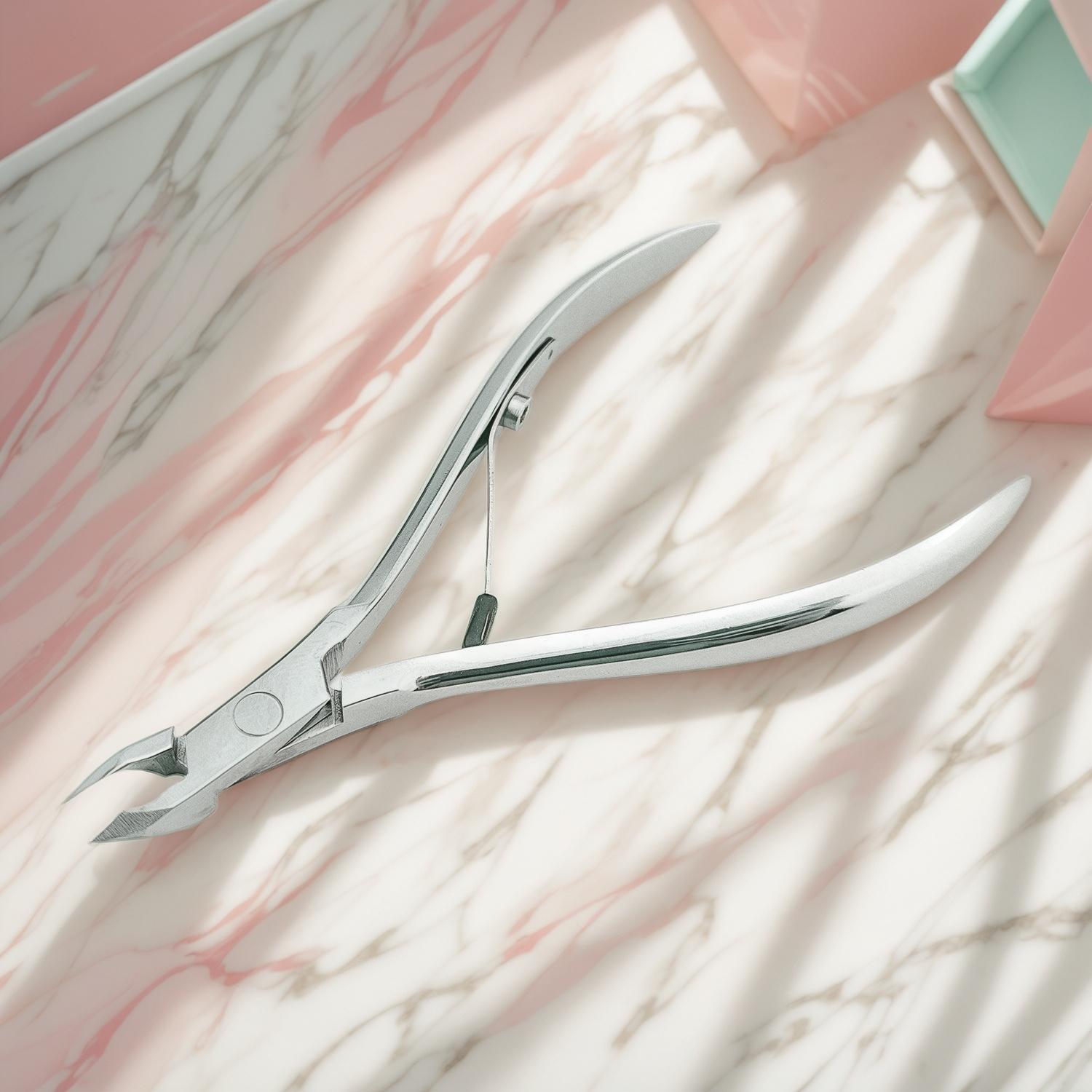
The Olimor Beauty Cuticle Nipper is positioned for professional manicure and pedicure use. Supplied product details describe polished stainless steel construction, ergonomic handling, precision-engineered aligned blades, a double-spring mechanism and a seamless minimalist design that supports cleaning and sanitizing. This guide explains how those features matter in real nail-care environments and how buyers can evaluate cuticle nippers before adding them to a salon toolkit or wholesale assortment.
What a Professional Cuticle Nipper Is Designed to Do
A cuticle nipper is a precision trimming instrument for delicate skin around the nail plate. It is most useful after cuticle softening and gentle preparation, when small areas of lifted non-living tissue are visible and can be trimmed cleanly. The goal is controlled detail work, not force.
In professional service, the nipper should help the technician make small, accurate cuts without tugging. Clean trimming supports a tidy nail outline and reduces the chance of ragged edges that can catch, tear or spoil the final look. This is especially important in pedicures, where sidewalls and thicker surrounding skin may require careful attention, and in manicure services where close-up polish work makes every uneven edge more visible.
A professional nipper also needs to fit the workflow of a busy treatment area. It must be easy to pick up, operate, clean, inspect and store. If a tool is awkward or inconsistent, technicians may compensate with extra pressure or repeated cutting motions, which can reduce precision and increase strain.
Key Features to Look for in Cuticle Nippers
When comparing professional cuticle nippers, focus on functional details rather than decorative styling. The most useful tool is the one that gives technicians controlled cutting, repeatable feel and easy maintenance.
Polished stainless steel construction
Stainless steel is commonly used for professional nail instruments because it provides a smooth working surface and can support repeated cleaning routines when cared for properly. The Olimor Beauty Cuticle Nipper is described as having polished stainless steel construction. A polished finish is valuable in a service environment because it looks clean at the manicure table and helps buyers visually inspect the surface for residue, damage or rough areas.
Aligned precision blades
Blade alignment is one of the most important buying criteria. The cutting edges should meet cleanly at the tip and along the working edge. If the tips are offset or the blades close unevenly, the nipper may push, drag or crush instead of trimming cleanly. For delicate cuticle work, that difference is immediately noticeable.
Ergonomic handling
Technicians may use nippers many times during a workday. A balanced, ergonomic handle helps maintain control around small nails, corners and sidewalls. Comfort is not only a convenience; it supports accuracy. A tool that feels secure in different hand sizes is more likely to perform consistently across a salon team.
Double-spring mechanism
The supplied Olimor details describe a double-spring mechanism. A smooth spring return can reduce repetitive hand effort by reopening the handles after each cut. Buyers should check that the action feels even and controlled, without sticking, excessive resistance or looseness.
Minimalist design for cleaning
Professional nail tools must be cleaned and sanitized between services according to applicable procedures. A seamless, minimalist design with fewer unnecessary grooves or decorative recesses can be easier to wipe and inspect. This is useful for salons and spas where hygiene steps must be practical enough to perform consistently.
Comparison Checklist for Salon and Wholesale Buyers
Before placing a bulk order or standardizing tools across a team, evaluate more than one sample when possible. Consistency across units matters for both salon operations and wholesale customer satisfaction.
| Evaluation point | What to check | Why it matters |
|---|---|---|
| Blade tip alignment | Close the nipper slowly and confirm the tips meet evenly without visible offset. | Good alignment supports precise trimming around corners and sidewalls. |
| Cutting edge contact | Check whether the blades meet smoothly along the working edge. | Uneven contact can lead to pulling, incomplete cuts or excessive pressure. |
| Spring response | Open and close the handles several times. | A stable return helps reduce hand fatigue and supports repeatable technique. |
| Handle comfort | Ask technicians with different hand sizes to hold and simulate use. | Comfort affects control during long manicure and pedicure schedules. |
| Surface finish | Inspect the polished stainless steel for smoothness and obvious rough areas. | A clean surface is easier to maintain and presents better at the service table. |
| Hinge stability | Check for unwanted side movement or looseness. | A stable hinge helps the blades close predictably. |
| Packaging protection | Confirm the tips are protected during storage and shipping. | Blade damage during transit can affect performance before the tool is used. |
For purchasing teams building a broader professional range, cuticle nippers should be evaluated alongside pushers, files, tweezers and other beauty instruments. Olimor product options can be reviewed through the beauty tool product range when planning a coordinated salon or wholesale assortment.
How to Choose the Right Nipper for Different Use Cases
The best cuticle nipper depends on the working environment. A single independent nail technician, a spa chain and a distributor may all value the same core features, but they often weigh them differently.
For nail salons
Salons need tools that are comfortable, predictable and easy to turn around between clients. When multiple technicians share a purchasing standard, consistency is critical. A good salon nipper should feel stable in the hand, trim cleanly without extra force and withstand regular cleaning procedures when properly maintained.
For spas
Spas often focus on a calm, polished service experience. Tools should look professional at the treatment station and support quiet, controlled operation. The described double-spring mechanism and minimalist polished design are relevant because they contribute to smooth handling and a clean presentation.
For training environments
In nail schools or internal training programs, inconsistent tools can make learning harder. Beginners may not know whether uneven results come from technique or tool limitations. Standardizing on a nipper with aligned blades and predictable spring response can help trainers focus on safe technique, pressure control and correct trimming decisions.
For distributors and wholesale programs
Wholesale buyers should think beyond one demonstration sample. They should ask how the product fits a retail display, professional kit, salon starter set or replacement-tool program. Buyers can explore related categories through Olimor beauty tool collections to decide whether the nipper fits a wider manicure and pedicure assortment.
Cost Factors Without Relying on Price Alone
Cuticle nippers vary in cost, but the lowest unit price is not always the best purchasing value. For professional buyers, the more useful question is how reliably the tool performs in daily service and how much inspection, replacement or customer support it may require.
Key cost factors include material and finish, blade alignment consistency, spring mechanism quality, packaging protection, order quantity, customization needs and supplier communication. A polished stainless steel tool with aligned blades may carry a different cost profile than a basic tool with less attention to finish or consistency. Packaging can also influence cost, especially if the product is intended for retail display, professional kits or private-label presentation.
Maintenance practices also affect long-term value. Even a well-made precision tool can be damaged by dropping, storing it loose with heavier implements or allowing moisture to remain around the hinge and spring. Buyers should consider whether their teams or customers have clear cleaning, drying and storage routines. A tool that is handled correctly is more likely to remain useful and consistent.
Inspection Steps Before First Use and During Service Life
Inspection should be part of both receiving and daily professional use. It helps catch damage early and prevents unsuitable tools from reaching the service table.
- Check blade closure: Close the nipper gently and confirm the tips meet cleanly.
- Inspect the cutting edge: Look for visible chips, bends, roughness or uneven contact.
- Test the spring: Open and close the handles to confirm the return feels smooth and controlled.
- Review the hinge: Make sure the movement is stable and does not wobble from side to side.
- Examine the surface: Confirm the polished stainless steel surface is clean and free of residue before service.
- Remove damaged tools: Do not use a nipper with a bent tip, loose hinge, damaged blade or questionable cleanliness.
For wholesale receiving inspections, it is useful to check multiple units from a shipment rather than relying only on the top sample. This helps confirm consistency across the order and protects the reputation of a professional beauty-tool program.
Cleaning, Sanitizing and Storage Practices
Cuticle work is performed close to living skin, so hygiene procedures must be taken seriously. Salons and spas should follow their local regulations, product instructions and internal protocols. In the United States, disinfectant claims and directions are commonly associated with the Environmental Protection Agency, while salon sanitation requirements are often enforced by state cosmetology or barbering boards. Buyers and operators should verify current rules, product labels and supplier documents for their own market.
Practical care habits include cleaning visible residue promptly after use, following the required disinfectant dilution and contact time, drying the tool thoroughly before storage and protecting the blade tips from contact with other metal implements. Moisture left around the hinge or spring can shorten the useful life of metal tools, and edge damage can compromise blade alignment.
Storage should keep clean tools separated from used tools. Tip protection is especially important during transport, mobile services and wholesale shipping. A professional nipper should not be tossed loose into a drawer where the cutting edges can strike other tools.
Supplier Evaluation Questions for B2B Buyers
Commercial buyers should treat cuticle nippers as precision tools, not simple accessories. Before selecting a supplier, ask questions that reveal consistency, communication quality and suitability for your sales channel.
- Can the supplier provide product details for material, finish, blade design and spring mechanism without making unsupported claims?
- Are samples available for inspection by purchasing staff and working technicians?
- Can packaging, assortment or presentation requirements be discussed for salon, spa or wholesale channels?
- How should buyers communicate customization needs, branding expectations or retail packaging preferences?
- What inspection steps are used to check blade alignment, surface finish and spring action before shipment?
- How are cutting tips protected during packing, storage and transport?
When discussing a potential order, provide the intended use case, destination market, sales channel and any packaging requirements. This helps the supplier respond with relevant information rather than generic catalog language. Businesses can contact Olimor for product discussions or send a purchasing inquiry with project details.
Common Problems and How to Prevent Them
Many cuticle nipper problems come from selection, maintenance or handling rather than the trimming step alone. If a nipper pulls instead of cutting, check blade alignment, sharpness and whether residue is affecting closure. If the tool feels tiring, test the spring response and handle comfort. If performance changes suddenly, inspect for a dropped tip, bent edge or hinge issue.
Over-cutting is usually a technique and training problem. A nipper should be used only for small areas of lifted non-living tissue. Technicians should avoid cutting healthy skin or using the tool as a general clipper. Clear salon protocols, good lighting and proper client preparation help prevent misuse.
For distributors, customer complaints can often be reduced with simple care instructions. Retail or professional packaging should remind users to clean, dry, protect and inspect the tool. This supports better user experience without making exaggerated performance promises.
FAQ: Professional Cuticle Nipper Purchasing
Can I request samples before placing a larger order?
Professional buyers should ask about sample availability so technicians can inspect blade alignment, handle comfort, spring response and finish before committing to a larger purchase.
Is there an MOQ for cuticle nippers?
Minimum order requirements can depend on product configuration, packaging and customization needs. Buyers should confirm current MOQ details directly through an inquiry rather than assuming a fixed number.
Can cuticle nippers be customized for wholesale or retail programs?
Customization may involve packaging, assortment planning or branding requirements. Share your target market, channel and presentation expectations so Olimor can review what is appropriate for the project.
How should quality be checked when an order arrives?
Inspect multiple units for blade alignment, spring action, hinge stability, smooth polished surfaces and packaging protection. Remove any damaged or questionable tools from sale or service.
How long does production or delivery take?
Timing depends on order details, customization, quantity and shipping arrangements. Confirm lead-time expectations in writing during the purchasing discussion.
Final Buying Guidance
A reliable cuticle nipper should be precise, comfortable, easy to clean and consistent across repeated use. The Olimor Beauty Cuticle Nipper addresses key professional priorities through polished stainless steel construction, aligned precision blades, ergonomic handling, a double-spring mechanism and a clean minimalist design that supports hygiene routines.
For salon and spa teams, the right nipper helps technicians deliver cleaner-looking manicure and pedicure results with better control. For wholesale buyers, it becomes part of a professional assortment where finish, consistency and supplier communication influence repeat purchasing. Choose the tool that performs well in real hands, fits the service workflow and can be maintained properly between clients.
Tag: